Activity
Mon
Wed
Fri
Sun
Nov
Dec
Jan
Feb
Mar
Apr
May
Jun
Jul
Aug
Sep
What is this?
Less
More
Owned by Heather
A playground for designers, creators, and digital builders who want to experiment with AI, elevate your visual work, and turn ideas into income!
PLR Squarespace + Showit+ Systeme.io Website Templates for Resell -Whitelabel Stellar Design you can Resell. Community Support❤️Entire Training Portal
Summiters
325
Free
The Harmonium Evolution
888
Free
Content Creator Skool
436
5.0
$7/m
Event & Collab Growth Co
787
5.0
Free
Claude for Content Automation
955
5.0
$39/m
The Kind Copy Movement
1.9k
5.0
Free
Empowered AI Collective™
3.6k
Free
EverAds | Growth Boost Style
1.4k
5.0
Free
AI to Your First $100K
237
Free
6 contributions to Skool Scale Camp

Feb 18 •
Hot Tip to Record Your Skool About Video!!
Literally, wake up first thing, get your makeup and hair fixed. Then..... Do your script and power it out and record. yes, my makeup was half worn off by the time I recorded LOL, But.... I Got It Done!! Whoop

2 likes • Feb 19
@Brenda Rigney exactly!!!

🔥
Feb 18 •
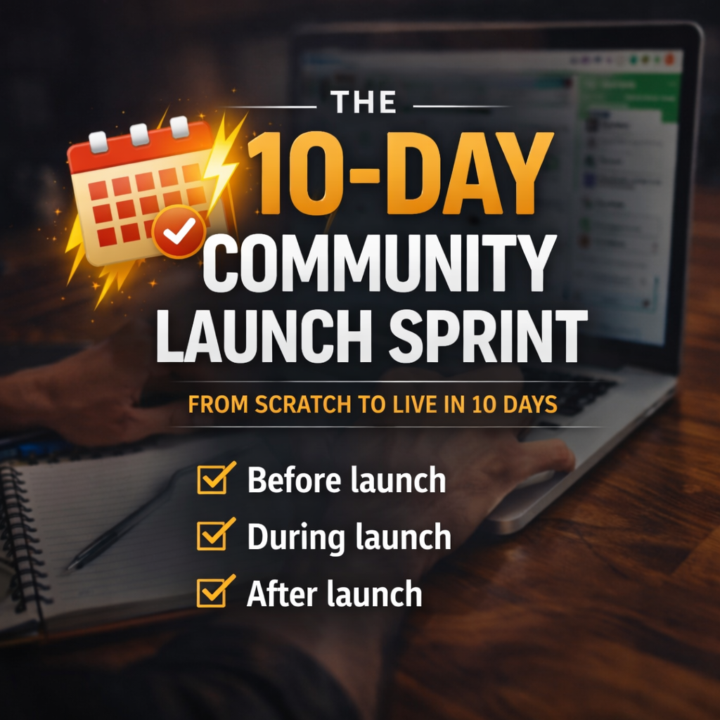
📣 Launching your Skool soon? Overthinking everything?
Don’t overbuild it. I put together a 10-Day Community Launch Sprint that shows you exactly what to do before launch, on launch day, and after so you build real momentum from day one. Simple. Clear. No fluff. If you want it, I’ll drop the link below 👇 10 Day Community Launch 🚀 Sprint
1 like • Feb 18
Love it, but how in the heck did you get that confetti on your about page?? amazing!!

🔥
Feb 18 •
The skill nobody talks about when it comes to stress
Do you ever notice you're already planning your recovery before the day has even started? I did this today and I only realised what I was doing when I really reflected in it. I woke up feeling a bit groggy. I'd slept seven and a half hours after weeks of running on six, and instead of feeling rested, my body was doing that weird thing where more sleep actually leaves you feeling harder to wake up. It wasn't wrong, it was just adjusting. But I could feel it. And instead of ignoring it or pushing through, I started to plan around it. Cinema with my son, then over to my mum's for dinner, then back home. On paper it looked like a pretty light day. But I found myself thinking "right, when we get back around four, I need to make the next few hours really calm. Quiet. Nothing much." I was reading the shape of the day before it had started and designing my response into it. I used to think that kind of thing was overthinking. Or that I was being a bit precious about it. Now I recognise it for what it actually is. 🌿 It's not overthinking. It's self-awareness. 🌿 It's not being precious. It's knowing your own nervous system. 🌿 It's not weakness. It's one of the most underrated skills there is. Most of us only deal with our energy after we've already crashed. We notice we're exhausted at 9pm and wonder why. We snap at someone and then feel awful about it. We drag ourselves through the day and collapse at the end of it. But there's another way. You can learn to read what's coming. To look at the shape of your day and think, okay, this is what this is going to cost me, so what do I need to put in place? For me today, it was a quiet afternoon buffer after the social parts of the day. For you it might be something completely different. But the skill is the same. Anticipating your needs rather than reacting to the fallout. It's something we work on a lot inside The Sacred Reset because it's not a natural way of thinking, especially when you've spent years just white-knuckling through everything. It takes practice. And it takes a certain kind of self-trust to believe that your needs are worth planning around.

1 like • Feb 18
I just checked out your amazing community and joined bc of this post! LOVE your work and excited to be a part of your world!

🔥
Feb 18 •
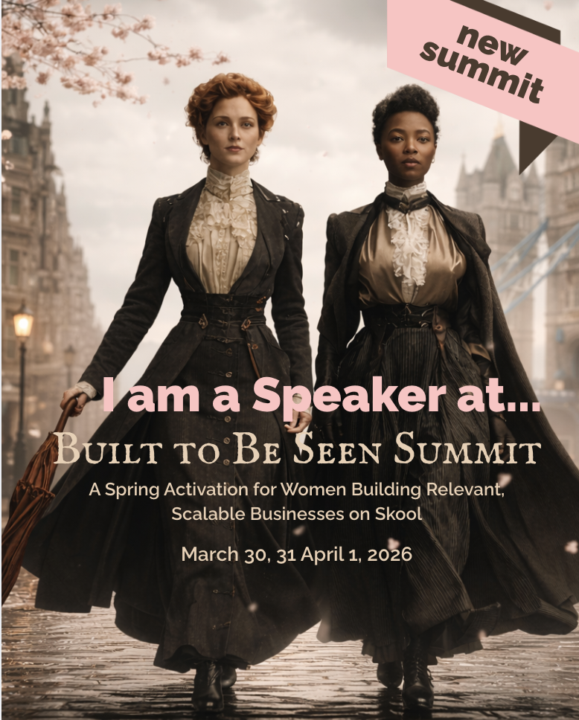
Built To Be Seen!
I'm in!!! Looking forward to speaking at the Built To Be Seen Summit!! What an honor!
2 likes • Feb 18
nice!!

🔥
Feb 13 •
🎥 New YouTube Episode is Live — and this one is important.
I’m breaking down exactly how I grew my Skool community from $400/month to $10–15K/month in recurring revenue — and the shift that made it happen. Spoiler: it wasn’t more content. It wasn’t better funnels. It was summits. And because I don’t just teach theory… I built the implementation. 🔥 How to Run Profitable Summits on Skool — $49 Step-by-step strategy for: • Choosing your summit theme • Recruiting aligned speakers • Structuring sponsorships • Filling your Skool community • Converting attendees into recurring revenue 🤖 AI Dream Team: Summit Edition — $99 Done-for-you AI tools for: • Speaker outreach • Sponsorship pitches • Messaging + positioning • Content planning • Event flow + promotion strategy You can grab those separately. OR… BUT ➡️ here’s the part that matters most: If you join the Aligned AF Community, you get BOTH courses included. ✔ $49/month ✔ OR $353/year (over 60% savings vs paying monthly) And unlike buying a standalone course… Inside Aligned AF you also get: ✨ Direct coaching from me 👉 Ask your questions about launching your Skool, driving traffic, structuring your summit, messaging, sponsorships — all of it. ✨ Ongoing training + support 👉 You’re not left alone to “figure it out.” ✨ A community of women business owners 👉 Other women building, launching, testing, growing — sharing ideas, feedback, and momentum together. And if you go annual… You also get my 20 Custom GPT AI Dream Team included — the exact tools I use to: 🤖 Plan launches 🤖 Map summit strategy 🤖 Refine messaging 🤖 Create content faster 🤖 Build smarter systems So instead of piecing this together alone in 2026… You get: The roadmap. The coaching. The community. The AI tools. All in one place. OH!! And did I mention I have a 💥 FREE 7-Day Trial going on in the Aligned AF Community until February 15 at 9pm Pacific. Join now, get settled, and wait for these amazing new courses to unlock on Day 8-10.
2 likes • Feb 14
super helpful!
1-6 of 6
@heather-hathaway-6214
🤘Creator of Whitelabel Website Insiders-a PLR Website Template Membership-Join Me💰
Web Designer& Branding expert with AI ART
PLR product creator❤️
Active 4h ago
Joined Nov 29, 2025
Los Angeles, CA
Powered by