Activity
Mon
Wed
Fri
Sun
Jun
Jul
Aug
Sep
Oct
Nov
Dec
Jan
Feb
Mar
Apr
What is this?
Less
More
Memberships
Exploring Peptides Community
14.2k members • Free
Research Radar
11.8k members • $10/month
Orion Peptides
106 members • Free
RealTalkByNewMe
605 members • Free
Peptides Calculator
311 members • Free
2 contributions to Orion Peptides

8d •
The Danger of "Warm" Shipments for Injectable Peptides
You have done your research. You found a vendor, read the purity reports, and placed your order. A few days later, a box arrives on your doorstep. You open it—and the ice pack is completely melted. The vials feel warm to the touch. Do you still inject? The short answer is no. Here is why warm shipments are one of the biggest hidden dangers in peptide research. Peptides are Fragile Molecules Peptides are short chains of amino acids—biologically active compounds that mimic natural signaling molecules in the human body. Unlike traditional pills or powders, peptides have complex three-dimensional structures. When exposed to heat above recommended storage temperatures (typically 2-8°C or 36-46°F for reconstituted or certain lyophilised peptides), these structures begin to unfold. This process, called denaturation, is irreversible. Once denatured, the peptide no longer functions as intended. But worse than simple potency loss, degraded peptides can break down into aggregates or immunogenic fragments. Injecting these byproducts may trigger unwanted immune responses, injection site reactions, or systemic inflammation. In short, a warm shipment does not just give you a less effective product—it gives you a potentially unsafe one. The Science of Thermal Degradation Research has consistently shown that temperature spikes accelerate peptide hydrolysis (breakdown by water) and oxidation. One study found that a peptide stored at 40°C (104°F) for just 48 hours lost over 60% of its purity, with new impurity peaks appearing on HPLC analysis. Many delivery trucks and warehouse sorting facilities easily reach these temperatures during summer months—or even in climate-controlled trucks if the cooling system fails. The problem is that heat damage is invisible. Your vial may look identical to a properly stored one. The lyophilized cake may appear intact. But without laboratory analysis, you have no way of knowing whether degradation has occurred. This is why professional labs and hospitals invest in continuous temperature monitoring for every shipment of sensitive biologics.


0 likes • 1d
The only problem with that is all peptides come from China in huge cargo containers that are not refrigerated. And they may sit in customs for days maybe even weeks which are not refrigerated. It’s not just up to the place that you’re buying it from? And what about when it’s still in China is it refrigerated then in those warehouses?
Mar 16 •
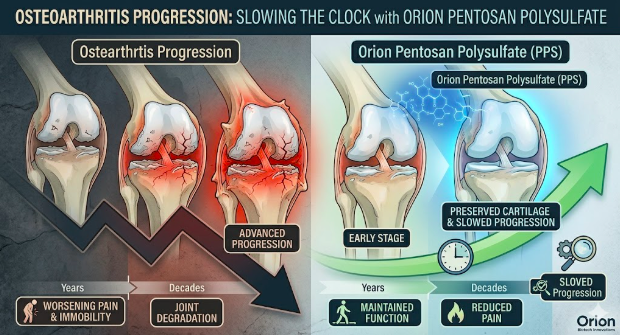
Osteoarthritis: I Stopped Waiting for My Joints to Fail and Started Researching Orion Pentosan Polysulfate
Hey everyone, I need to have a real talk about something that has been haunting me for the last few years: Osteoarthritis. It is the elephant in the room for anyone over 40, especially those of us who have spent decades in the gym, playing sports, or just living life hard. We treat our bodies like machines, but eventually, the mileage shows. For me, it started in my knees. A little stiffness in the morning that would loosen up after moving around. Then it progressed to a dull ache after leg day. Then came the crunching. That lovely sound of bone on bone, or cartilage so rough it sounds like sandpaper, when I squat down to pick something up. The doctor confirmed it. Moderate osteoarthritis in both medial compartments. His advice? "Take some glucosamine, lose weight, and come back when you need a knee replacement." Wait, what? I'm supposed to just let my joints crumble until the only option is titanium? That felt like a cop-out. There had to be a way to actually address the biology of the problem, not just manage the pain until the hardware fails. That search led me to Pentosan Polysulfate, specifically the Orion brand. And for the first time in years, I feel like I am actually slowing the clock down instead of just watching the hourglass empty. Understanding Osteoarthritis: It's Not Just "Wear and Tear" First, let's bust a myth. Osteoarthritis is often called "wear and tear" arthritis, implying it's just like a tire wearing out from use. But if that were true, every marathon runner would be crippled, and every sedentary person would have perfect knees. That's not the case. Osteoarthritis is an active, dynamic disease process. It involves: Inflammation: Low-grade, chronic inflammation in the joint lining (synovium) that releases enzymes that eat away at cartilage. Catabolic Breakdown: Your body produces enzymes (like MMPs) that break down the cartilage matrix faster than your body can rebuild it. Chondrocyte Senescence: The actual cartilage cells (chondrocytes) stop functioning properly. They become old, lazy, and stop producing the collagen and proteoglycans needed to keep the joint cushiony.
0 likes • Mar 16
Is this for osteoarthritis in other places in your body or just knees?
1-2 of 2