
Write something

2d •
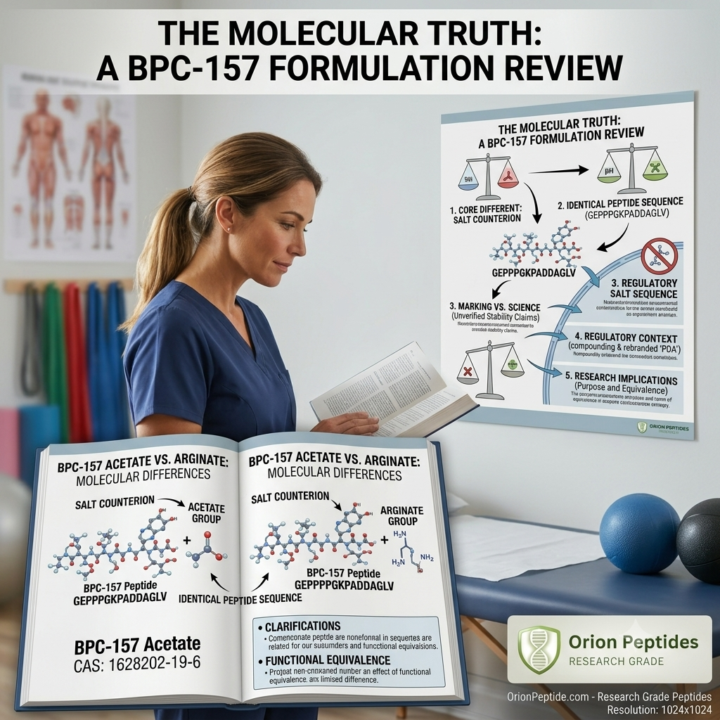
BPC-157 Acetate vs. Arginate
The Bottom Line: Same peptide sequence (GEPPPGKPADDAGLV). The only difference? The salt counterion. Acetate – conventional, widely studied form Arginate – paired with arginine instead of acetate What's Not Different: - The active peptide is identical - No peer-reviewed studies show efficacy differences - Stability claims (e.g., "1,000x more stable") are unverified vendor claims, not published science. Why Arginate Exists: After FDA restricted BPC-157, some vendors rebranded the arginate salt as "PDA" to argue it's a new chemical entity. Regulatory experts view this skeptically – the FDA targets the peptide sequence, not the salt. Key Takeaway: Same molecule. Different salt. No proven functional difference. For research-grade BPC-157, check OrionPeptide.com – lab-verified quality. https://medium.com/p/6dc34052c7d0?postPublishedType=initial
0
0
2d •
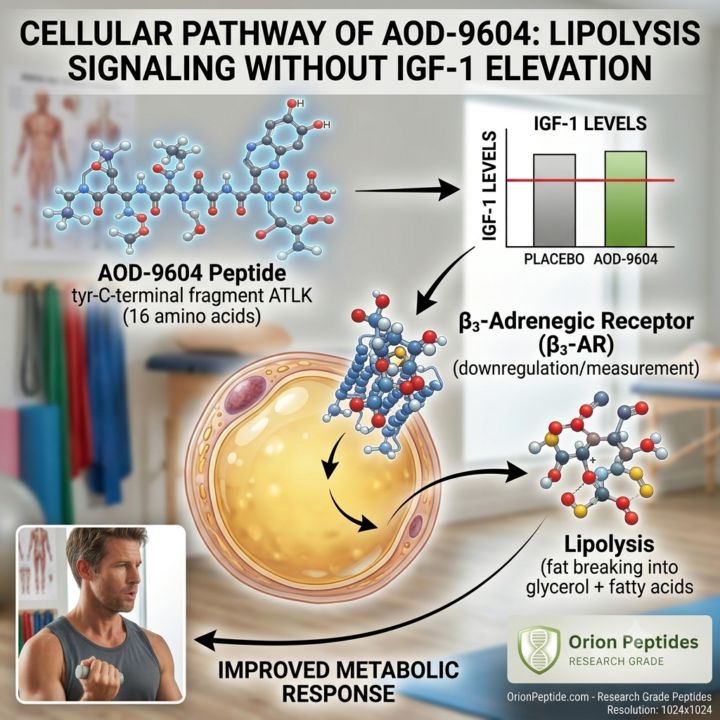
AOD-9604 Cellular Pathway – Skool Summary
What It Is: Synthetic 16-aa peptide from hGH C-terminus. Mimics fat-burning effects of growth hormone WITHOUT raising IGF-1. Key Mechanism: - No hGH receptor binding – bypasses IGF-1 axis entirely - No IGF-1 elevation – confirmed in clinical trials - No negative impact on glucose metabolism – unlike full-length hGH The Pathway: 1. Increases β₃-adrenergic receptor (β₃-AR) expression in fat cells 2. Enhances lipolytic sensitivity over time 3. Stimulates fat breakdown (lipolysis) and fat oxidation 4. Additional unknown pathways may also contribute Key Takeaway: AOD-9604 isolates lipolysis from growth-promoting effects – clean fat metabolism signaling without the hormonal baggage. https://medium.com/p/53adb3809731?postPublishedType=initial For research-grade AOD-9604 and other peptides, check OrionPeptide.com – lab-tested quality you can trust.
0
0

Jan 6 •
🛑 Community Rules: Read Before Posting 🛑
Welcome to the team! To keep this space free, educational, and safe for everyone, please read and respect the following guidelines. We are here to research and learn, not to spam or endanger others. 1. NO Selling or Solicitation (Zero Tolerance)🚫 : - Do not use this group to sell your own products, promote your own affiliate links, or push "Underground Lab" (UGL) items. - Any member caught sliding into DMs to sell substances or unverified services will be banned immediately. 2. This is NOT Medical Advice ⚠️ - While I am a professional Biohacking Coach and Trainer, I am not a doctor, and neither are most members here. - Everything shared here is for informational, educational, and research purposes only. - Do not prescribe protocols to others as absolute medical fact. - Always consult with a qualified medical professional (like our partners at Optimal Clinic) before starting any new therapy. 3. Research & "Bro-Science" 🧪 - We love new experiments, but please distinguish between anecdotal experience (what worked for you) and scientific fact. - If you make a bold claim, try to back it up with a source or clearly state that it is just your personal experience. - Help us fight misinformation by calling out bad data respectfully. 4. Respect & Professionalism 🤝 - We are navigating a complex industry together. Treat fellow researchers with respect. - No flaming, harassment, or bullying. - Disagreements are fine; disrespect is not. 5. Privacy Matters 🔒 - Do not post private personal information (addresses, phone numbers, etc.) or sensitive payment details regarding vendors publicly. Keep the feed clean and safe. 🔒
3d •
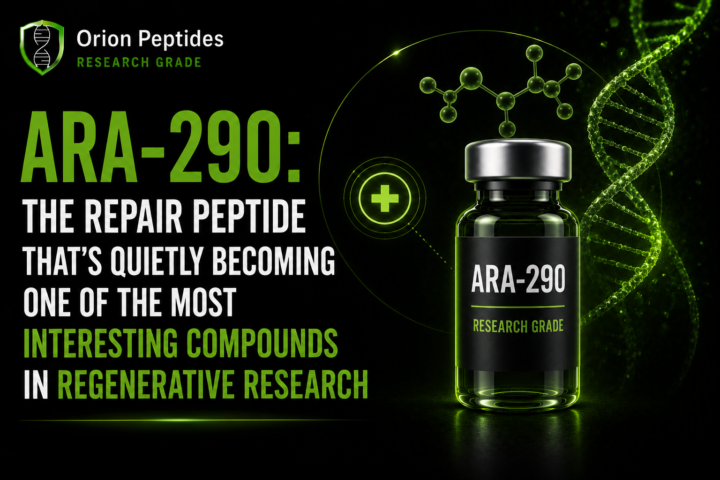
ARA-290: The Repair Peptide That's Quietly Becoming One of the Most Interesting Compounds in Regenerative Research
Before we dive in, I'd like to thank Orion Peptides for supporting the educational content I create. Their support gives me the time to review the latest research, read through published studies, and turn complex science into practical articles that anyone can understand. If you decide to support them, you can use code Parker15 for 15% off your order. Every so often, a peptide comes along that flies under the radar. It doesn't have the mainstream attention of GLP-1 medications. It isn't discussed as often as BPC-157 or TB-500. And yet, when you start reading the research, you quickly realize it's doing something fundamentally different. ARA-290 is one of those peptides. Rather than stimulating growth hormone, altering appetite, or acting directly on muscle tissue, ARA-290 targets one of the body's own repair systems—one that only becomes active when tissue is under significant stress. That unique mechanism is why researchers have become increasingly interested in its potential role in nerve repair, inflammation, and tissue recovery. What Is ARA-290? ARA-290 (also known as cibinetide) is a small synthetic peptide derived from the structure of the hormone erythropoietin (EPO). Most people recognize EPO because of its role in stimulating red blood cell production. However, researchers discovered that EPO appears to have another completely separate function. Beyond regulating red blood cells, EPO can also activate pathways involved in tissue protection and repair. The problem is that full-length EPO also increases red blood cell production, which isn't desirable when researchers are studying tissue repair alone. ARA-290 was designed to separate these effects. It retains the tissue-protective signaling while avoiding the erythropoietic effects associated with traditional EPO. The Innate Repair Receptor The real story begins with something called the Innate Repair Receptor (IRR). Unlike many receptors that are continuously active throughout the body, the IRR behaves differently.
1
0
3d •
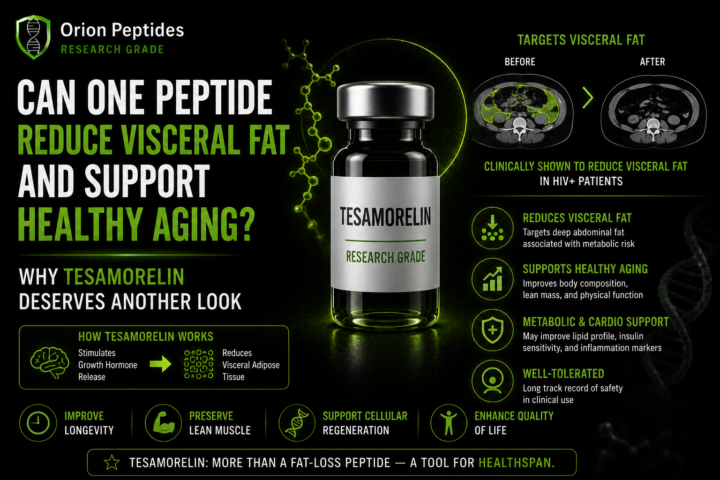
Can One Peptide Reduce Visceral Fat and Support Healthy Aging? Why Tesamorelin Deserves Another Look
Before we jump in, a quick thank you to Orion Peptides for supporting the educational content I create. Their support allows me to spend hours reviewing the literature and translating complex peptide research into articles that are easy to understand. If you decide to support them, you can use code Parker15 for 15% off your order. If you've followed my blog for a while, you'll know we've covered Tesamorelin before. But with several fascinating studies continuing to shape the conversation around metabolism, body composition, sleep, and even healthy aging, I think this peptide deserves another look. Because while most people associate Tesamorelin with fat loss... The science suggests that may only be part of the story. More Than a Fat-Loss Peptide Tesamorelin is a synthetic analogue of growth hormone-releasing hormone (GHRH). Unlike growth hormone itself, Tesamorelin doesn't replace anything. Instead, it signals the anterior pituitary gland to release your body's own growth hormone through its normal physiological pathways. That distinction matters. Rather than delivering supraphysiological amounts of growth hormone directly, Tesamorelin works upstream, allowing the body's feedback mechanisms to remain involved in regulating growth hormone secretion. This mechanism has made Tesamorelin one of the most extensively studied peptides affecting the growth hormone axis. The Human Research on Visceral Fat Is Impressive One of the strongest areas of evidence comes from randomized controlled clinical trials examining visceral adipose tissue (VAT). Visceral fat is very different from the fat just beneath the skin. It surrounds internal organs and is strongly associated with: - Insulin resistance - Type 2 diabetes - Cardiovascular disease - Fatty liver disease - Chronic inflammation - Metabolic syndrome Unlike subcutaneous fat, visceral fat is metabolically active and produces inflammatory molecules that may negatively affect long-term health.
1
0
1-30 of 1,033
powered by

skool.com/biohacking-and-longevity-group-3757
All-in-one peptide education community. 🧪
Dosing guides, storage protocols, stacking frameworks, vendor intel, GLP-1 research, and expert support.🧬
Suggested communities
Powered by