
Write something

Jan 21 •
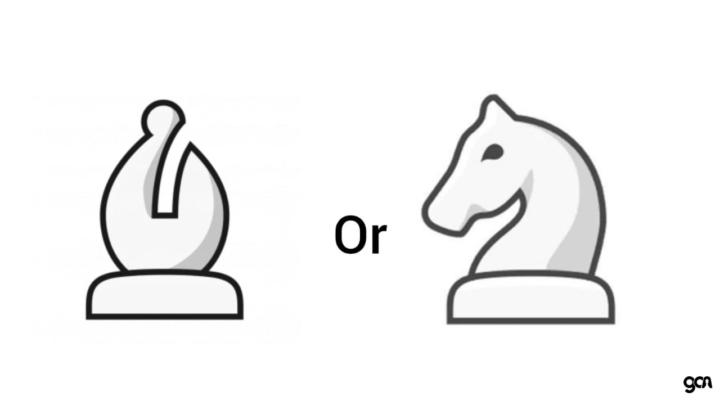
🐴 Bishop or Knight — Which to Keep in the Endgame?
One jumps over heads, the other shoots along diagonals. They’re compared to a katana and a battle‑axe. But who is truly stronger in a real game — the 🐴 knight or the 🐘 bishop? 🧩 Everything depends on the position and the stage of the game. Here’s how their strength differs: 🔹 Opening: The knight enters the stage first. Its path is clear — c3/f3 or c6/f6. The bishop needs space: until the center clears, it waits. 🗣 “Knights are developed first, bishops — when there’s a target.” 💡 For beginners — a reliable rule: bring out your knights first. 🔹 Middlegame: ▪️ In open positions, the bishop shines: it maneuvers quickly, attacks on both flanks, works well in pairs. ▪️ In closed positions, it’s the knight’s time! It hops over pawns, finds holes in the defense, and sets up outpost shows. 💣 Combo: Two bishops in an open position — almost a weapon of mass destruction. 🎯 The bishop strikes fast, but only on its color. The knight is slower, but can reach any square (not immediately, but it will). 🔹 Endgame: ▪️ Pawns on one flank? The knight rules. It’s mobile in a small area, while the bishop loses its “long‑range advantage” here. ▪️ Pawns on both flanks? Choose the bishop. It reaches the needed sector faster and doesn’t tire. ▪️ Short on time? Opponents more often blunder against knights — forks are hard to calculate in time trouble. 📊 Pro statistics: In practical games (without the bishop‑pair), the knight wins more often (~55%). But this isn’t a “law,” just a trend — the specific position matters more. 🧠 Conclusion: The bishop — ideal in spacious battles. The knight — the god of chaos and outposts. Before exchanging minor pieces, ask yourself 4 questions: 🔹 Where are the pawns? 🔹 Is the board open? 🔹 Which piece is more active? 🔹 How much time is left? And remember: an active knight is better than a passive bishop, and vice versa. 🎭 In the end, it’s not the piece that decides — it’s your choice. So which one will you keep on the board? 🔥 — Team Knight ❤️🔥 — Team Bishop
1
0
Jan 21 •
Chess960: What it is and how it differs from classical chess?
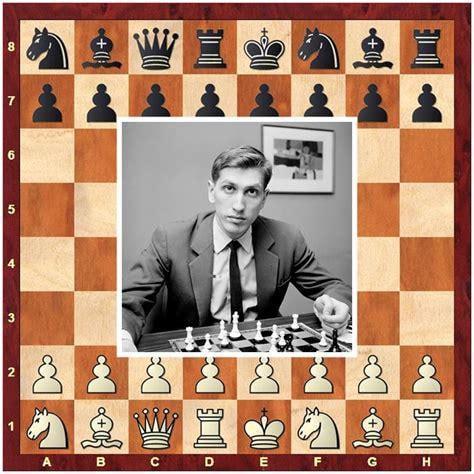
Origin Story: Chess960, also known as Fischer Random Chess, was invented by former world champion Bobby Fischer in 1996. Legend has it that Fischer grew tired of memorized openings and decided to shake up the chess world with a random starting setup. The name "960" comes from the number of possible starting positions – no more dull, repetitive openings; every game is a lottery! Main Rules and Differences: At the start of the game, pieces are placed randomly on the back rank (mirrored for White and Black) according to specific rules (the king must always be placed between the two rooks to allow for castling). As a result, familiar opening patterns vanish – there's no Ruy Lopez or Sicilian Defense in their traditional forms. You have to think for yourself from the very first move. Castling in Chess960 is possible, but it's executed relative to the king's and rook's final positions (another little surprise for the uninitiated). Otherwise, all standard chess rules apply: the goal is to checkmate the opponent's king. Advantages of Chess960: The main benefit is the removal of theoretical burden. You don't need to memorize entire opening encyclopedias: even a grandmaster can't prepare all 960 possible setups at home. This fosters creativity and flexible thinking – the player who navigates unfamiliar positions better wins, not the one with the thickest opening notebook. Strategy is built on general principles and understanding, not on long, memorized lines. For amateurs, it's a true delight: you can play a friend without fearing they'll crush you with book knowledge in the opening. Impact on Playing Style and Preparation: In Chess960, improvisation is required from the very first moves. Players admit it feels like returning to childhood, when they didn't know any theory – every move is full of mysteries. 😅 The style of play shifts toward creativity: universal skills like tactics, strategy, and positional understanding are highly valued, as there's no reliance on home preparation. Preparation for games is also unique: instead of analyzing the opponent's specific lines, players train general principles and the quick evaluation of unfamiliar positions. This format is excellent for sharpening the mind and teaching independent thinking, without leaning on pre-learned theory.
1
0
Jan 21 •
The London System: Why Has It Become So Popular Lately?
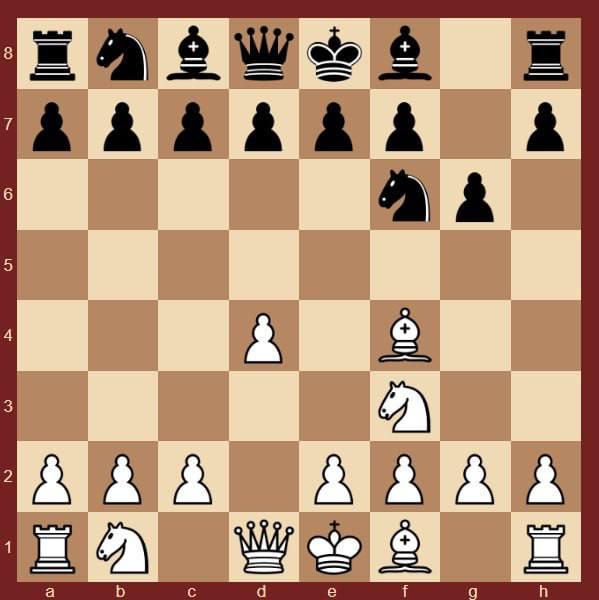
The Idea Behind the Opening: The London System is an opening where White builds an impenetrable fortress from the very first moves. The bishop goes to f4 (the main "trick" of the London), pawns are placed on d4, e3, c3, knights usually on f3 and d2. The result is a flexible and solid position without weaknesses. White doesn't rush into an immediate attack but calmly develops pieces, preparing to respond to any moves by Black. It's like setting up a defense and telling the opponent: "Alright, now figure out how to break through." Advantages for Different Skill Levels: For beginners, the London System is a true godsend. You don't need to memorize hundreds of theoretical moves: you build a familiar structure and achieve a solid game. Made a mistake in the move order? Not a big deal, the position remains resilient. For advanced players, the "London" is also appealing: there's less risk of falling into the opponent's home preparation, and opening traps are minimized. And if the opponent gets careless, you can shift from quiet play to a lightning-fast attack – the London also has sharp variations. Which Top Players Use the London? Just 15 years ago, only a handful of players experimented with this opening, but now even world champions are happy to employ it. Magnus Carlsen occasionally plays the London System, especially in rapid games – and very successfully. Grandmaster Gata Kamsky famously loved the London long before it became mainstream, and he helped breathe new life into the opening. Other elite players have joined in: from Vladimir Kramnik to Hikaru Nakamura – all have tested the "London" in tournaments. When you see such a weapon earning points, it's hard to resist. Modern Trends: In online chess, the London System has become almost the trendiest opening. Popular streamers and coaches recommend it to beginners because it's easier to grasp one systematic approach than tons of theory from, say, the Ruy Lopez. As a result, on Chess.com and Lichess, every second player with White chooses the London – a kind of chess hit. Jokers even call it the "London Invasion". 😊 However, the results speak for themselves: the opening is genuinely effective. Simplicity + Reliability = Popularity – that's the formula for its success.
1
0
Jan 21 •
When the Computer Beat the Champion (The Deep Blue vs. Kasparov Match)
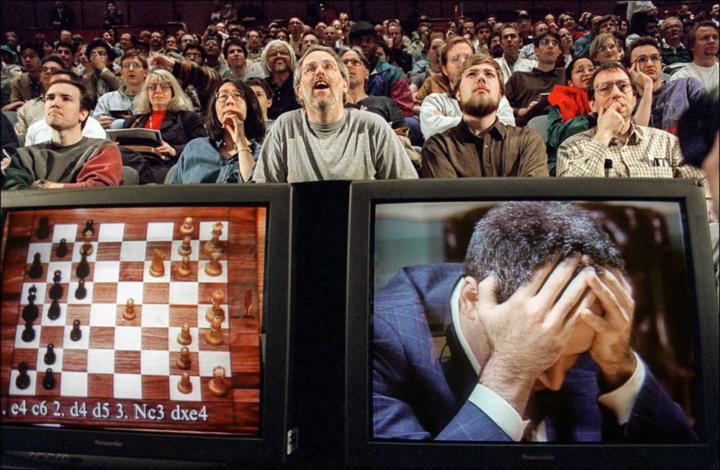
The IBM Deep Blue supercomputer on display at the Computer History Museum. In 1997, this very computer became the first to defeat the reigning world chess champion (Garry Kasparov) in a match. In May 1997, a rematch between man and machine, straight out of a sci-fi plot, took place. World Champion Garry Kasparov faced off against Deep Blue – IBM's most powerful chess computer. The year before, Kasparov had defeated the machine's first version, but the upgraded Deep Blue took its revenge, winning the match with a score of 3½–2½. This was the first time in history a computer had beaten the reigning world champion, ushering in a new era for chess. A shock? You bet! It felt like a "Terminator" had arrived on the chessboard. Deep Blue could evaluate up to 200 million positions per second – a feat beyond the wildest dreams of any grandmaster. In the photo: Spectators in New York watch the broadcast of the decisive game (May 11, 1997). Kasparov himself was stunned by the outcome – after the final loss, he left the hall in complete shock at having been outplayed by a machine. Later, the frustrated champion even accused the IBM team of foul play, suggesting that grandmasters had assisted the computer with key moves. (Subsequently, after analyzing the games, Kasparov acknowledged his defeat and retracted his accusations.) After his loss, Kasparov admitted that in some of the machine's moves, he felt "something different from human logic." However, if you can't beat them, join them: today, all top grandmasters train with computers, analyzing games and preparing openings with chess engines. A modern smartphone already surpasses that very Deep Blue in playing strength, and engines like Stockfish or AlphaZero leave humans with no chance at all. So, don't be upset if you lose to a chess app on your phone – even the legendary Kasparov once found himself in the same boat. The main thing is to learn from these silicon coaches and keep enjoying the game! ❤️🔥 - Computers have made chess better
1
0
Jan 21 •
♟ A fork is definitely not a piece of cutlery, but a formidable weapon on the chessboard.
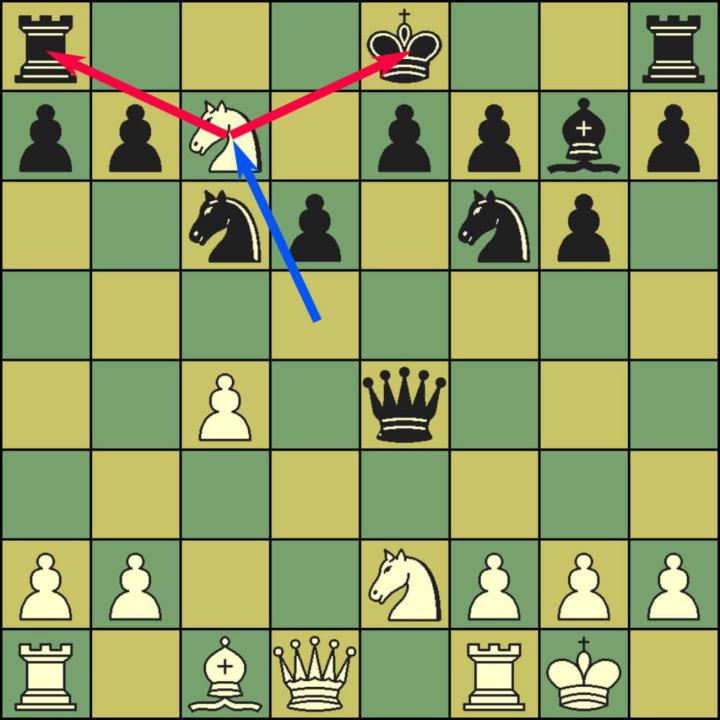
What is a fork? A fork is a tactical situation where one piece attacks two (or more) of the opponent's pieces simultaneously. This "double threat" often leads to a material gain, as it's impossible to defend all attacked targets in one move. 🐴 The knight is the most frequent forking piece, thanks to its unique "L"-shaped move. ♟ The pawn is no slouch either: it can sacrifice itself to snatch a more valuable piece (in such cases, it's often called a "double attack"). Example: A white knight on c7 simultaneously attacks the king on e8 and the rook on a8. How to use a fork? · Evaluate the position carefully: Can you "pick up" two of your opponent's pieces at once? · Protect your own pieces: Don't leave them on squares where a knight, pawn (or sometimes even a queen, bishop, or rook) can deliver a double attack. A fork can change the outcome of a game – keep it at the ready (just not the dinner kind!) and collect trophies from the board. SOLVE FORK PUZZLES (https://lichess.org/training/fork) The best way to master this tactic is to solve 20-30 puzzles on the theme of forks. I even run a "50 Fork Puzzles Marathon" for my students and love watching their ratings grow! Give it a try and come back with your results!
0
0
1-21 of 21
powered by
skool.com/gca-chess-library-3479
• Studios with openings and traps from videos
• Training, biohacking, articles, tournaments
Suggested communities
Powered by