Activity
Mon
Wed
Fri
Sun
Jan
Feb
Mar
Apr
May
Jun
Jul
Aug
Sep
Oct
Nov
What is this?
Less
More
Owned by Lane
Welcome to SEO Success Academy – the ultimate destination for business owners, digital marketers and agencies to master the art and science of SEO.
Memberships
Agency MVP Powered by UpHex
402 members • Free
Agent-N
6.2k members • Free
Assistable.ai
3k members • Free
AI Customer Machine
948 members • Free
TexAu: Data and AI for Sales
322 members • Free
Skoolers
180.2k members • Free
Google Ads Skool
4.1k members • Free
418 contributions to SEO Success Academy

2d •
Don’t Panic: Why AI Search Won’t Kill Your Most Valuable Traffic
The prevailing narrative around AI search has been one of existential threat. We’ve been told that as AI Overviews and AI Mode become the default, website traffic will inevitably decline, starved of the clicks that have fueled digital marketing for decades. However, this doomsday scenario is largely based on studies focused on informational queries—the “how-to” and “what-is” searches that AI is perfectly designed to answer directly. But what happens when the user’s intent shifts from learning to buying? A new study focused specifically on transactional queries reveals a much more optimistic picture. New user experience (UX) research focused on high-involvement services like finding a doctor or dentist shows that for transactional searches, AI Mode is not a traffic killer. In fact, it’s the opposite. When users are looking to make a purchase or book a service, they don’t want a single, definitive answer from an AI. They want a curated list of options to evaluate. This fundamental difference in user behavior means that your most valuable traffic—the users who are ready to pay you—is not going away. It’s just changing the rules of engagement. The End of ‘Winner-Takes-All’ SEO For years, the goal of SEO has been to secure the coveted #1 ranking, a position that historically captured the lion’s share of clicks and rewards. The new study demonstrates that AI Mode fundamentally breaks this model. When searching for services, an overwhelming 89% of users clicked on more than one business. They are not looking for a single recommendation; they are using the AI-generated results to build a consideration set. On average, users in the study checked 3.7 different businesses before making a decision. This represents a massive paradigm shift for marketing leaders. The obsessive, often resource-intensive pursuit of the top spot is no longer the only path to success. The new goal is to secure a position within the top three to five results—the consideration set. If you are in that group, you have a real chance to win the customer. This levels the playing field and creates new opportunities for brands that may have previously struggled to compete for the #1 rank.

0 likes • 4h
@Abe K yes sir great points right there! Thank you for adding in your insights and wisdom as well :)
5h •
Beyond Clicks: Are Your SEO Metrics Becoming Obsolete?
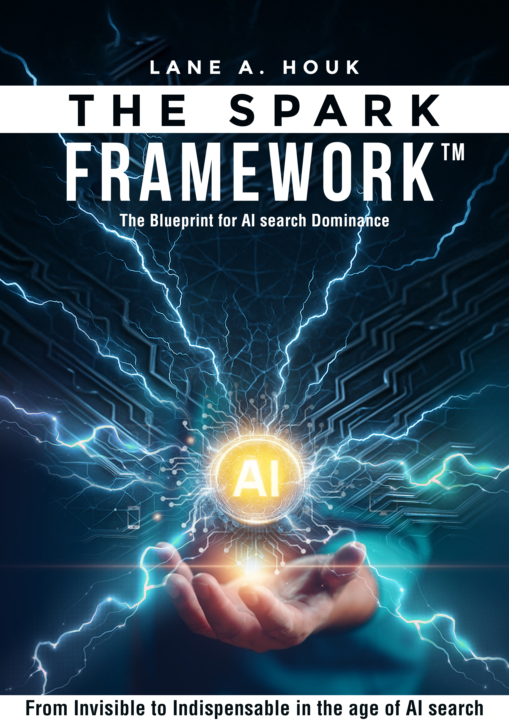
As SEO professionals, we're witnessing a fundamental shift. While we've mastered tracking clicks and rankings, AI Overviews and direct answers from platforms like ChatGPT are changing the game. Our clients' content is being used, but the value isn't always captured in our traditional analytics. This isn't just about adapting; it's about evolving our strategy. The SPARK Framework™ was developed for this exact challenge. It provides a structured methodology to move from a keyword-centric approach to an entity-based one, focusing on becoming the citable authority that AI models trust. For example, the Answer Readiness pillar isn't just about FAQs; it's about structuring data so effectively that AI systems can directly synthesize it into answers, positioning your brand as the source. Question for the community: How are you adapting your client reporting to demonstrate value when success is a citation in an AI answer, not just a click-through?
0
0
5h •
Navigating the New SEO Landscape: Key Google Updates for Marketing Leaders
Google is rapidly evolving its search ecosystem, introducing a series of updates that directly impact how marketing leaders must approach their strategies. Three recent changes—an AI-powered configuration in Google Search Console, anonymous reviews in Google Maps, and a new user flow from AI Overviews to AI Mode—signal a clear direction toward a more automated, user-centric, and AI-driven future. For executives, understanding the strategic implications of these shifts is critical for maintaining a competitive edge. 1. Search Console Gets an AI Assistant for Faster Reporting Google has begun rolling out an experimental AI feature within the Search Console's Performance report. This new tool allows users to describe the data view they need in plain English, and the system automatically configures the appropriate filters, comparisons, and metrics. For example, a marketing manager could type "compare clicks from the UK versus France," and the AI will generate the corresponding report without manual setup. From a leadership perspective, this is a welcome productivity enhancement. It empowers teams to conduct complex data analysis more efficiently, reducing the time spent on repetitive report building and freeing up resources for higher-value strategic work. However, it is not a substitute for analytical expertise. Leaders must ensure their teams continue to verify the AI's output, as a slight misinterpretation of a natural language prompt could lead to flawed insights. While this feature streamlines configuration, it does not yet provide the much-anticipated data on traffic from AI Overviews or AI Mode, which remains a critical blind spot for performance measurement. 2. The Rise of Nicknames in Google Maps Reviews In a significant shift for local SEO, Google Maps now permits users to leave reviews using a custom display name and profile picture rather than their real Google Account name. While the underlying account remains visible to Google, this change introduces a layer of public-facing anonymity that alters the dynamics of online reputation management.
0
0

10h •
Social Media Now Outranks Search for SMB Traffic, New Survey Reveals
A fundamental shift is underway in how small and medium-sized businesses (SMBs) acquire customers online. For the first time, social media has surpassed organic search as the primary source of website traffic, according to a new survey from WordStream by LocaliQ. This finding, coupled with a growing frustration over AI’s impact on search visibility, signals a critical inflection point for marketing leaders and business owners. The data reveals that 64% of SMBs now list social media as a main traffic driver, edging out organic search at 52%. This trend is particularly pronounced among solopreneurs and micro-businesses, many of whom are finding that social platforms and online marketplaces provide sufficient lead flow to bypass the need for a traditional website altogether. This shift challenges the long-held belief that search is the undisputed king of inbound marketing and forces a re-evaluation of where to allocate precious marketing resources. The AI Disruption: Frustration and Opportunity The rise of AI-powered search is adding another layer of complexity. A significant 40% of SMBs report losing traffic due to Google’s recent updates and the integration of AI Overviews. While most (72%) still believe their SEO efforts are effective, there is a growing sense of unease as they see competitors appearing in AI-generated summaries where they do not. This has become the biggest frustration for small businesses, who feel they are losing control over their brand’s visibility at the most critical stage of the buyer’s journey. However, the survey also uncovers a silver lining. AI models often pull information from a wider range of sources than the top 10 traditional search results, creating a rare opportunity for smaller brands to gain visibility they would not normally earn. This has led to a surge in awareness and tracking, with 50% of all SMBs—and 70% of larger ones—now actively monitoring their AI referrals and mentions. The data makes it clear: AI-driven traffic is no longer a theoretical concept but a tangible and trackable channel that businesses can and should optimize for.
0
0

1d •
The New Structure of AI-Era SEO: What Matters Now
The ground has shifted. The skills and strategies that defined SEO for the last two decades still matter, but they don’t carry the same weight or apply for the same reasons. As generative AI becomes the primary layer for information discovery, marketing leaders are grappling with a critical question: what does it actually take to stay visible? The answer is not a complete reset, but a strategic restructuring. The new model for AI-era SEO can be understood as a three-layered framework that separates the timeless fundamentals from the newly mandatory disciplines and the entirely new competitive edges. Understanding this structure is the key to moving from a place of uncertainty to one of strategic clarity. Layer 1: The Fundamentals That Are Now Non-Negotiable This first layer contains the work every experienced SEO already knows, but the cost of getting it wrong has skyrocketed. Large Language Models (LLMs) are unforgiving when it comes to ambiguity. They depend on clear access, clear language, and stable topical relevance. The fundamentals are no longer just best practices; they are the price of entry. Semantic alignment remains critical, but it has evolved from matching keywords to matching user intent with absolute clarity. LLMs evaluate meaning, not just words. Direct answers, a skill honed during the era of featured snippets, are now essential for signaling confidence to the model. If the answer isn’t in the first few sentences, you risk being bypassed entirely. Technical accessibility and content freshness are more important than ever, as they directly impact the quality of your vector index and the model’s trust in your information. Finally, topical authority has become even more pronounced. LLMs look for patterns of expertise, and thin content strategies that prioritize coverage over depth will collapse. Layer 2: The Optional Work That Became Mandatory This second layer includes tasks that many SEOs treated as optional or secondary. In the AI era, these disciplines have moved from the “nice-to-have” to the “must-do” category, as they directly affect chunk retrieval, embedding quality, and citation rates.
0
0

1-10 of 418

@lane-houk-2084
Lane is a US Army veteran and a recognized expert in the digital marketing and SEO industries.
Active 4h ago
Joined Sep 11, 2024
Colorado
Powered by