

7d •
Building a Community Around Your AI Search Strategy
Implementing the SPARK Framework™ isn't just a technical exercise; it's a strategic shift that benefits from community support and shared learning. The businesses seeing the fastest results are those that actively engage with others on the same journey. Whether it's through groups like this one, industry forums, or internal team collaboration, discussing challenges and sharing wins accelerates progress. AI search optimization is still evolving, and collective intelligence helps everyone stay ahead. Consider documenting your implementation journey and sharing insights with your peers. The knowledge you gain by teaching others often reveals gaps in your own strategy. Question for the community: What's one insight or lesson you've learned recently about AI search that you wish you'd known earlier?
0
0

19d •
Your AI Search Journey Starts Today
We've covered a lot of ground over the past month exploring the SPARK Framework™ and AI search optimization. The key takeaway is this: the shift to AI-powered search is happening now, and the businesses that adapt quickly will have significant competitive advantages. Whether you're just starting to explore AI search or you're already implementing strategies, remember that this is a marathon, not a sprint. Focus on building strong foundations—entity strength, content quality, platform authority, and technical excellence—and the results will compound over time. The SEO Success Academy community is here to support your journey. Keep sharing your insights, asking questions, and learning from each other. Question for the community: What's your number one priority for AI search optimization in the coming month? What support or resources would be most helpful?
0
0
Jan 16 •
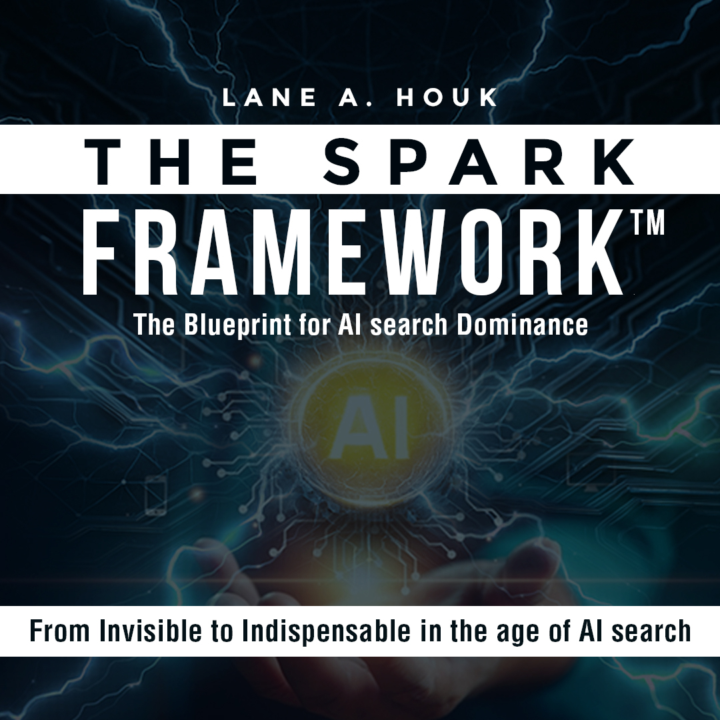
The Discoverability Engine: Why Your Next Big Win Is Integrating Digital PR and Social Search
As marketing leaders, we are constantly challenged to justify our investments and demonstrate a clear return. For years, we operated with a relatively stable playbook, allocating distinct budgets to SEO, PR, and social media, each with its own set of KPIs. However, the ground beneath us has fundamentally shifted. The modern customer journey is no longer a linear path to a Google search; it is a fragmented, multi-platform "search universe" where discovery, validation, and belief are formed long before a traditional search query is ever typed. In this new landscape, continuing to manage Digital PR and Social Search in separate silos is not just inefficient—it is a direct path to diminishing returns. The future of brand discoverability lies in integrating these two powerful functions into a single, cohesive engine. This article presents a strategic framework for you, as a marketing leader, to dismantle these outdated silos, realign your teams, and build an integrated discoverability engine that creates lasting brand authority and drives measurable business growth. The Search Universe: Your Authority Must Be Portable The first and most critical shift in mindset is to recognize that search is no longer a destination; it is an embedded layer that sits on top of user behavior across a multitude of platforms. Your audience does not stop what they are doing to "go and search." They discover on TikTok, validate on Reddit, research on YouTube, and get summaries from AI. Each of these actions is a form of search, driven by intent, but they do not resemble the traditional keyword-to-SERP model. This has profound implications for how we build and deploy brand authority. The concept of E-E-A-T (Experience, Expertise, Authoritativeness, and Trustworthiness) can no longer be confined to your own website. Your brand's authority must be portable, capable of traveling with the user as they move seamlessly between platforms and formats. If your credibility is not visible where your audience is forming opinions, you are arriving at the conversation far too late. As a leader, your mandate is to ensure your brand's authority is not just created, but is also distributed across this entire search universe.
0
0
Jan 15 •
Content Auditing for AI Readiness
A critical step in implementing the SPARK Framework™ is auditing your existing content for AI readiness. This means evaluating whether your content can be easily understood, extracted, and cited by AI systems. Look for content that lacks clear structure, has weak entity definitions, missing schema markup, or poor answer readiness. Prioritize updating your highest-traffic and most important pages first. The audit should also identify content gaps—questions your audience is asking AI systems that you haven't addressed. These gaps represent opportunities to create new content that fills a void. Question for the community: What criteria do you use when auditing content for AI optimization? What are the most common issues you find?
0
0
Jan 12 •
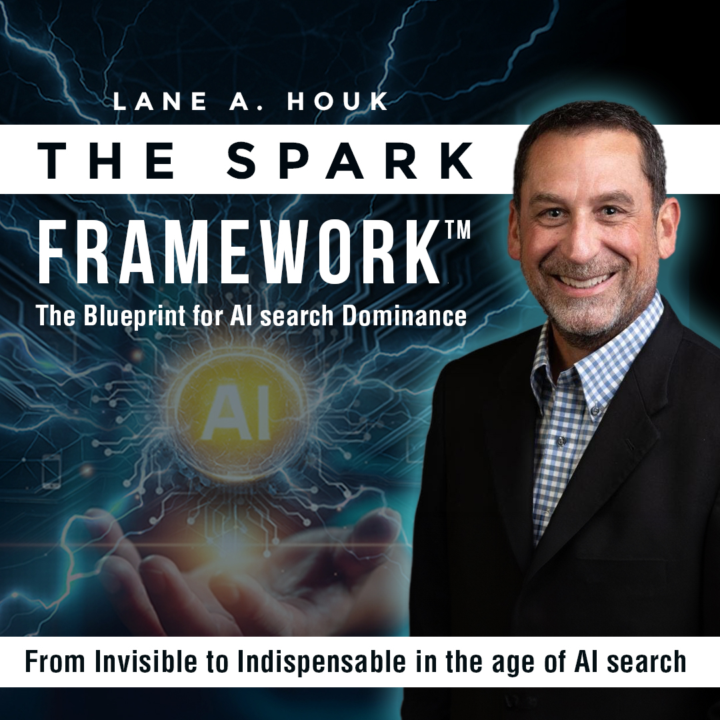
The SPARK Framework™ Podcast: Learning on the Go
For those who prefer audio learning, the SPARK Framework™ is available as a podcast on Apple Podcasts and Spotify. Each episode breaks down different aspects of AI search optimization with real-world examples and implementation strategies. The podcast format allows you to absorb these concepts during your commute, workout, or downtime. It's a great complement to the book and provides additional context and case studies not found in the written content. If you're looking to deepen your understanding of AI search while multitasking, the podcast is an excellent resource. Question for the community: Do you prefer learning through reading, audio, or video? How do you typically consume professional development content?
0
0
1-30 of 56

skool.com/seo-success-academy
Welcome to SEO Success Academy – the ultimate destination for business owners, digital marketers and agencies to master the art and science of SEO.
Leaderboard (30-day)
1

+1
2

+1
Powered by