Activity
Mon
Wed
Fri
Sun
Jun
Jul
Aug
Sep
Oct
Nov
Dec
Jan
Feb
Mar
Apr
May
What is this?
Less
More
Owned by Eileen
Where horse people come to learn ,share, and occasionally go 'oh THAT’S why!' Join our global herd shaping ethical equine-assisted work. Free for now.
A calm, practical space for overwhelmed EA practitioners to find focus and reduce workload using The Realistic Phased Growth System.
Memberships
Work Boots to WiFi with Suzie
53 members • Free
INFLAMELESS LIVING
93 members • Free
DIGITAL PROFITS COLLECTIVE
1.1k members • Free
✨💗🦋 Light Heart Vision
160 members • Free
Still Rising
90 members • Free
The Directory On Skool
601 members • Free
Rich Witch Magick
299 members • Free
Skool Launch Lab
346 members • Free
Ricochet
206 members • Free
5 contributions to INFLAMELESS LIVING

🔥
1d •
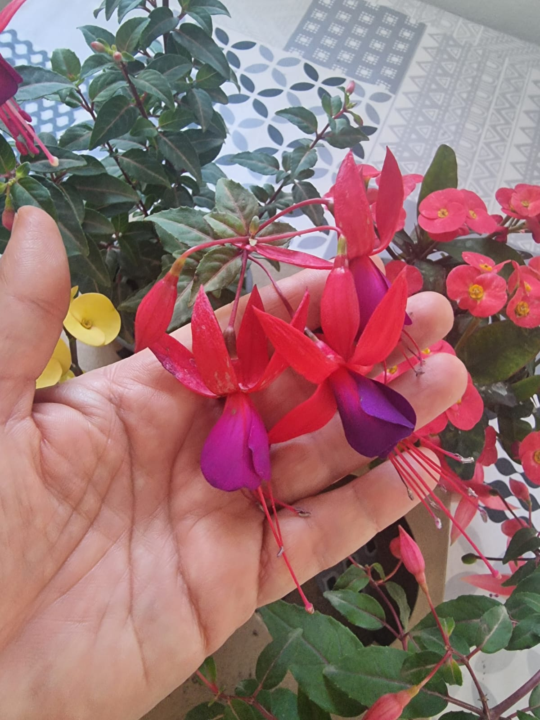
💮🥀🌻💮🥀🌻Happy Mother´s Day! 💮🥀🌻💮🥀🌻
Today we celebrate Mother´s Day here in Spain (we celebrate it the first Sunday in the month of May). So I´ve got my presents - these lovely flowers that I will plant today - so today I will be working in my garden a lot (tomatoes to be raised, we have to prune some trees and plant some more herbs). I hope you all have a beautiful Sunday and share some photos to see what you are up to :))

4 likes • 1d
Happy Mother’s Day 😍
🔥
1d •
SUNDAY STORY: The Desert That Refuses to Drink
In the Mojave desert, the rains arrive in late summer like a long-overdue promise. After months of cracked earth and merciless heat, the clouds finally break open and the rain pours down and the ground does something that defies every instinct. It refuses to drink. Geologists call this hydrophobicity. The extreme heat, combined with resins released by desert plants, creates an invisible waxy crust on the surface of the soil. The rain lands, beads up and rolls away. The harder it pours, the faster the water escapes. The earth has simply forgotten how to receive the rain. Something almost identical happens inside the human body when it develops insulin resistance, and understanding the parallel may be one of the most useful things we can do for our long-term health. Every time we eat, the pancreas releases insulin, a hormone that functions as a biological key. It travels through the bloodstream to our cells, fits into a specific receptor, and turns it, allowing glucose to enter and be burned as energy. In a healthy body, this is an elegant, almost effortless choreography. A meal arrives, insulin rises gently, cells open, energy flows in, and the signal quiets. Like rain falling on soft soil, everything is absorbed in its own time. But our modern food environment has fundamentally changed our metabolism. When we consistently eat highly processed carbohydrates and added sugars - things that break down almost instantly into glucose - the insulin signal never gets to quiet. And just as the desert soil develops its waxy crust as a response to relentless heat, our cells begin to protect themselves from the relentless flood of insulin by pulling their receptors inward. They grow numb to the signal. This is insulin resistance - and it is important to understand that it is not a failure of the body. It is the body doing exactly what a body does: adapting to its environment, protecting itself from what it perceives as excess. The cell, overwhelmed by a constant influx of energy it cannot process, locks its own door. The problem is that a protective adaptation, sustained long enough, becomes its own disease.

3 likes • 1d
That is fascinating. Thank you for the great explanation 😍

3d •
This is how your body tells you it's losing capacity!
Most people don’t realize they’re losing strength, balance, and mobility until everyday things start feeling harder. It could be things like getting up from the floor, walking upstairs without using the railing, standing on one leg while putting on shoes or turning quickly without feeling a bit unstable... We tend to call this 'ageing', but it’s often a mix of not enough movement, not enough strength training and, of course, not giving your body what it needs to maintain muscle and move well. Muscle doesn’t just disappear with time. It disappears when we don’t use it (use it or lose it, remember?!) … and when we don’t support it (protein being a big one). The same thing is true for stiffness. It's not just “tight muscles”, it can also be linked to recovery, inflammation, hydration, and how we fuel the body. A simple self-check: 1. Stand on one leg for 30 seconds (no support) 2. Sit down and get up from the floor without using your hands 3. Bend forward and try to touch your toes without bending your knees Give them a try! If one felt harder than expected, that’s not a failure, it’s feedback...Your body is asking for a bit more support (movement, strength, working on your balance… and better fuel). I'm curious to read how did it go in the comments!👇
5 likes • 2d
I was better at this a month ago but April has been a bit of a disaster health-wise 😳 I’ll be back at CrossFit next week 🤞🤞🤞🤞
🔥
Mar 8 •
Sunday Story: The River That Cleans Itself at Night
In Iceland, glacial rivers run milky and turbid through the day. Meltwater from ancient ice carries sediment, mineral dust and debris accumulated over centuries. But return to the same riverbank at dawn, after a still and silent night and there is a huge change. The current that flows past you is clean, pale blue, almost crystalline. The river cleaned itself, quietly, while the world was resting. Something similar happens inside your brain every night. Scientists once believed the brain had no lymphatic system, no internal cleansing network of the kind that drains the rest of the body. Then, in 2013, a landmark discovery changed everything. Researchers found a hidden channel system running alongside the brain’s blood vessels, driven not by a pump, but by the slow, rhythmic pressure of cerebrospinal fluid. They named it the glymphatic system. And it only works at full capacity during deep sleep. During the day, as your brain works hard to think, perceive, and feel, it generates metabolic debris: used proteins, oxidative byproducts and most critically, amyloid-beta and tau, the same proteins associated with neurological decline when they accumulate too much. This is not a flaw in the brain’s design. It is simply the cost of thinking. But as you fall into deep, slow-wave sleep, something remarkable happens. The brain’s cells shrink by nearly 60%, widening the channels between them. Cerebrospinal fluid surges through those newly opened spaces. Waste proteins are pulled from the tissue, carried along the glymphatic channels, and flushed toward the liver and lymphatic system for disposal. The brain, quite literally, washes itself clean. The Icelandic river cleans itself but if something blocked the stillness of the night the sediment would build and the water would remain clouded. Over time, the riverbed would shift. Chronic sleep deprivation does exactly this to the brain. Without sufficient slow-wave sleep, the glymphatic system does not work properly and the proteins accumulate. Inflammation rises quietly in the brain tissue. Research links poor sleep hygiene not just to fatigue, but to accelerated cognitive aging, impaired memory consolidation and elevated neuroinflammatory markers. The brain fog many people feel is biology.

3 likes • Mar 9
Fascinating 😊 I love this - and sleep 😊
🔥
Mar 6 •
What’s your favorite food? Let’s settle this once and for all
I’ve been pondering one of life’s greatest mysteries… Not “Why do we have eyebrows?” or “Where do all the missing socks go.” No, no. I mean the real question: What’s the ultimate, unbeatable, can‑eat‑it‑anytime food? Because let’s be honest, when you find that one food that makes your body happy and tastes amazing, it’s basically a soulmate. So let’s settle this.
Poll
7 members have voted

5 likes • Mar 6
@Elena Maren
2 likes • Mar 7
@Dietrick Kooyman oh yes!
1-5 of 5
@eileen-bennett-6080
Connecting horse lovers with information, education, and each other so we can create positive change through equine-assisted services.
Active 1h ago
Joined May 2, 2026
Ireland