Activity
Mon
Wed
Fri
Sun
May
Jun
Jul
Aug
Sep
Oct
Nov
Dec
Jan
Feb
Mar
What is this?
Less
More
Memberships
The Tongue Tie Parent Guide
77 members • $97
Chiropractic Mastery
77 members • $49/month
6 contributions to Chiropractic Mastery

20d •
Best time for our weekly calls?
Hey all, I know daylight saving has shifted things for many of you and made the group calls a little harder to join consistently. I’m thinking of moving our weekly call to 7:00 pm Thursday Eastern Time to make it easier for more people across the U.S. Before we lock that in, I’d love to hear from you, does that time work well for you? If not, let me know what time generally suits you best, and I’ll do my best to find something that works for as many people as possible.

1 like • 18d
I may give the 11pm a try. Might be handy as the little one will be asleep 😅.
Jan 19 •
Epilepsy, childhood migraine, practitioner self care, CNS nutrition
Covers Epilepsy v childhood migraine, communicating to parents when they have medical confidence melting and giving them alternatives to hang on to in a chiropractic domain, philosophy and competition challenges in the office, specifics on lifting sphenoid and gag reflex threshold. How to explain threshold to parents and clients. Communication • Give homework to give families back control. Management then tells them to call back and get checked. Calling back to get checked is part of the homework. • Changing diagnoses (example: epilepsy → migraine). Some clients hold onto one diagnosis and forget there is hope. • “I get adjusted myself. I want you to have the same.” Patients advice- small goes a long way • Cranial work improves CSF and blood flow to the brain. • Small advice goes a long way: TMJ issues in bald patients — cold stresses the system. Keep warmth in the body (beanie). • Avoid overtightening suboccipitals and TMJ strain. • Point-dog hold Hold 10 seconds to reset posture and nervous system awareness. Teach patients to “snap to attention.” Nervous System Nutrition • Nutrition = basics of feeding the nervous system. • GABA • Building block of brain scaffolding • Stress depletes it • Research shows it can reduce tics and seizures • Improves clarity, focus, and response to adjustment • Poor suture texture (“wood-like”) + low CSF = need amino acids to build tissue strength. • Omegas improve fat conduction and tissue strength. • Ornithine supports CSF production. • If patients don’t have good nutritional input, adjustments happen on “squishy tissue” and won’t be as effective. Practitioner Self-Care • Self-care = life-giving back into your tank (Mother Nature). • Low suboccipital tone + looking down + fast impulse = mini whiplash, being the bench higher. • The energy exchange is real — protect your own system. • Switch off when you leave practice. • Separate work and home (uniform mindset). Create a transition ritual. • Write down unfinished thoughts at the end of the day so you start fresh tomorrow.

3 likes • Jan 25
Wow!l blown away…Crazy how in one Q&A and so many take homes. I could stop making notes. Sharing in case someone finds it useful.❤️ Communication • Give homework to give families back control. Management then tells them to call back and get checked. Calling back to get checked is part of the homework. • Changing diagnoses (example: epilepsy → migraine). Some clients hold onto one diagnosis and forget there is hope. • “I get adjusted myself. I want you to have the same.” Patients advice- small goes a long way • Cranial work improves CSF and blood flow to the brain. • Small advice goes a long way: TMJ issues in bald patients — cold stresses the system. Keep warmth in the body (beanie). • Avoid overtightening suboccipitals and TMJ strain. • Point-dog hold Hold 10 seconds to reset posture and nervous system awareness. Teach patients to “snap to attention.” Nervous System Nutrition • Nutrition = basics of feeding the nervous system. • GABA • Building block of brain scaffolding • Stress depletes it • Research shows it can reduce tics and seizures • Improves clarity, focus, and response to adjustment • Poor suture texture (“wood-like”) + low CSF = need amino acids to build tissue strength. • Omegas improve fat conduction and tissue strength. • Ornithine supports CSF production. • If patients don’t have good nutritional input, adjustments happen on “squishy tissue” and won’t be as effective. Practitioner Self-Care • Self-care = life-giving back into your tank (Mother Nature). • Low suboccipital tone + looking down + fast impulse = mini whiplash, being the bench higher. • The energy exchange is real — protect your own system. • Switch off when you leave practice. • Separate work and home (uniform mindset). Create a transition ritual. • Write down unfinished thoughts at the end of the day so you start fresh tomorrow. • Use doorway resets between patients to “wash off” emotional load. • Get adjusted — even if you have to travel. • Strength work needs to happen. • Avoid thrusting while flexed forward — protect heart and thoracic region.
Jan 18 •
Skool content coming!!
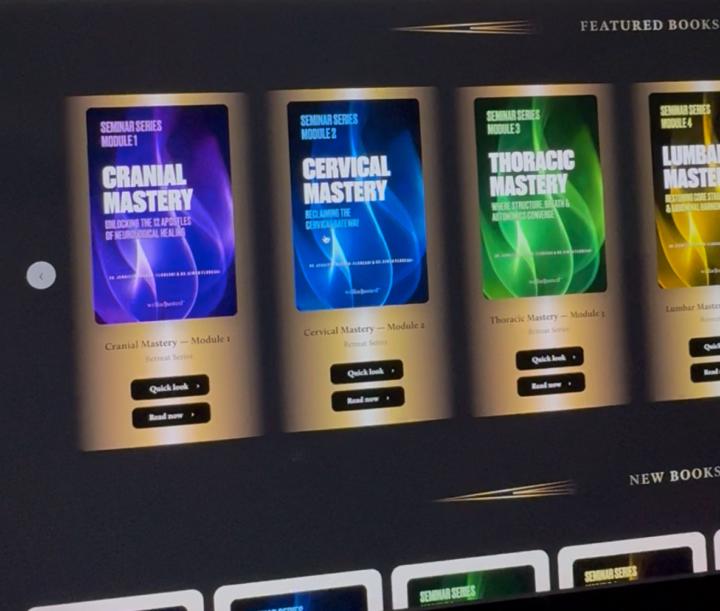
I’m excited to share with you all my day today going to my publisher and seeing the first drafts of our modules in a concourse with ai generated images to showcase the beauty of the adjustment. Drop a message in here if you would like to be the first people to review this content. There is 6 books so far!
1 like • Jan 18
Now that is amazing news! Can’t wait to see it! 🥳
0 likes • Jan 18
@Simon Floreani amazing thank you 🙏
Jan 12 •
Intense onset of thoracolumbar pain
Hi Simon I had a client who came in with a sudden onset of extreme 15 out of 10 pain in the thoracic lumbar junction he can’t stand or walk well or at all I sent off XRAYS immediately and then he came back for the report that night on my investigation the x-ray seem normal no disc fractures or anything of that sort History Years of emotional pain and grief Bent over to pick up a dumbbell and back when pop Videos attached and photos Positive compression test positive decompression test for alleviate some pain Can’t move at all zero range of motion Treatment On his first visit, I did an occiput left which alleviate some pain instant instantly but then it came back and gentle interiors Trigger point therapy to his QLS and some movement After the care, he was definitely feeling a lot more pain, even though everything I did was really gentle And he couldn’t walk and left in the wheelchair He’s coming again today Wondering if there’s anything in particular you see on the XRAYS or the videos I’ve seen two cases like this before In the same areas with the same presentation Both of them were hard cases for me One guy I’ve been dealing with for years lots of pain medication and the only thing that fixed burn the nerve endings that helped to alleviate the pain a little bit The other was a similar case where on heaps of pain med’s and didn’t get enough results with us and left. This was about three years ago for each of them. If you have any questions, let me know appreciate all your help

0 likes • Jan 18
Thank you for posting, learnt a lot 🙏

Jan 9 •
It's working
Following up from my case where my client had more snoring post a sphenoid lift adjust. I was all prepared with the balloon exercises that Simon had suggested to help. Before I could even speak he said "I don't know what you are doing but its working! My snoring is gone completely". So this is my win for the week, trusting in the process even when I am unsure myself how to explain it, or reverse engineering what's happening.
0 likes • Jan 10
Amazing ♥️!
1-6 of 6