
Jan 19 (edited) • 📈 Case Conferences
Epilepsy, childhood migraine, practitioner self care, CNS nutrition
Covers Epilepsy v childhood migraine, communicating to parents when they have medical confidence melting and giving them alternatives to hang on to in a chiropractic domain, philosophy and competition challenges in the office, specifics on lifting sphenoid and gag reflex threshold. How to explain threshold to parents and clients.
Communication
• Give homework to give families back control.
Management then tells them to call back and get checked. Calling back to get checked is part of the homework.
• Changing diagnoses (example: epilepsy → migraine).
Some clients hold onto one diagnosis and forget there is hope.
• “I get adjusted myself. I want you to have the same.”
Patients advice- small goes a long way
• Cranial work improves CSF and blood flow to the brain.
• Small advice goes a long way:
TMJ issues in bald patients — cold stresses the system. Keep warmth in the body (beanie).
• Avoid overtightening suboccipitals and TMJ strain.
• Point-dog hold
Hold 10 seconds to reset posture and nervous system awareness.
Teach patients to “snap to attention.”
Nervous System Nutrition
• Nutrition = basics of feeding the nervous system.
• GABA
• Building block of brain scaffolding
• Stress depletes it
• Research shows it can reduce tics and seizures
• Improves clarity, focus, and response to adjustment
• Poor suture texture (“wood-like”) + low CSF = need amino acids to build tissue strength.
• Omegas improve fat conduction and tissue strength.
• Ornithine supports CSF production.
• If patients don’t have good nutritional input, adjustments happen on “squishy tissue” and won’t be as effective.
Practitioner Self-Care
• Self-care = life-giving back into your tank (Mother Nature).
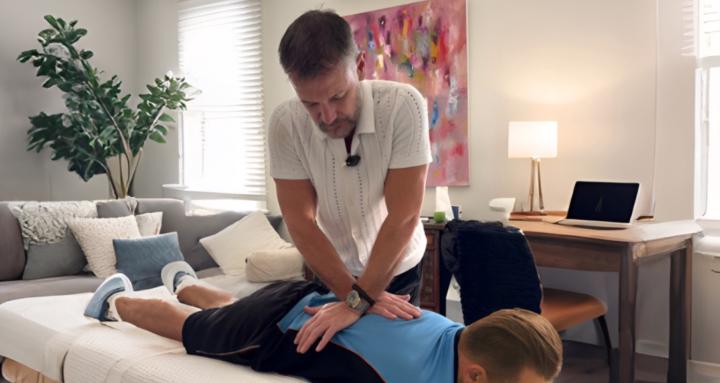
• Low suboccipital tone + looking down + fast impulse = mini whiplash, being the bench higher.
• The energy exchange is real — protect your own system.
• Switch off when you leave practice.
• Separate work and home (uniform mindset).
Create a transition ritual.
• Write down unfinished thoughts at the end of the day so you start fresh tomorrow.
• Use doorway resets between patients to “wash off” emotional load.
• Get adjusted — even if you have to travel.
• Strength work needs to happen.
• Avoid thrusting while flexed forward — protect heart and thoracic region.
Shoulder soreness is better than lower back injury → raise the table.
Language & Framing
• Replace “bad” with “poor.”
Examples:
• Poor neurological nutrition
• Poor blood supply
• Poor CSF function
• Neural tube defects from poor nutrition
Philosophy & Mindset
• Build an appetite for tolerance.
Don’t take offense.
Don’t need everyone to agree with you.
• Keep your toolkit growing.
Stop learning = stale practice.
• If you don’t wish to change, you’ll get the same results.
• Chiropractic mastery takes decades.
Do what you can to get patients the best result today.
Competition Perspective
• Remember why we’re here: to love and serve patients.
• If my work helps — great.
If yours helps — awesome.
If neither helps — be brave enough to advise to change to a different chiro
Put the “shame blanket” down.
Borrow solutions instead of competing.
• Teach through third-person stories (“I know someone who…”).
Sphenoid Technique Notes
• Case: sensitive gag reflex - Technique:
• In-and-out fast
• Poke and retreat
• Let gag reflex assist
• Use swirl and fanning motion
• Flexed sphenoid drops inferiorly toward mouth — should be dome-shaped.
Threshold & Emotional Release
• Nervous system needs threshold stimulus for change.
• Crying isn’t bad — it resets the system
Language During Treatment
• “Stay with me.”
• “Take a breath.”
• “This is a journey.”
• “We’ll review after — we’ll be good at the end.”
Pain Language & Consent
• “When it hurts, I know I’m in the right place.”
• Your body stored this. My job is to help you release it.
• Pain is like a USB holding old injury patterns.
• Ask the brain if it still needs to hold the pattern or if it’s time to let go.
• Close eyes. Focus inward. Stay present. Don’t run away.
38:40
5
10 comments
Epilepsy, childhood migraine, practitioner self care, CNS nutrition
Leaderboard (30-day)
1

+20
2

+19
3

+17
4

+13
5

+12
Powered by