Activity
Mon
Wed
Fri
Sun
Mar
Apr
May
Jun
Jul
Aug
Sep
Oct
Nov
Dec
Jan
What is this?
Less
More
Memberships
Dog Lovers Club
127 members • Free
Puppy Owners Support Network
55 members • Free
13 contributions to Puppy Owners Support Network

18d •
A little bit about your adolescent dog!
During adolescence, just like human teens, your puppy will want to engage in thrill seeking, and risky behaviours - and will try out anything which will make them feel good. This will look like - - Not listening and running off to chase an animal, dog, person or moving object - Jumping up at people - Playing with other dogs in a really inapproriate way - Exploring the bins - Stealing items and the list can go on. Basically, anythig that your dog finds fun or potentially fun, they will try out. And once they try it out, and get some 'feel good factor' from it, - guess what - they are going to try it again, and again, and again! It's particularly important at this age that you minimise these risky behaviours as much as possible - let's call it 'damage control'. Of course, sometimes they will slip the net, but if they do something once, it's not the end of the world and just information for us, so we can learn to avoid that situation again. How can you minimise risky behaviours...? At this age, it's all about micro managing behaviour - - Control and management through baby gates, long lines, quiet walks and not allowing people to be silly with your dog, or wind them up! - Continue to practice and rehearse your training - and layer it into real life scenarios, building on the duration, distance and distractions. - Be very picky as to who your dog plays with - your dog is much better off having a small group of regular friends that they play with, and then learn to relax around everyone else than learning that everyone s a free for all. - Your dog will also be better off playing with older dogs as opposed to other puppies. Similar to a human teenager who starts smoking at 16 - they are much more likely to continue to smoke long term, whereas if they avoid engaging in smoking as a teen, it's unlikely that they will start at the age of 20 - by managing behaviour now and preventing your dog from practising unwanted behaviours through the teenage stage, by the time your dog is a full adult, they are much more likely to be more well rounded and better behaved.
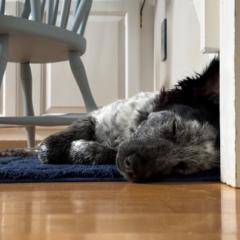
2 likes • 17d
Yeah, you've pretty much nailed the behavior patterns, and we've been trying out many of the training suggestions you mention. Patience, consistency, and time, right?
0 likes • 22d
Velociraptor…
25d •
What would your dog's new years resolution be?
Prince's new years resolution would be... 'To look more sad so that mam takes me for longer walks or gives me an extra treat ball out of pure guilt!'
1 like • 25d
Darby has resolved to eat better/healthier "snacks" at the dog park. Well, actually she couldn't care less, but we certainly do!
0 likes • 25d
@Sarah Groves Um, yeah, they sort of do… It’s amazing how many dog owners conveniently ignore their dog’s poops. We spend most of our time at the dog park picking up after them, otherwise Darby will get to them first. It’s an unhealthy habit, as well as seriously disgusting. Sigh…
27d •
Happy New Year to you all and your pups!
Hopefully the fireworks won't go on for too long tonight!
1 like • 27d
🤞
Dec '25 •
Relationships between puppy and owner can be rocky at times...
What's been a piece of advice that you've been given that's felt like a gamechanger for growing your relationship with your pup?
3 likes • 30d
That no matter how bad their behavior may seem, they don’t mean any of it personally. They honestly don’t understand the rules - yet. It’s amazing how reminding myself of that changes my attitude.
1 like • 29d
@Sarah Groves Including our own!
1-10 of 13

@david-hardwick-5222
Happily retired, life-long dog lover. Darby (born Jan-25) is an Australian Cattle Dog mix who makes every day a gift. Looking forward to being here!
Active 10h ago
Joined Dec 10, 2025
INFP
Cape Cod, MA, US