Activity
Mon
Wed
Fri
Sun
Aug
Sep
Oct
Nov
Dec
Jan
Feb
Mar
Apr
May
Jun
Jul
What is this?
Less
More
Memberships
Ground Standard Professionals
97 members • Free
Professional Self Defense
37 members • $249/month
RHINO Tactical Defense
26 members • Free
Family Safety and Protection
30 members • $5/month
3 contributions to Family Safety and Protection

🍀
Nov '25 •
Physical Self Defence is a Last resort
In almost every class I teach, whether it’s women in a workplace, seniors in a community centre, young adults, or corporate teams preparing for worst-case scenarios, someone inevitably asks: “What do I actually DO if someone attacks me?” It’s a fair question. It’s also the wrong starting point. Real self-defence doesn’t begin with strikes, kicks, or techniques. It begins long before an attacker is within arm’s reach. And the truth most people don’t hear enough is this: Physical self-defence is a last resort. Not the plan. Not the primary solution. Not the smartest first line of defence. In fact, for many people, especially women, seniors, those with injuries, disabilities, or reduced strength, relying on a physical confrontation is not only unrealistic, it can be extremely dangerous. Movies, social media clips and even most martial arts schools create a distorted perception of self-defence. We see small people defeating large attackers. We see perfect blocks, clean strikes, and clear victories. What we don’t see is: - The chaos - The adrenaline - The tunnel vision - The freezing - The legal aftermath - The injuries from a single punch or fall In the real world, physical violence is messy and unpredictable. A single push can result in a head hitting concrete. A “simple punch” can be fatal. A knife appears when you didn’t see it. A second attacker appears when you were focused on the first. For women and seniors in particular, size and strength discrepancies make a physical exchange even more dangerous. The missing link in most self-defence training is not more techniques… It’s more awareness. Awareness prevents more attacks than strength ever will. By the time a situation has turned physical, the odds have already shifted against you, no matter how strong, trained, or confident you are (or think you are).
0 likes • Nov '25
Very well said Glenn. Are we able to use things like this in our postings on Social Media. Yes I will give you credit for it.
🍀
Nov '25 •
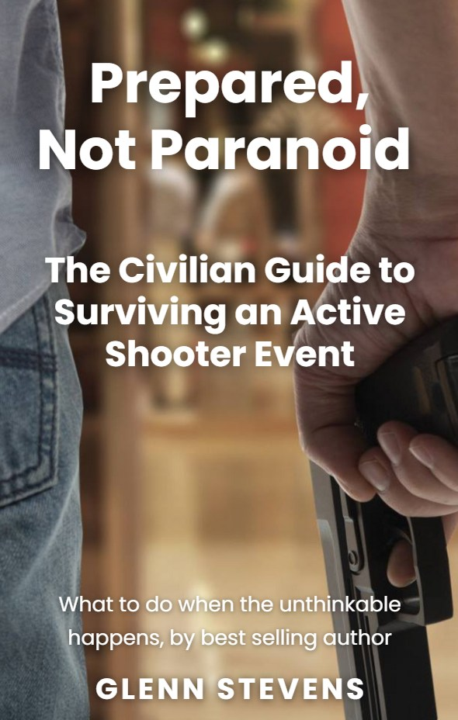
My New Book: Prepared, Not paranoid
My new book will be available to purchase as a paperback on 26th November. I'll post a link when it's available. It's currently available on Kindle. US Store: https://www.amazon.com/dp/B0G1JWVNG6 AUS Store: https://www.amazon.com.au/dp/B0G1JWVNG6 UK Store: https://www.amazon.co.uk/dp/B0G1JWVNG6
1 like • Nov '25
It was a very good read. I hope you got my comments last week that I sent you after I finished it. Sent them to your email.
🍀
Nov '25 •
Welcome to our newest members
Welcome to the community! 👊🔥 Great to have you here. Here’s what you can expect: ✔ Clear, practical guidance. We keep things real here. No fluff, no hype. Just skills, strategies, and insights you can actually use. ✔ A supportive, respectful environment. Ask questions, share wins, post challenges. We help each other get better. If you only do one thing today, drop a quick intro: Who you are. What you’re working on. What you want to get out of this group. Again, welcome. Let’s make progress together
2 likes • Nov '25
@Candice Holden Welcome Candice to our group. Thank you for sharing your story with us.
1-3 of 3
@dave-frank-1524
Owner of RHINO Self Defense CLE, LLC here in the Cleveland Ohio area. Been teaching Self Defense classes since 2017. Retired LEO 43 yrs of service.
Active 4d ago
Joined May 28, 2024
Mentor, Ohio