Activity
Mon
Wed
Fri
Sun
Aug
Sep
Oct
Nov
Dec
Jan
Feb
Mar
Apr
May
Jun
What is this?
Less
More
Memberships
KDP Publishers by PublishFlow
328 members • Free
Church of SEO Jesus
1.2k members • Free
Amazon KDP Ads with Matt
689 members • Free
Royalty Guild. Amazon KDP
393 members • Free
Publish & Profit Challenge
4.9k members • Free
Driven Publishers
4.4k members • Free
Profitable Publisher 3.0
366 members • Free
130 contributions to Royalty Guild. Amazon KDP

5d •
Progress, update, the journey and all that
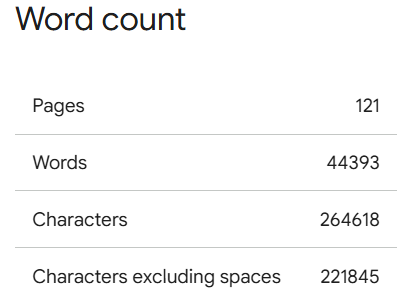
I have been a member for some time now, browsing, searching and learning but not posting very actively on this Skool. I am also that one-book writer putting his life journey into ink. In my case, it is about my move to Thailand and living, working and surviving here for the past years. About a year ago, for medical reasons, I left Bangkok to semi-retire with my wife in rural Thailand. That allowed me a lot of time to finish rewriting all my existing articles on the subjects contained in my book into storytelling reads that would appeal to a broad, interested audience. Since joining this group, I have learnt a lot, especially from participating in one of Igor's calls. Thank you Igor and the two other people who were present. That was an interesting exchange. My biggest obstacles were learning and realising that KDP is not simply uploading a .doc file, and secondly, keeping myself motivated a couple of hours a week to work on my book, especially since we moved to rural Thailand, where the pace is so much slower. The latter is still an issue, as life is good here. Progress: The word count, tone of voice, spelling (UK spelling), length and read time of each chapter, introduction, glossary, about the author and this book, and imprint – all that is done. Photos: One of the things I learned along the way is that colour is soooo much more expensive, so I had to remove all the hyperlink blue and emojis and then work on my imagery. Learning about the use of colour and the cost of size affecting your split (I wanted to stay in the 70%), I selected 14 black and white photos from my collection of hundreds of pictures taken over the past 5+ years and then went to AI to ask what should be done with them. I also secured written approval from anyone who appeared in the pictures. Each picture is now: - 300 DPI - 900x1367 dimensions - total size is under 6 Mb Notary & Trust: Sadly I had a very negative experience with a publisher who mistook my being a first-time writer of a book for being gullible in business and unintelligent about publishing. He overlooked the fact that I had worked a hundred years ago as a proofreader and Jack-of-all-trades at a large Dutch/British publisher, and that I had also worked for four years at the largest newspaper conglomerate in the Netherlands. 😆 He also overlooked the fact that I had read about notaries and had taken some rather silly selfies of myself at my PC while writing my book, as well as other ways I was able to prove I am the author. It did, however, make me very insecure when other people asked me to read my work. Right now I am even too insecure to include the teaser (introduction and part of chapter 1) of my book here. Sorry for that.

1 like • 4d
Hey Latte, good to see you around again. Been wondering what happened. Short Reads: interesting concept I had one of my books qualify for. Unfortunately only possible in the US. Nevertheless I plan do rip one of my short stories book apart and publish the stories ndependently. From the length they could qualify, so whenever the German market allows, the books will already be there. Ai: I think we cannot work without anymore. Not for 100% writing, but for brainstorming, analyzing etc. Obstacles: when you have a question - ASK !!! Patience & Reward: that is quite a challenge. As Amazon owns the customer, we do not get any customer data to contact them. Including a link/QR-Code at the end of the book leading to a landing page where you can offer kind of bonus in exchange for their email address would be possible. There is a possibility of offering discount codes on Amazon, but could be that that is restricted to FBA. Looking forward to reading more from you - have a successful week.
1 like • 4d
@Latte Motte in the US you have Short Reads as real categories (depending on time to read/number of pages). In the German Kindle store you don't have them. Never get, I still can publish books with a short reading time in DE, but they are not explicitly marked as such.

8d •
First Book Went Live Today!!
Hello everyone. I am from Ottawa Canada and my first book went live today!! Now I have no idea what to do lol!!!
4 likes • 7d
First of welcome to this fine group of KDP publishers. As @Igor O mentioned, ask, ask and ask again if you have any questions. Also happy to learn from your experiences in publishing. I wish you a good start with your first book.

18d •
Video ad
I have a seasonal book on Amazon and I am thinking to give it more push by adding a video ad, I am wondering if anyone in the group tried video ad, and did it work for you
2 likes • 12d
@Rodrigo Narciso Yes if the video ad is setup as broad, check the search terms frequently to negate non-relevant KW. The money burning ad described earlier (christmas coloringbook) got clicks for knitting layouts and other completely unrelated stuff. As a benefit I got lots of KW data for the knitting niche 😃
0 likes • 9d
@Laura Diaz Minimum bid for video is 15 cent (at least it was in Q4 & Q1), so you might bid a bit higher. Re visibility: did you check in incognito mode on your browser? As Amazon taylors their results to your browsing behaviour, it could be that your ads are blocked for you, but visible to others.

13d •
How to update A+ content in a faster way ?
I only had 6 books in my 9 months journey on KDP so far and was able to keep my A+ content up-to-date (and not too bad quality). I've increased my production pace and now I can release new books with relative low effort & time. But my bottleneck remains in updating A+ content across all marketplaces... The more books I have, the more time it takes, as I haven't been able to automatize it. The creation of banners is actually fast, but it is the updates inside KDP, for all marketplaces, that takes ages... Anyone has been able to find a smart way for managing this ??? Any extension ?? Anything with Claude CoWork or else ?? I remember reading in a forum @Hector Martín was able to release like 60+ books in a short time , how are you managing the A+ content for them ?? Tx in advance for any help !!!! @Igor O @Thomas Juuls @Hector Martín
1 like • 12d
If I remeber correctly, there is a possibility to copy A+ content across marketplaces (depends on language). Don't remember how it worked, but I did that with US published book and A+ copied over to UK. Added: Asking ChatGPT how it works, returned this anwer. Hope it helps a bit. ============= Amazon KDP has a semi-automatic way to copy A+ Content between marketplaces, but there is currently no fully automatic "publish everywhere" feature. How to copy A+ Content to other marketplaces 1. Create and publish your A+ Content in one marketplace (for example, Amazon.com). 2. Wait until the content is approved and published. 3. In the KDP A+ Content Manager, switch to another marketplace (e.g., Amazon.co.uk, Amazon.de, Amazon.ca). 4. Look for Auto-generated Content or Show auto-created content. 5. Amazon should create a draft copy of your existing A+ Content in that marketplace. 6. Open the draft and click Publish. (Kindle Direct Publishing) What gets copied automatically? Amazon copies: - Images - Text - Module layout - Comparison tables The copied version appears as a draft in supported marketplaces where your book is available and the language is supported. (Kindle Direct Publishing) Can you publish all marketplaces at once? Unfortunately, no. As of recent reports from KDP users and Amazon support, you still need to open each marketplace's draft and publish it individually. There is no bulk-publish button. (Reddit) Time-saving workflow for large catalogs If you have many books: 1. Create A+ Content once. 2. Apply it to all relevant ASINs in the source marketplace. 3. Wait for auto-generated drafts to appear in other marketplaces. 4. Switch marketplace → filter for Drafts → publish each draft.

16d •
Audible audiobook from Kindle. Any experiences?
My first AI-narrated ebooks are in the publishing state, so I am interested - does anybody already have any experience with that format?
2 likes • 16d
@Lara Knutzen Let's see, how long it take to get the invitation. Just applied as well. @Igor O Did this work only with books where you set the US as main market or also with books in other markets, that could also sell in the US?
2 likes • 12d
@Laura Diaz Learn to get rid of less important stuff quicker could be the optimum.
1-10 of 130

@thomas-juuls-4959
Still kind of beginner, even though I started in 2020. Just celebrating my 5th anniversary on KDP. Aiming for treating this more like a business. 8311
Active 13m ago
Joined Nov 6, 2025
Powered by