
Write something

6d •
How Do You Manage Social Media When you Franchise Your Business?
Managing social media for a franchise system is significantly different than managing social media for a single business. A franchisor must balance brand consistency with local authenticity, allowing franchisees to market effectively in their own communities while protecting the overall reputation of the brand. The most successful franchise systems build a structured social media program that combines corporate oversight, standardized branding, local marketing support, and performance measurement. The goal is to create a scalable system that drives customer engagement at both the national and local levels and the key is to leverage local market engagement with a consistent, professional overall image and brand presentation. Step 1: Establish a Social Media Strategy Before creating accounts, define the purpose of your social media program. Your strategy should answer: - Who is your target customer? - Which platforms matter most? - What is the brand personality? - What content should corporate create? - What content should franchisees create? - How will success be measured? Every post should support one or more objectives, such as: - Brand awareness - Lead generation - Customer acquisition - Local community engagement - Recruitment - Franchise development - Customer retention Step 2: Create Corporate-Owned Accounts The franchisor should own and manage all national brand accounts. Typical accounts include: - Facebook - Instagram - LinkedIn - TikTok - X (Twitter) - YouTube - Pinterest (if applicable) These accounts become the official voice of the brand. Corporate content should focus on: - Brand storytelling - New products - National promotions - Company news - Customer success stories - Community initiatives - Educational content - Industry leadership Step 3: Establish Local Franchise Pages Each franchise location should have its own local business pages. Examples include: Facebook - ABC Fitness – Orlando - ABC Fitness – Dallas
1
0
Jun 4 •
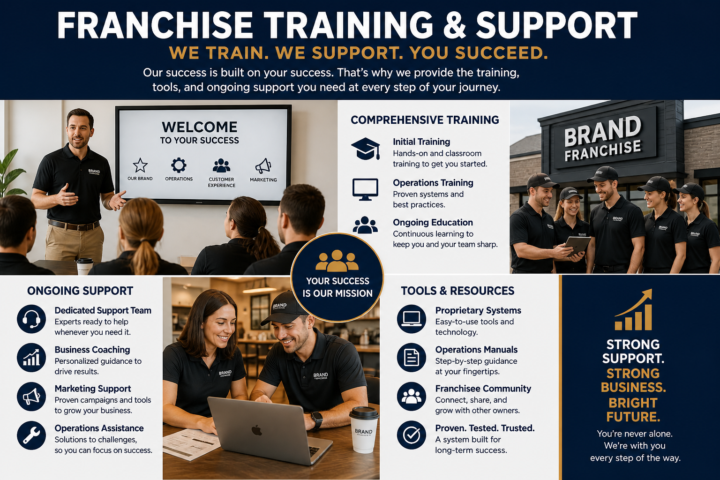
What is a learning management system for a franchise and how do you build one for franchise training?
A Learning Management System (LMS) is the central training platform that a franchise system uses to educate, certify, track, and support franchisees and their employees. Think of it as the digital version of your franchise operations manual, training department, onboarding process, and continuing education program combined into one system. For a franchise organization, an LMS becomes one of the most important tools for maintaining consistency across locations and ensuring that every franchisee operates according to brand standards. Read more on learning management systems in Franchising. Why a Franchise System Needs an LMS As a franchise grows beyond a handful of locations, in-person training alone becomes difficult and expensive to manage. An LMS helps franchise systems: - Train franchise owners consistently - Onboard new employees quickly - Maintain compliance standards - Track certifications and completion rates - Deliver updates to operating procedures - Reduce training costs - Improve operational consistency - Scale franchise growth efficiently Without a structured LMS, training often becomes fragmented, inconsistent, and difficult to monitor. What Should Be Included in a Franchise LMS? 1. Franchisee Onboarding Training This is typically the first learning path. Topics include: - Introduction to the brand - Franchise system overview - Company history - Mission and values - Franchise agreement requirements - Business setup procedures - Opening timeline The objective is to help a new franchisee understand the entire franchise system before opening. 2. Operations Training This section mirrors the Operations Manual. Examples: - Opening procedures - Closing procedures - Customer service standards - Product preparation - Equipment operation - Quality control - Inventory management This is often the largest section of a franchise LMS.
2
0
May 4 •
Guide to Protecting the Brand and Repairing the Relationship When Managing Franchisee Relationships
Franchising is built on alignment—shared goals, shared systems, and shared success. But even in the strongest franchise systems, disputes between franchisors and franchisees are inevitable. Whether driven by financial stress, unmet expectations, operational breakdowns, or personality conflicts, a struggling franchise relationship can quickly escalate if not handled properly. The difference between a temporary challenge and a long-term problem often comes down to how the franchisor manages the situation. A thoughtful, structured approach can resolve issues, preserve relationships, and protect the brand. A reactive or overly aggressive approach, on the other hand, can lead to litigation, reputational damage, and network instability. This article outlines a practical, step-by-step framework for managing franchisee disputes and stabilizing relationships that are going poorly. Understanding the Root Causes of Franchise Disputes Before addressing a dispute, it’s critical to understand why it exists. Most franchise conflicts fall into a few common categories: - Financial Issues – Late royalty payments, underperformance, or cash flow problems - Operational Non-Compliance – Failure to follow brand standards or systems - Expectation Gaps – Franchisee believes the business should perform differently - Communication Breakdowns – Misalignment due to lack of consistent dialogue - Personality Conflicts – Differences in leadership style or decision-making In many cases, the dispute is not about one issue—it’s a combination of several factors that have compounded over time. Step 1: Identify and Document the Issue Clearly The first step in managing a franchise dispute is clarity. Franchisors should: - Document the specific issue(s) - Identify which sections of the Franchise Agreement are being violated (if applicable) - Gather supporting data (financials, communications, performance metrics) This step is critical because it removes ambiguity. Instead of addressing the situation emotionally or generally, you are working from facts.
3
0
Apr 15 •
How to Build a Sales Process you Can Teach, Train and Hold Franchisee's Accountable To
Defining your sales process for selling your product or service is one of the most important—and most overlooked—elements of building a successful franchise system. Even the best business model will struggle if franchisees don’t know how to consistently generate leads, convert customers, and grow revenue. As a franchisor, your role is not just to provide a product or service—it’s to build a repeatable, teachable sales system that can be executed by operators with varying levels of experience. The goal is to create a framework that is simple, structured, and scalable, while still allowing for local market flexibility. Below is a comprehensive guide to designing a franchise sales process that can be trained, taught, and supported across your entire network. 1. Start with a Clear Sales Philosophy Before building tactics, you need alignment on how your brand sells. Define your core approach: - Are you consultative or transactional? - Is your brand premium or value-focused? - Do you sell based on urgency, education, or relationship? Example: - Home services → consultative, trust-based - Fitness → emotional + community-driven - QSR → speed and convenience Lock in on your value proposition and make sure that it is as clear and teachable as possible. Your sales philosophy becomes the foundation of all training and messaging. 2. Map the Ideal Customer Journey Every franchise system should define a step-by-step customer journey from awareness to purchase. Typical sales funnel: 1. Lead generation 2. First contact 3. Qualification 4. Presentation / estimate 5. Follow-up 6. Close 7. Retention / upsell Each step must be: - Clearly defined - Documented - Measurable This creates consistency across all locations. Sometimes, as the founder, we forget the steps in the sale and we just say or do things because we have always done it that way, now we are dealing with someone who knows nothing about the business and is starting from ground zero, keep this in perspective when teaching and training sales to your franchisees.
Mar 27 •
What is the Brand Fund and How does It Work?
A Brand Fund (often referred to as an Advertising Fund or Marketing Fund) is one of the most important shared resources within a franchise system. It is designed to pool financial contributions from franchisees (and sometimes the franchisor) to support system-wide marketing, brand development, and customer acquisition efforts. When structured and managed properly, a Brand Fund becomes a powerful engine for growth, brand consistency, and long-term value creation. When mismanaged, however, it can quickly become a source of tension and mistrust between franchisor and franchisees. Below is a comprehensive look at how a Brand Fund works, along with the responsibilities of the franchisor and the expectations of franchisees. What is a Brand Fund? A Brand Fund is a collective marketing pool funded primarily through contributions from franchisees, typically calculated as a percentage of gross revenue (commonly 1%–4%). These funds are used to support regional and national marketing initiatives that benefit the entire franchise system rather than any single unit. Unlike local marketing, which franchisees control directly, the Brand Fund is centrally managed by the franchisor and deployed strategically to build brand awareness, drive customer demand, and strengthen the overall brand position in the market. How a Brand Fund Works 1. Contributions Franchisees contribute to the Brand Fund on a regular basis—usually weekly or monthly—based on a percentage of their gross sales. The contribution structure is disclosed in Item 6 of the FDD and further detailed in the franchise agreement. Some systems also require: - Minimum contribution thresholds - Additional local marketing spend (separate from the Brand Fund) - Initial grand opening marketing contributions The franchisor may or may not contribute its own capital to the fund, but in many systems, the fund is primarily franchisee-funded. 2. Centralized Management The franchisor manages the Brand Fund, making decisions about:
2
0
1-12 of 12
powered by

skool.com/franchise-marketing-systems-3411
Learn about franchising your Business and How to Franchise your Business Model into new markets through franchise growth.
Suggested communities
Powered by