Activity
Mon
Wed
Fri
Sun
Aug
Sep
Oct
Nov
Dec
Jan
Feb
Mar
Apr
May
Jun
What is this?
Less
More
Memberships
MMC BunClub
130 members • Free
16 contributions to MMC BunClub


1 like • 18d
That made me laugh 😂

Mar 22 •
Saturday was a long day.
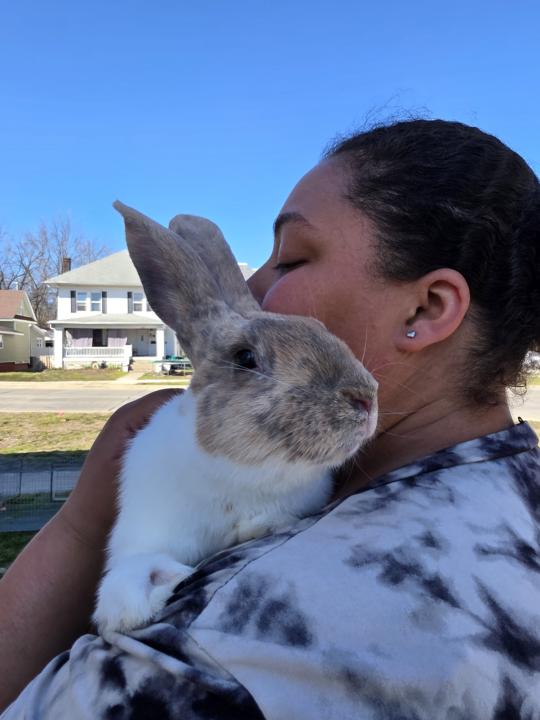
Took 15 rabbits to their new home in Illinois today. Sara is restarting her meat herd, and it felt good getting them settled in while a new lean-to is going up. While I was away, I got the news that Cindy had passed. She gave me one last strong litter, one doe in IL, and a Tricolor I kept . I had planned to give her a well-earned rest—but Cindy had her own timing. The night before, she was exactly as she’d always been—gentle and social, coming up for long head pats, and visiting with Kranitz just an hour before he found her. She was stretched out between her feed and water on a warm spring day. He thought she was simply napping, like her daughter tucked beneath her and Martha a few rows down… but her rest had gone deeper, and she didn’t wake. Cindy was my first Best of Breed harlequin doe. She leaves behind daughters both in Harlequin and Senita lines that will carry her forward, and a mark on this barn that won’t be forgotten.
0 likes • Mar 22
Oh no! I’m sorry!!
1 like • Mar 15
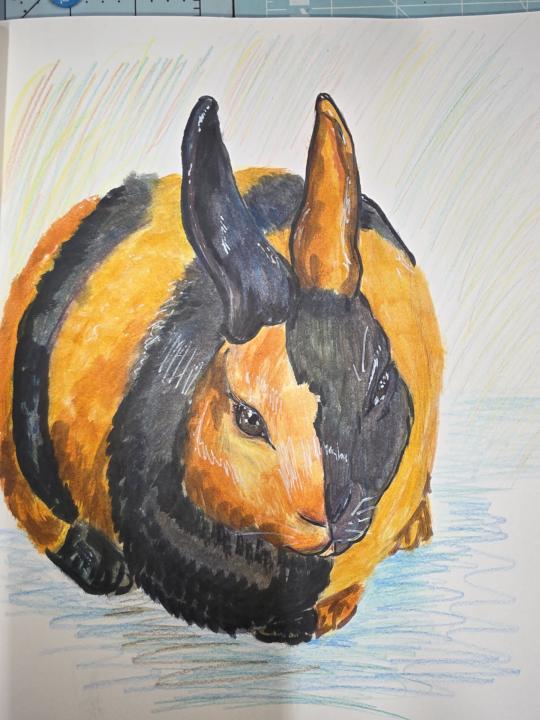
I been trying to tan pelts
0 likes • Mar 22
@Mary Margaret Conley I wanna try that! I got a whole freezer full to try it out on. I been hunting for fleshing tools besides my hand or a butter/cheese knife.
Feb 28 •
The week has not leveled out.
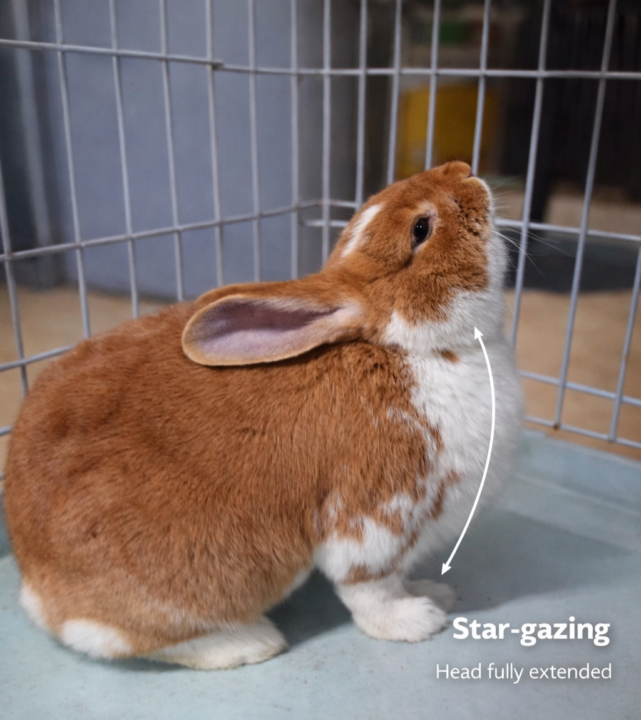
Indiana is still swinging without restraint — 20s to near 70 and back again. That kind of instability stresses, bodies, lungs , anything that has to regulate temperature to stay alive. We are at three losses. I expect a fourth today despite intervention. A younger harlequin litter has taken the worst of it. I’ve already lost two of Foxy’s bucks. Her doe began showing symptoms last night. We also lost a Red New Zealand doe. Necropsy showed sudden, acute pneumonia — lungs completely saturated with pus, consistent with a silent presentation of Pasteurella. No sneezing. No discharge. No crusted nose. No drawn-out warning. The only visible sign came at the end — head extended back, labored breathing, then dead within hours. At that point you are not reversing anything. You are watching the body fail. The farmhand and I feel the pressure shifts too — congestion, fatigue, headaches. We compensate. Young rabbits often cannot. Rapid temperature swings, barometric shifts, warm rain to freezing snow — that combination stresses the respiratory system hard. Anything marginal goes first. So far it has affected only a few. I am monitoring closely. Anyone even slightly off gets pulled and watched. The wetness visible around the nostrils in the photo was from Vet-RX I applied in an attempt to help open the airway while antibiotics circulated. It was not discharge. This was acute. When a rabbit extends its head straight up with the neck fully stretched, it is attempting to maximize airflow. By the time that posture appears, lung involvement is already significant. Antibiotics require time — usually 48–72 hours — to reduce bacterial load. In cases like this, treatment would have needed to begin days earlier, before visible respiratory distress. Once gasping begins, you are behind. Silent Pasteurella does not always present with obvious upper respiratory signs. Sometimes there is nothing outward until the end. The only early indicator I’ve consistently seen is subtle: Off feed.
0 likes • Mar 2
Scary!! Do you just use a probiotic and electrolytes to try and prevent that?
0 likes • Feb 20
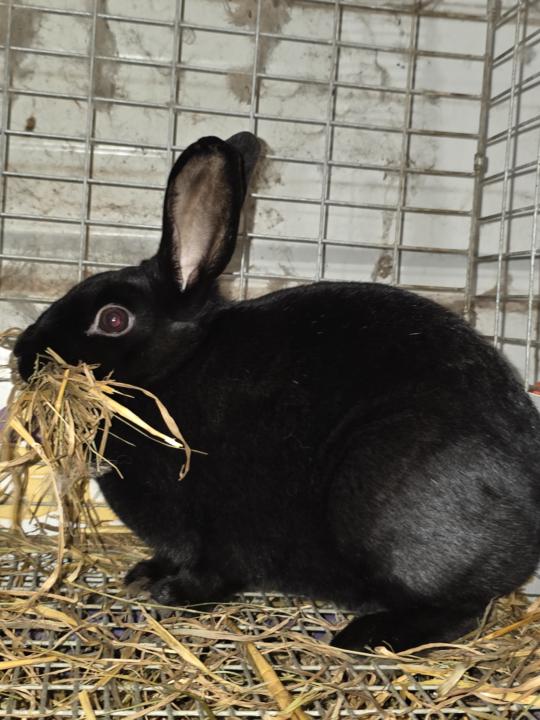
She’s pretty!!
1-10 of 16

Active 18d ago
Joined Dec 31, 2025