Activity
Mon
Wed
Fri
Sun
Jul
Aug
Sep
Oct
Nov
Dec
Jan
Feb
Mar
Apr
May
Jun
What is this?
Less
More
Owned by Brenda
Equipping preschool directors with leadership, team-building, and training tools for today’s early childhood education.
🩷 Less stress. 🩷 More confidence. 🩷 More connection. Helping parents make sense of feeding challenges, sensory differences, and big emotions.
Memberships
Social Selling on LinkedIn
927 members • Free
Read SkoolMagazine Here
293 members • Free
Sensory Project Ayres’ SI CoP
427 members • Free
The Sensory Ladders™️ Project
231 members • Free
Skool Events Daily
305 members • Free
SKOOL OF FOOD WRITING
81 members • $10/month
HEARTSTRINGS & HANDCRAFTS
16 members • Free
Panda for Skool: CRM Plus
400 members • Free
Skool Scale Camp
4.9k members • Free
36 contributions to Connected Through Play

🔥
13d •
Member Spotlights
Once a month, I open the feed for you to promote your community, your business, a project that would benefit from feedback, basically a Free4All. Simple play rules: 1. Before or after sharing, comment on 2 other shares 2. Let’s keep everything in this post for easy reference 3. Up to 2 “promo’s” in 24 hours - remember, “Share Don’t Sell!” 4. Have Fun. Tagging a few folks to get this started, if I missed you, it’s not intentional, it’s my ongoing challenge with the app. @Betty Jo Winters @Brenda Chilstrom @Cam Parkes @Celia Kibler @Des Cooke @Daniel Cavaretta @Elizabeth Houston @Amy Grantham @Jose Guerra @Karen Gibson @Katya McEwen @Cristal Vancarson @Steven Cruz @Heather Wilson @Janell Bitton @Jay Dee Archer @Lidia Axe @Lisa Vanderveen @Jen Staniforth @Max Orlewicz @Mayelice Castro @Roslyn Hill @Natasha Bryant @Natalie Duncan @Sharon Otaguro @Paul Wren @Paula Artis @Ramona Zihlke @Tim Tindle @Wendy Venema @Anna Murrietta @Evelene Sterling @Devin Trent


1 like • 10d
@Wendy Venema both parents and kids, and it really depends on the family and where they are in their journey. Some parents it takes awhile to get to the point where they realize their part of the equation. It's definitely individualized. Within my online supports, though, it's a lot of coaching for parents.
1 like • 9d
@Wendy Venema Exactly! Yes, I have my community here on Skool, Raising Curious Eaters, and the programs are applicable for any parents who are struggling with sensory and feeding difficulties. All of my programs are built around connection and relationship. Thanks for asking! I'd love to chat more with you!
13d •
Learning comes easier when children can laugh: Research proves it!
I just ran across this article about making children laugh and how that helps build resilience so they can learn more easily. Helping Children Laugh Can Make Their Brains More Resilient and Learning Easier

🔥
20d •
You Choose
I'm working on content for June and wanted to be sure I'm meeting your needs. Let me know in the poll what you'd like to see.
Poll
2 members have voted

1 like • 16d
I don't have a strong preference, I just am wondering if it'll help me to be more oriented to the day of the week if I see the category.
🔥
17d •
Slime Time
Years ago, my kids became fascinated with slime after watching Nickelodeon’s Double Dare, where contestants would suddenly get covered in bright green goo. They thought it was the funniest thing imaginable and immediately wanted to figure out how to make their own at home. Not occasionally. Constantly. At one point I remember finding half-finished bowls of mysterious goo in the refrigerator beside leftovers because someone was “still experimenting.” We had batches that stretched beautifully, batches that snapped apart like rubber bands, and at least one horrifying version that somehow became both sticky and crumbly at the same time. And honestly, looking back now, I think the most valuable part was not the slime itself. It was the experimenting. Kids are naturally drawn to substances that behave strangely because children notice inconsistency long before adults do. Adults tend to like predictable materials. We expect liquids to pour, solids to stay firm, and mixtures to behave the same way every time. Children are fascinated by the exceptions. So what happens when something seems to be both a liquid and a solid, depending on how you touch it? I’m so glad you asked and if you didn’t, I know you were thinking it! Oobleck or what we called slime, for example, is what scientists call a non-Newtonian fluid. Most liquids behave consistently under pressure. Water pours the same way whether you touch it gently or smack the surface. Oobleck changes behavior depending on force. Press slowly and your hand sinks in. Hit it quickly and it suddenly feels solid. That unpredictability creates curiosity immediately because the brain starts trying to solve the contradiction. “Wait… is it a liquid or a solid?” The answer is actually more interesting than either choice. It behaves like both. There is real science underneath that strange feeling. The cornstarch particles suspend in water, but under sudden pressure those particles crowd together and resist movement. Once the pressure eases, the mixture relaxes again and flows more like a liquid.

2 likes • 16d
I recently made a form of oobleck with greek yogurt so it could be edible!
🔥
26d •
Frustration Is Not the Enemy
As I watch my grandson begin to navigate the world, one of the hardest things for me is watching him struggle with something I could fix in ten seconds. He’s learning to walk and to navigate his space, my daughter is doing great at letting him struggle, while grandmama, who knows better, wants to rush in and help! I have to remind myself that in my hurry to make the frustration disappear, I’m also taking away the moment of growth. Think about this, resilience is not built by keeping children from ever feeling disappointed, irritated, embarrassed, or stuck. It is built in the small moments when they meet a manageable challenge, feel the discomfort of not getting it right immediately, and discover that frustration does not have to end the experience. They may need a breath, a different approach, or a short break before trying again. What matters is that struggle is not automatically treated as proof that someone else needs to take over. Play gives children a remarkably safe place to practice that. A lost round of a card game is not the same as a serious life setback. A marble run that collapses is not a crisis. But the emotions that rise in those moments are real. So is the chance to recover. When we treat every frustration as something to erase, children may learn that discomfort means something has gone wrong and someone else should step in. When we stay close without immediately taking over, they have a chance to learn something more powerful: I can feel frustrated and still be okay. I can struggle and decide what happens next. Now, this doesn’t mean we ignore tears or leave children alone in distress. It means we begin to tell the difference between a child who needs comfort and a child who needs a little room to wrestle with the problem before we solve it for them. This week, we are stepping into The Resilience Playground: the everyday spaces where play, frustration, and growth collide. We will look at how to support children without rescuing too quickly, how to help them reset after a fumble, how to turn mistakes into useful information, and why being bad at something can be part of becoming strong.

1 like • 25d
@Mary Nunaley the phrase comes out of sensory integration theory... which I love and will never stop learning about.
2 likes • 18d
@Gus Gray absolutely! Our capacity is such an important piece to add into the puzzle.
1-10 of 36
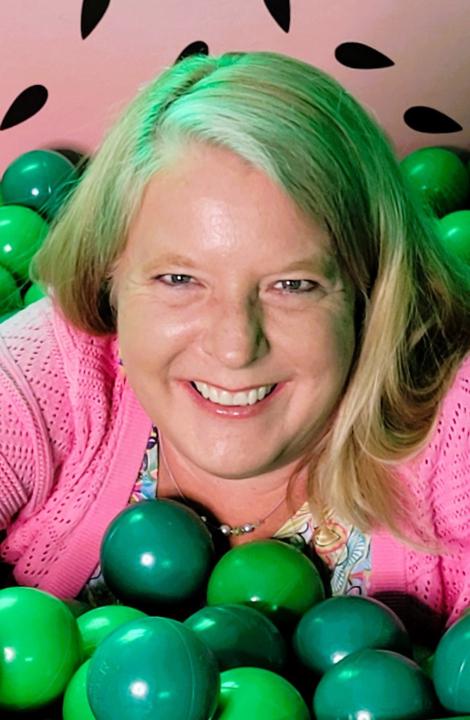
@brenda-chilstrom-5083
Award-winning pediatric OT & feeding specialist | Creator of Eating with EASE Academy + co-creator of ULTIMATE Preschool Playbook |Connection matters
Active 8h ago
Joined Feb 11, 2026
Naples, FL
Powered by