Activity
Mon
Wed
Fri
Sun
Jun
Jul
Aug
Sep
Oct
Nov
Dec
Jan
Feb
Mar
Apr
What is this?
Less
More
Owned by Nova
A Neuro-Affirming Safe Space for folks to connect & explore your Inner Child's sense of Fun through Play from a Childhood Educators Lens🌻
Memberships
Oracle Connections
3.1k members • Free
Audaciously AuDHD
991 members • Free
Grounded Roots Parenting 🌿
87 members • Free
ADHD Masters
1.3k members • Free
The Tarot Circle!
250 members • Free
Guitar for Beginners
162 members • Free
NeuroRebuild
28 members • Free
Skoolers
193.1k members • Free
Managers of Chaos 👾
34 members • Free
208 contributions to Grounded Roots Parenting 🌿

6d •
Monthly Shoutout 🌿
I want to take a moment to recognise the people who’ve really shown up in here this month. 💕 Not just posting for points — but contributing, supporting, sharing and helping others feel less alone in it all. So here’s our Top 10: ✨ @Nova Maree-Prophet ✨ @Oddysey Campbell ✨ @Merrie B ✨ @Elena Maren ✨ @Chad Noorman ✨ @Shelly Richards ✨ @Sylv Davies ✨ @Devin Trent ✨ @Tim Tindle ✨ @Jason Dobbie A special shout out to the winners of our competitions this past month @Nova Maree-Prophet and @Merrie B !! I hope you have had a chance to use and enjoy the resources! This space works because of people like all of you. The comments, the encouragement, the honesty — it all adds up. And to everyone else here… even if you’ve been quieter, reading, taking things in, trying things at home — that matters too. If you’ve taken something from this space this month, this is your little nudge to give something back. A comment, a thought, a “same here”… it all counts. That’s how this grows 🌱


4 likes • 5d
@Ellie Hayes 🥰✨
2 likes • 2d
@Chad Noorman
3d •
Development in ND children 🧩
A lot of neurodivergent children don’t follow a straight developmental line. You can have a child who is reading well above their age, solving maths problems quickly… ...but then struggling to join a game, hold a back-and-forth conversation, or manage the social expectations of their year group. And that gap can become really noticeable around Year 2 (US: 1st Grade, age 6–7). Not because anything has “gone wrong”… but because the environment suddenly asks for more than just knowledge. 📚 It starts asking for: – independence – organisation – flexible thinking – social awareness – sustained effort on demand For children with AuDHD and a PDA profile, that’s a very different kind of load. 😩 So what can happen? A child who can do the work… starts to avoid it. A child who understands the lesson… doesn’t engage with it. A child who seems “fine” academically… begins to fall behind in practice Not because they’ve lost ability — but because the demands have outpaced their capacity in that moment. You might notice things like: • Your 8-year-old chatting more comfortably with younger children (e.g. Year 1 / US: Kindergarten, age 5–6) • Struggling with group dynamics their own age handle more easily • Avoiding tasks they can absolutely do at home • Big reactions to everyday expectations • Needing more support with starting, stopping, or shifting tasks That doesn’t mean they’re “behind.” It means their development is spiky. 🦔 Think of it like this: Their learning ability might be working at Year 4 or above (US: 3rd Grade, age 8–9)… while their executive functioning is closer to Year 1–2 (US: Kindergarten–1st Grade)… and their nervous system is trying to keep everything balanced in between. That’s a huge load for a child to carry. So when your child gravitates towards younger children socially? That often isn’t regression. It’s regulation. 🧘♀️ Younger children tend to: – place fewer social demands – be more direct and less complex – allow more flexibility in play

1 like • 2d
Our Government Kindergarten here in Australia was the first step in my daughters regression. It is pushed as mandatory from our maternal health nurses. It is astounding how none of them promote Home-schooling or partial home-schooling so the Government can get education funding for every student signed up. This is something that has been kept secret from all new parents.
2d •
⭐ Daily Inspiration ⭐
You have something nobody else has. Your exact experience. Your perspective. The specific way you see the world and move through it. That's not nothing. That's everything. The world doesn't need another version of someone who already exists. It needs you — fully, unapologetically, exactly as you are. So stop shrinking. Stop editing yourself down. Stop waiting until you're more polished or more ready or more like someone else. You're already the thing the world is missing. Show up as that.

4 likes • 2d
This is the best reminder! I feel blessed this was my fist skool post I clicked into 💚
9d •
Welcome!! 🌿🤗
Please give a big Grounded Roots welcome to @Mahmoud Mahmoud who joined us this week 👋 It’s always lovely seeing new people find their way into the space. This community is all about supporting each other, sharing ideas, and exploring calmer, more connected ways of teaching and understanding children. 💕 I hope you find the community useful!

2 likes • 7d
[attachment]

8d •
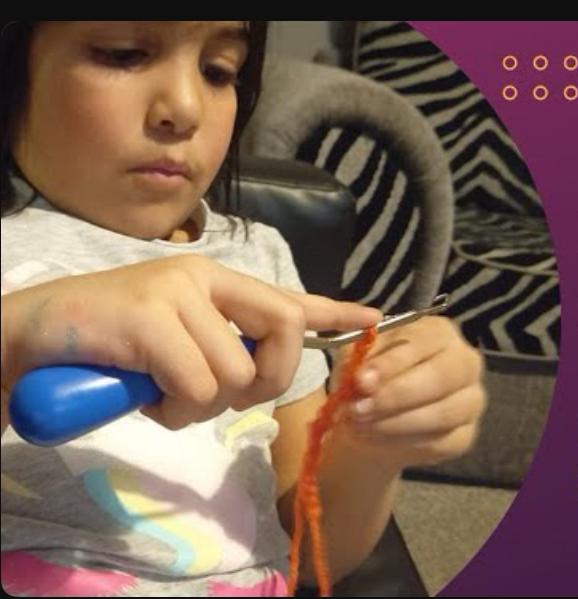
An absorbing activity for you and your child
Hello, I have taught latch hook crochet to adults, to children in school and at the moment to my local Saturday class. I would love to reach more children online. Beginners can learn new fun projects using a latch hook instead of a traditional hook. I teach new easy methods which are not usually learned in traditional crochet. We begin with easy bracelets, flowers and headbands, things children can wear. First projects include baskets, bags, pots, bugs and easy bags. Please comment if you would like to know more about Crochet Art and Cordcrochet.
1 like • 7d
I have the needles and yarn, but never an instructional video I or my daughter can understand (both of us have learning difficulties ties into our neurodivergence). Crochet is so cool! 🤩
1-10 of 208

@nova-maree-6040
Neuro-Queer, Home-Schooling Mumma with HEAVY Squirrel Vibes💚
(Ze/Zir/We/She)
Community Services & Early Childhood Education & Care certified.
Active 2d ago
Joined Feb 8, 2026
INFJ