Activity
Mon
Wed
Fri
Sun
Jun
Jul
Aug
Sep
Oct
Nov
Dec
Jan
Feb
Mar
Apr
What is this?
Less
More
Owned by Andrew
“A growth community focused on confidence, mindset, and real progress. No fluff—just forward motion. Learn from real industry professionals."
Memberships
Luna’s Little Jungle
22 members • Free
Community Launch
12k members • Free
5-Day Stock Accelerator
1.9k members • Free
𝓢𝓽𝓸𝓬𝓴 𝓦𝓮𝓪𝓵𝓽𝓱 𝓐𝓬𝓪𝓭𝓮𝓶𝔂
48 members • Free
AI Automation Society
351.5k members • Free
Brotherhood Of Scent
8.8k members • Free
Skoolers
192.9k members • Free
5 contributions to AI Automation Society

Feb 22 •
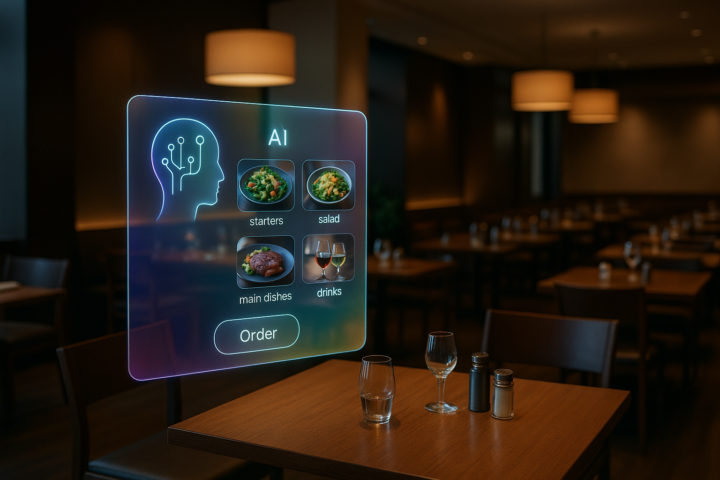
90% of hospitality entrepreneurs say: "AI is too complicated for my business."
Meanwhile: - Chipotle runs their entire planning on AI - McDonald's is testing voice-controlled drive-thrus - Domino's lets AI optimize delivery routes These are no longer experiments. This is the new standard. What I notice in conversations with food entrepreneurs: the fear isn't the technology itself. It's the fear of being left behind while others quietly gain an advantage. That fear is valid. But the solution isn't to wait until everyone is doing it. The solution is to start small. One process. One experiment. Learn what works for YOUR business before "best practices" are defined by your competitors. AI in food & hospitality isn't a future trend - it's the playing field where the game is already being played. The question is: where do you stand when the time comes?

3 likes • Feb 22
@Frank van Bokhorst AI has been the most revolutionary aid since health itself. That’s why Palantir will be very beneficial in the health care space. It’s a process that’s skeptical to commit to, but the downside is being left behind and trying to catch up.
Feb 11 •
Advanced integration systems?
https://www.skool.com/skoolers/advanced-integration-systems?p=7d147990
1 like • Feb 11
@Muskan Ahlawat there are some new areas I want to dive into for brand new users who have never been exposed to my automotive learning content.
1 like • Feb 12
@Muskan Ahlawat what do you think the best approach would be to come up with a resolution? I’ve reached out to Zac Bronstine, Director of Performance Intelligence Centrical. They produce products for gamification and such. Just not sure how to implement on this platform.

Feb 10 •
Automation failure reasons
Automation Doesn’t Fail Because of Tools It Fails Because of These Things Most broken automations weren’t built wrong technically. They were built wrong conceptually. Here’s what actually matters. 1. Ownership must be clear Every automation needs an owner. Not “the system”. Not “the tool”. A real person who is responsible when it: misfires sends the wrong message misses a lead If no one owns the automation, no one improves it. 2. Timing is more important than speed Fast automation is useless if it’s badly timed. Following up too early feels pushy. Following up too late feels careless. Good automation respects: business hours response gaps user behavior Timing creates trust. Speed does not. 3. Exceptions are the real workload Automation handles the average case easily. The value is in handling: incomplete data unexpected replies edge cases If your system breaks on exceptions, you haven’t automated — you’ve postponed work. 4. Feedback loops are essential Automation without feedback never improves. Your system should learn from: replies failures manual corrections Even simple feedback (tags, notes, outcomes) can dramatically improve future decisions. :--> Questions:+ 1. More points to add ? 2. More points to improve? 3. Which point is mostly happens?
3 likes • Feb 10
@Muskan Ahlawat Lack of clear objectives: Automation projects frequently fail when the specific goals and desired outcomes are not well-defined from the outset. Without a clear purpose, the automation may solve the wrong problem or fail to deliver meaningful value.
Feb 6 •
What matters in Automation
What Actually Matters in Automation (Not the Tools) Most people think automation is about speed. It’s not. Automation is about reducing mistakes while scaling decisions. If you miss this, everything else falls apart. 1. Process clarity comes first:- >Before you automate anything, you should be able to answer this clearly: What starts this process? What information is required? What decisions are being made? What ends the process? If you can’t write this in plain language, automation will only hide the confusion — not solve it. Clear process → reliable automation. 2. Decision logic matters more than actions:- Sending messages, updating sheets, triggering APIs — that’s easy. >The hard part is deciding: when to act why to act when not to act Good automation is decision-driven, not action-driven. 3. Context is non-negotiable:- Automation without context behaves like spam. >Your system should know: what already happened who interacted last what stage the user is in what the last outcome was Context turns automation from “noise” into help. 4. Boundaries prevent damage:- >Every automation needs limits: maximum attempts clear stop conditions escalation rules If your system doesn’t know when to stop, it will eventually cause problems at scale. 5. Visibility is safety:- If automation fails silently, it’s dangerous. >You should always know: when something breaks what decision was made why it happened Logs and alerts matter more than fancy dashboards. 6. Consistency beats intelligence:- A predictable system is more valuable than a smart one. If the same input produces different outputs, trust disappears. Consistency is what allows automation to scale safely. 7. Human override is not optional:- The best automation still allows human control. Not because automation is weak — but because judgment, nuance, and accountability still matter. Automation should assist decisions, not escape responsibility. Final truth::-- Tools change. Models improve. Platforms come and go.
4 likes • Feb 6
@Muskan Ahlawat Hey Muskan! Since we’re both navigating the AI Automation Society, I wanted to reach out. I’ve seen you topping the leaderboards lately—congrats on hitting Level 8! Your recent posts really resonate, especially your take on defining responsibility before intelligence for AI agents. It’s such a sharp way to prevent "outsourcing chaos." A few things I’ve been following from your work: - The "Team Member" Approach: I love your philosophy that AI is just a team member you haven't trained yet. - Automation Boundaries: You made a great point about keeping sales manual while using AI for summaries to keep things personal. - Practical Wins: Your focus on clarity over complexity is exactly what the community needs. Between your lead role at the Sharda University AI & Robotics Club and your work on AI sales & marketing automation, you’ve clearly got a lot of plates spinning.

💎
⭐
Oct '24 •
Welcome! Introduce yourself + share a career goal you have 🎉
Let's get to know each other! Comment below sharing where you are in the world, a career goal you have, and something you like to do for fun. 😊
3 likes • Feb 5
@Bill Chapman I'm new here as well. I honestly don't know. Will try to find out.
3 likes • Feb 6
@Frank van Bokhorst lol!! I can honestly say, this is the first greeting I’ve ever gotten from anyone from Amsterdam! Wow! 🤩
1-5 of 5

@andrew-smith-7198
I’m a Master Certified Automotive Technician with over 20 years of industry experience, currently teaching Automotive Technology at Pflugerville High.
Active 12d ago
Joined Feb 4, 2026
Powered by