Activity
Mon
Wed
Fri
Sun
Apr
May
Jun
Jul
Aug
Sep
Oct
Nov
Dec
Jan
Feb
Mar
What is this?
Less
More
Memberships
Spiritual Rebels
3.5k members • Free
17 contributions to Spiritual Rebels

Jan 15 •
Does quantum physics prove that we can change the world?
Lately, I came across a theory that suggests the world may not be broken, but out of balance. And that humans might be more involved in this than we like to admit. This perspective was explored in depth by a largely overlooked thinker: Walter Russell (1871–1963). A name that is mentioned surprisingly rarely, even though the ideas behind it feel more relevant today than ever. Russell was not a classically trained physicist. He was self-taught, an artist, a thinker, a teacher. This mix is exactly what makes him interesting, because he did not only try to explain the world, but to understand it as a connected whole. One of his central works is The Universal One (1926). He also wrote The Secret of Light, Atomic Suicide?, and The Message of the Divine Iliad. In all of these writings, the same core idea appears again and again: the world is not made of dead matter, but of movement in fields, of rhythm, of balance. Russell described the universe like a breath: expansion and return, building up and breaking down, compression and release. For him, this was not a poetic metaphor, but a fundamental law of nature. Everything moves toward balance. When balance is disturbed, tension arises, and systems try to regulate themselves. For a long time, such ideas were seen as purely philosophical. But this is where it becomes interesting. Many things Russell described intuitively are now reappearing in modern science. In quantum physics, matter is no longer seen as solid substance, but as excitation of fields. Empty space is not nothing, but an active quantum field full of energy. In quantum chemistry, we see that reactions do not happen only mechanically, but are influenced by coherent states and field interactions. In quantum biology, it becomes clear that even living systems react very sensitively to subtle energetic processes. So the basic assumptions match: The world is organized in fields. Everything is connected. Order does not arise by chance, but through balance and rhythm.

0 likes • Jan 31
If enough people stabilize their inner balance, the collective background noise changes. And over time, so do the systems built on it...yes 💯! We are all responsible for the world we live in, we literally created it. It is the expression of our collective mind. As the majority is still unconscious, the reality is so - wars, racism, factory farming, pollution. When enough people awake, this will come into balance. Why every awakening person is so powerful.
🔥
Jan 5 •
Hi everyone 👋
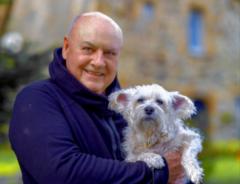
I’m Mark. After spending twenty years living, studying, and working in China, I retired to establish my studio and retreat in France.I studied Traditional Chinese Medicine at university and specialized in Behavioral Psychology. As a Certified Master Coach, Mindfulness Coach, and Difficult Emotions Coach, I’ve traveled extensively through Asia, India, Tibet, Bhutan, Australia, and the USA, learning from various masters in spiritual modalities and meditation. Irecently set up my own Skool group called The Peaceful Path, This space exists for people who want to slow down, reflect, and live with a little more awareness and kindness — without pressure, labels, or dogma. 🙏

1 like • Jan 11
Welcome Mark; your dog mirrors you, lovely. I have same with my dog 🩷✨️
1 like • Jan 11
@Mark Lawrence that's how I feel about my Mikey 🩷

Jan 2 •
Happy New Year 😎
Hello friends, hope you're having a wonderful first day of 2026. My question for you today is: What is a spiritual teaching you understand , but struggle to live when life gets difficult? I'm building something that helps people apply spiritual teachings practically in daily life, and i'm curious to know some sticking points you might find yourself dealing with? Much peace and many blessings, and remember... Just 🐝 PS. I have turned off the premium tier to the community and am going to keep it free only. For those who have upgraded in the past, you will get free access to the new project once it launches. Until then, the exclusive content will be available for paid members until the billing cycle ends. 🙏
0 likes • Jan 11
Having compassion towards those who create suffering for others (incl other sentient beings). I used to be sad, lately it is anger I feel & want nothing to do with people who are fast asleep. It is hard to be like Jesus
Dec '25 •
A Quiet Christmas
This year taught me that real transformation doesn’t come from effort alone, but from awareness. I used to believe growth meant constantly pushing forward, fixing myself and chasing the next version of who I should be. What I’ve learned instead is that presence changes more than pressure ever could. Spirituality for me stopped being an idea and became a way of living. Staying centered when things are uncertain. Choosing integrity over comfort. Trusting inner clarity even when the path isn’t fully visible. I thrive in environments where depth is valued over noise. Where people are honest with themselves, willing to sit with discomfort and brave enough to unlearn what no longer fits. As the year closes and Christmas arrives, I’m grateful for the lessons, the stillness and the growth that came with both. Wishing you all a Merry Christmas filled with clarity and peace.
1 like • Dec '25
Yes I feel the same, I have not changed as much as I would like to but I am aware, aware every moment. Merry Christmas...Peace above all else 🎄✨️

Dec '25 •
Merry Christmas
Whoever you are, wherever you are, and whatever this holiday season means to you, I hope it’s wonderful. Merry Christmas guys 🎄❤️
1 like • Dec '25
Merry Christmas 🎄💚
1-10 of 17
@ala-izy-3613
✨️mother, friend of animals, healer, mentor, pilgrim, seeker of truth✨️
Active 37d ago
Joined Nov 8, 2025
INFJ
Phuket, Thailand
Powered by