Activity
Mon
Wed
Fri
Sun
Nov
Dec
Jan
Feb
Mar
Apr
May
Jun
Jul
Aug
Sep
Oct
What is this?
Less
More
FBA Canadian Academy
610
Free
KNOWERS®
554
5.0
$9/m
18 contributions to FBA Canadian Academy

Jul 1 •
I’m Building a Lower-Cost Amazon FBA Canada Course
I know not everyone is ready to invest into a premium coaching program. And honestly, that’s totally fine. The cohort is not for everyone. It’s for people who want direct feedback, live support, accountability, and help making better decisions while they are actually building their Amazon business. But I also know there are a lot of people in here who are serious about learning Amazon FBA Canada, but maybe you’re not ready for that level of investment yet. Maybe you’re still working on building up your capital with your 9-5. Maybe you’re trying to understand the model first. Maybe you don’t have enough capital yet. Maybe you just want the step-by-step foundation before you decide if this is something you actually want to pursue. So I’m thinking about releasing a written course / playbook that breaks down the actual system I teach: - how Amazon FBA Canada works - how I think about sourcing - how to use Keepa, SellerAmp, and CanFlip - how to avoid buying bad products - how to think about capital, ROI, and risk - how to build the weekly sourcing loop - what beginners usually get wrong when they follow US Amazon advice This would not be the cohort. No live calls. No private lead reviews. No me looking over your shoulder correcting every decision. But it would give you the foundation and the framework so you can start learning the right way without jumping straight into a premium program. And if you eventually decide you want to apply for a future cohort, I’m considering letting your course payment count as credit toward the cohort. So it would not be wasted. If this is something you’d be interested in, comment COURSE below and I’ll DM you the details when it’s ready.

0 likes • Jul 1
Course
0 likes • Jul 1
The reason this would be a good introductory course is that I know many of my colleagues who want to start Amazon FBA and are looking for guidance like this. I work for Air Canada as a station attendant and interact with a lot of people, so it would be nice to refer them to something like this so they can do their own research.
May 24 •
Things I hate about Amazon FBA
This screenshot is one of the reasons I dislike Amazon FBA. Customer service approved this refund for a grocery product as “product not received.” If that’s the case, then why charge me shipping twice when YOU NEVER EVEN SHIPPED THE PRODUCT? It’s so easy to get hammered with refunds like this and end up at a loss. With such tight margins in grocery, I made around $4 from the $6.92 after paying for the cost of the product. But the refund is a 100% loss: -$20.39, almost 5x negative.
0
0


May 21 •
Sourcing in cda
Does anyone else new have problems sourcing. I've spent hours trying and so far I've come up with always being gated or super unprofitable using sellerID method or Amazon owns the buy box. This is frustrating. I'm committed but haven't found one thing that I can actually buy in Canada? Any tips would be wonderful.
1 like • May 21
@Guri Ecom are those 4000+ ASINs all in Canada?
May 17 •
American online stores
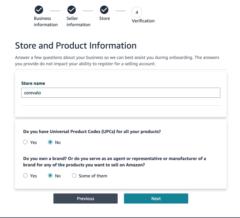
Is there a problem buying from them? Tariffs? French label? Any experience?
0 likes • May 20
French labels for certain categories is a requirement for Amazon Canada. You need to have the setup in place to have it delivered here to Canada via third party like Shippsy.

May 15 •
Only finding products that are found in US!
Hey guys, My name's Muhammad and I'm really excited to be here with all of you! I wanted to know if anyone else is having similar problems with me and that is that I am only finding products that are from USA or from some random country and they typically don't ship to Canada or they do and charge extremely high shipping rates. I've been looking through a lot of products and seem to have found myself constantly finding products that don't ship to Canada or aren't made here. Is there something I don't know about getting those products here, or am I doing something wrong??? Excited to hear from everyone! Also here's a prime example of that: B0DD67MKHQ
0 likes • May 20
@Muhammad Mulla no workaround
1-10 of 18

@abdul-aziz-moten-7465
Amazon Canada Seller exclusively for 2 years and run an FBA Prep for other canadian sellers.
Active 1d ago
Joined Apr 21, 2026
Brampton, Canada
Powered by