Activity
Mon
Wed
Fri
Sun
Nov
Dec
Jan
Feb
Mar
Apr
May
Jun
Jul
Aug
Sep
Oct
What is this?
Less
More
Brotherhood Of Scent
9k
5.0
Free
Watch Lover | Community
2.7k
5.0
Free
Real Men Real Style Community
13.6k
5.0
Free
2561 contributions to Brotherhood Of Scent

🔥
6h •
Edward Mooney Update:
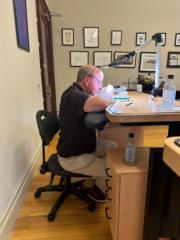
He responded back again! All is well and went according to plan. He said he is getting himself up to speed and should be back with us in a week. Prayers Answered!!!

🔥
6 likes • 6h
Great news!! Thanks Lon! 👏👏
🔥
14h •
FRAGRANCE MYTHS: FACT VS. FICTION
Part 7 - Natural Ingredients Are Always Better Than Synthetics THE MYTH: "If a fragrance uses natural ingredients, it’s higher quality. Synthetic ingredients are cheap substitutes that make perfume smell artificial." THE REALITY: Natural and synthetic describe how materials are obtained. They do not automatically tell you how beautiful, refined, or effective those materials will be in a fragrance. A great perfume depends on the materials selected, their proportions, and the perfumer’s skill. THE EXPLANATION: I appreciate beautiful natural materials. A rose absolute, a good patchouli, or a characterful oud can bring remarkable depth to a fragrance. But appreciating naturals doesn’t mean dismissing synthetics. Natural extracts can contain many different aromatic compounds, giving them complexity and distinctive character. Synthetic materials give perfumers additional control and access to smells that extraction alone cannot provide. Modern perfumery draws on both approaches. There’s another distinction worth understanding: smelling natural and containing natural ingredients are two different things. A flower’s extract doesn’t necessarily smell exactly like the living flower. Frederic Malle explains that perfumers use natural and synthetic materials together to create convincing impressions of nature. Lily of the valley is a good example. Its familiar floral character is recreated through perfumery materials because conventional extraction does not provide a usable natural extract of that scent. IFF identifies this as one of the possibilities that synthesis opened up for perfumers. Synthetic also doesn’t mean a material is merely a replacement. Materials such as Iso E Super, Cashmeran, and modern musks give perfumers creative possibilities of their own. IFF names Iso E Super and Cashmeran among its signature fragrance molecules. These materials belong to the perfumer’s palette alongside natural extracts. And when someone says a fragrance "smells synthetic," they’re usually describing an impression- perhaps harsh, overly sweet, plasticky, or excessively sharp. That impression alone doesn’t reveal the formula or prove that synthetic ingredients are the problem.
🔥
2 likes • 7h
Great points Lon!!
🔥
18h •
I MAY HAVE AN ADDICTION!!! ATH
Said I would stop but what happens if I need moisturizer? Oh yea and I may need attars and what happens if I need backup bottles and I hate traveling with full sized bottles. Is there an AA Meeting? Aaron Anonymous.

🔥
5 likes • 15h
You certainly may have an addiction!! But you also seem to be a drug pusher too!! At least you’ve gotten Me into the gateway drug!! 😜😂
🔥
3 likes • 7h
@Lon Chaneyfield it is wide open territory at this point. And lord knows we could use a change in smell in some of the boroughs 😜

1d •
Weekly BOS Member Shoutouts 🔥
BOS crew, here are a few standout posts from the BOS community this week. 👏 Big shoutout to @Darren Poesel for “Georgio Armani’s I Will.” His detailed review of a fragrance he had patiently tracked down gave members a useful perspective on its warm, woody character and real-world appeal. Post: https://www.skool.com/bos/georgio-armanis-i-will-2 👏 Shoutout to @Robert Sheard for “SOTD – Prada Luna Rossa Black.” His thoughtful wear of a long-held sample before committing to a full bottle offered an honest, experience-based fragrance recommendation. Post: https://www.skool.com/bos/sotd-prada-luna-rossa-black-a75cacd0 👏 Shoutout to @Renato Carotti for “Daily Motivation - 10/11/26.” His reflection on patience, precision, and developing a personal brand gave the community an encouraging reminder that meaningful work takes time. Post: https://www.skool.com/bos/daily-motivation-101126 👏 Shoutout to @Lon Chaneyfield for “FRAGRANCE MYTHS: FACT VS. FICTION.” His clear explanation that concentration labels do not automatically determine performance helped members make more informed fragrance choices. Post: https://www.skool.com/bos/fragrance-myths-fact-vs-fiction-643ae2c0 👏 Shoutout to @Nick Clemente for “Hawas Majestic - bleah, not for me.” His candid personal reaction added a useful counterpoint to the usual hype and encouraged honest fragrance discussion. Post: https://www.skool.com/bos/hawas-majestic-bleah-not-for-me Keep bringing the honest reviews, practical scent knowledge, and thoughtful conversations that help everyone explore fragrance with more confidence.
🔥
11 likes • 1d
What a great week from everyone!! 👏👏

🔥
2d •
Finally some fall weather
It may only be for a couple of days, but we have a legit fall day today. We've got a home game today and I don't have to wear shorts for a change. Plus, I get to grab one of my absolute favorites for the first time in a while. Austin hit me right between the eyes the first time I tried it and I never looked back. It is a fall Saturday in a bottle. Couldn't be happier to be pulling this one out today. Last time I wore it (which was at the tail end of winter), I got a hug and heard her mumble into my neck "God, you smell *good*."

🔥
4 likes • 2d
@Brett Sutton I second that!! 👏👏
🔥
5 likes • 2d
Looks great!! Enjoy it while you can 😜
1-10 of 2,561

🔥
@jeffrey-plotka-5779
Husband, Father, Entrepreneur. I enjoy flying, watches and mens style! I'm looking forward to meeting everyone.
Active 20m ago
Joined Jul 8, 2025
NY area
Powered by