Activity
Mon
Wed
Fri
Sun
Jun
Jul
Aug
Sep
Oct
Nov
Dec
Jan
Feb
Mar
Apr
What is this?
Less
More
Memberships
The Dementia Lifeboat
66 members • $15/m
22 contributions to The Dementia Lifeboat

Dec '25 •
Thursday Thoughts (on a Friday)
A couple weeks ago, I was coaching a group of women and one of them told us, "It has been a tough year." She explained some of the challenges her family has faced and I could tell there was more she wasn't sharing. She felt defeated, tired, and frustrated. Understandably so. But what she felt at the end of the session was different. A shift in energy. A shift in perspective. Because together we decided that she has every right to feel like a victim. It's just not helping create what she wants in her life today or in the future. And so I suggested that she also has every right to feel like a superhero. Because she is. In fact the hero story is more true than the victim story, because she's handled every single obstacle. She's figured it out. She's pivoted, adjusted, gotten scrappy and made it work. Like a superhero. Wonder Woman doesn't need to show up when things are easy. She shows up when things are hard. The more difficult the better. This doesn't mean she would choose to repeat those challenges. This doesn't mean she should think positively about them. It means she can stop feeling sorry for herself and start being proud of how she's handled it all. Her story is no longer about what a tough year it's been. Her new story is, " Easy or hard, I get it done. So you might want to get your notebooks out and take some notes world because I will show you how. Your welcome." Give it a try when you can. When you want to. It's OK to feel like a victim. It really is. But it just feels crummy AND it makes it so much harder for you to show up as the superhero that you are. Thank you for this, @Jocelyn Ives
1 like • Dec '25
Jocelyn, Thank you for sharing this story. I absolutely love the simplicity of "Easy or hard, I get it done." It really is what all caregivers do each and every day. Will be sharing this others for sure. Two thumbs up!!👍👍
Nov '25 •
What is one thing you're grateful for?
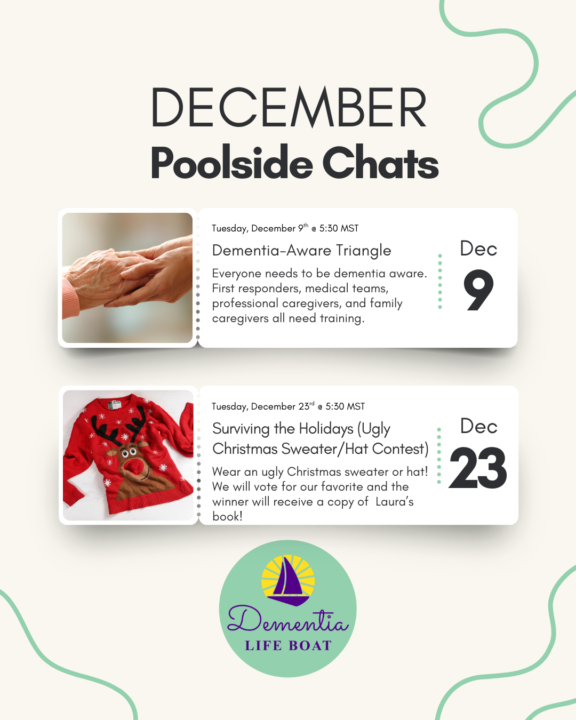
Happy Thanksgiving week, everyone! In the spirit of our topic from last night's Poolside, what is something you are grateful for? If you missed it, we discussed gratitude last night, exploring how to cultivate it and find it, even during tough times. Also, learn to be patient and kind to yourself in moments when you struggle to find gratitude. Our recording is live in the Classroom Tab, under "Poolside Chats Library." ------- Also, don't forget to register for our next Poolside Chat on December 9th, where we will be talking about how to become more dementia aware in the new year and why that is so important. Register here for December 9th @ 5:30 pm MST (AZ) / 7:30 EST Plus! Don't miss out on our Holiday special Poolside on December 23rd, where we will talk about how to get through the holidays. We'll be hosting an ugly Christmas sweater/hat contest, and whoever wins will get a copy of Laura's book! So get ready! Register here for December 23rd @ 5:30 pm MST (AZ) / 7:30 EST
2 likes • Nov '25
Thank you Laura, Jocelyn, and Courtney! Last night's meeting was outstanding and very informative. So thankful for all you three amazing ladies do for our dementia community. Happy Thanksgiving to all of you!
Nov '25 •
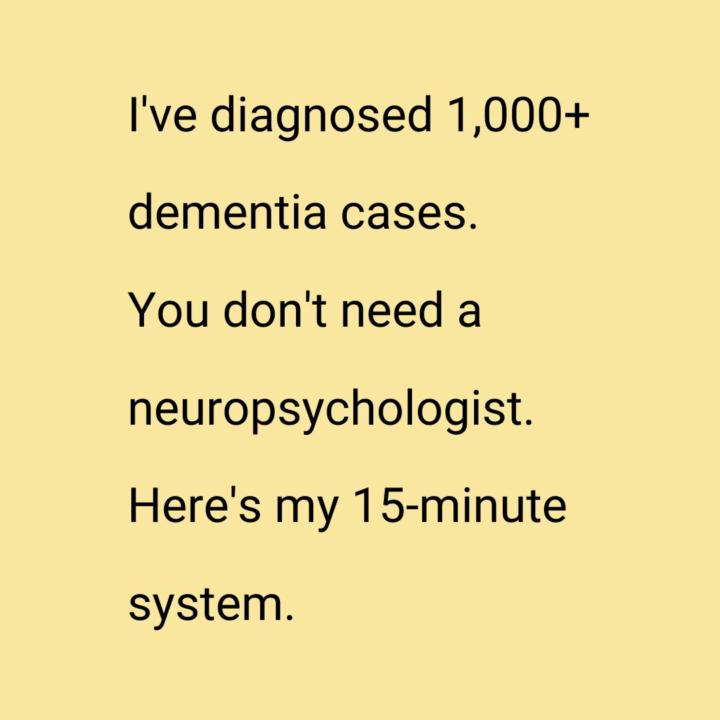
"I've diagnosed 1,000+ dementia cases. You don't need a neuropsychologist."
After diagnosing over 1,000 dementia cases, I've developed a system that primary care doctors can use. You don't need a neuropsychologist. You don't need a 6-month wait for specialty referral. You don't need advanced imaging. Here's my clinical approach: The 15-minute assessment that catches what traditional tests miss: 1. History from an observer is more valuable than history from the patient ↳ Spouse or adult child notices changes first ↳ Patient often minimizes or doesn't recognize deficits ↳ Ask: "What activities have they stopped doing?" 2. Digital cognitive testing reveals patterns traditional tests miss ↳ Standardized digital tests eliminate administrator bias ↳ Normative data adjusted for age and education ↳ Qualifies for CPT 96132 reimbursement 3. The questions that reveal more than any test ↳ "Do you still handle finances independently?" ↳ "Have you gotten lost in familiar places?" ↳ "Are you repeating questions or stories?" ↳ "Have family members expressed concern?" The diagnostic framework I use: Rule out dementia imitators first ↳ Sleep apnea ↳ B12 deficiency ↳ Depression ↳ Medication side effects ↳ Thyroid dysfunction ↳ Hearing loss Establish pattern of decline ↳ Slow and steady suggests neurodegenerative process ↳ Stepwise progression points to vascular dementia ↳ Fluctuating symptoms may indicate Lewy body dementia Assess functional impact ↳ Mild: Independent with complex tasks becoming difficult ↳ Moderate: Needs help with some daily activities ↳ Severe: Requires supervision for safety The diagnosis conversation I have: "Based on everything we've reviewed together, I believe you have early-stage dementia. This means your brain has changes affecting memory and thinking that are beyond normal aging. Here's what we can do about it." Then I create an immediate care plan: Start medications that work better early ↳ Acetylcholinesterase inhibitors add quality years ↳ Side effects minimal if started properly ↳ Benefits appear over years, not days
1 like • Nov '25
Thank you for sharing this outstanding article from Dr. Ghomi! It is spot on and pray all of our PCP communities will begin to understand and implement digital testing to assist with competently diagnosing patients who are in the very frustrating early stage of dementia. I would love to see his 15-minute system.
Oct '25 •
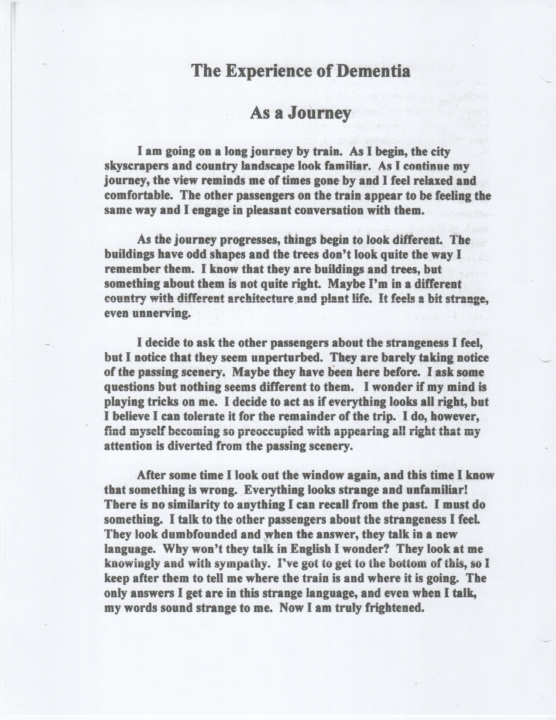
Story - The Experience of Dementia As a Journey
This story was shared with me by Karen Zondlo from Pueblo, CO. Karen facilitates a support group for families dealing with Parkinson's Disease. She provided permission to share with everyone on the Lifeboat:
0
0
Oct '25 •
Such vital info!
https://www.linkedin.com/posts/rezahg_60-of-dementia-goes-undiagnosed-in-the-united-activity-7383485916557864960-YQUN?utm_medium=ios_app&rcm=ACoAAANGOocBlTq8NZ9g8KaUq8J-MoigKo7ongk&utm_source=social_share_send&utm_campaign=copy_link
0 likes • Oct '25
A true eye opener and then some! I can definitely relate to this article in a huge way. Thank you for sharing this Laura!
0 likes • Oct '25
I was going to ask about coconut oil so thank you for reading my mind. I will definitely be sharing this article with all my support groups.
1-10 of 22
Active 16h ago
Joined Apr 10, 2025
Colorado Springs, CO
Powered by