Activity
Mon
Wed
Fri
Sun
Aug
Sep
Oct
Nov
Dec
Jan
Feb
Mar
Apr
May
Jun
Jul
What is this?
Less
More
Memberships
7FSS 5C Course
8.5k members • Free
Leadership Skool
1.6k members • Free
Imperium Academy™
67.7k members • Free
Inspired Life, Empowered Being
129 members • Free
KAIZEN
50 members • Free
🟢 6-Fig Society | Free
1.5k members • Free
Selling Online / Prime Mover
36.7k members • Free
Saisify Launch Community
325 members • Free
Chess Content Creators
18 members • $9/month
18 contributions to Inspired Life, Empowered Being

🔥
Feb 25 •
What do you want to be when you grow up?
Let’s revisit a classic question we were all asked at some point. You know the one. “What do you want to be when you grow up?” Some of us had crystal clear answers. Some of us panicked and copied the kid next to us. Some were wildly realistic. Some were pure fantasy. It’s a fun (and slightly revealing) way to get to know each other and maybe reconnect with a younger part of ourselves that dreamed without spreadsheets or supervision contracts. I have a very clear memory of being asked this at school when I was little. Teacher: “What do you want to be when you grow up?” Me: “An artist… or a mermaid.” Honestly? Still feels aligned. 🧜♂️🎨


1 like • Mar 7
@Georgiana D Thanks for that! I'd rate it as rather low, to be honest, but I am working on improving things! 😁
1 like • Mar 8
@Georgiana D sometimes yes, sometimes no. Need to go further to see. 🤔
Mar 2 •
Quotes / Lessons from Kids' Books
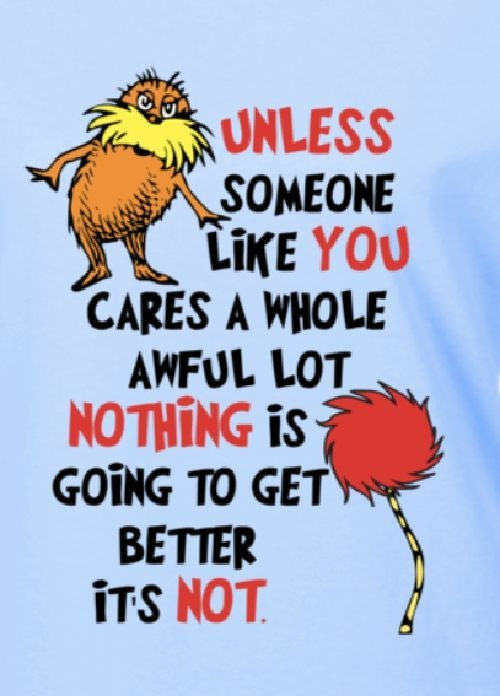
Some fun for Monday: I was just at my part-time job, helping a kid make a craft while reflecting on how tired I am of teaching English here (another one of those evenings, haha), when, by chance, I read a wise quote from Dr. Seuss' "The Lorax" (a story from my own childhood) on a worksheet: "UNLESS someone like you cares a whole awful lot, nothing is going to get better. It's not." It's not exactly an epiphany, as I already knew that, at least to some extent, but seeing it right there in front of me, on an elementary school level English language worksheet, was sort of enlightening in a sense. I suppose little quotes like these, often stumbled upon by chance, help motivate me to keep working hard and going forward. Any quotes and/or lessons from kids' books that you like? 😁
Feb 26 •
“Strict with Thyself, Lenient with Others”
“Strict with Thyself, Lenient with Others” Those were the wise words of Marcus Aurelius, and likely other Stoics, a couple thousand years ago… It is nice to repeat them, but how many of us live by them? I know plenty of people who do the opposite: The overweight father who forces his son to do sports. The husband who complains about his wife’s weight, but won’t set foot in a gym himself. The old diabetic boss who only hires young, fit employees. The list goes on… Don’t be that person. If you want others to change, lead them by modelling the good behaviour yourself. You cannot make others do what you want, but you can show and inspire them. “Be the change you want to see,” as they say. And if they still don’t change? Be kind, gentle and lenient. Getting angry, or trying to force the issue, will only lead to hurt feelings and worsened relationships. Worse case, they’ve stayed the same but you’ve improved by setting a good example. Just a quick reflection for today. Your thoughts?🤔
Feb 20 •
Learning through curiosity, rather than necessity
Hey Everyone, Hope you’ve all been having a wonderful week! While randomly scrolling on my phone, I found an article that I’d like to share with you. Here’s a link to it: Psychology says people who educated themselves through curiosity instead of classrooms solve problems in a fundamentally different way — and these 8 traits explain why formal education can't replicate what struggle teaches It discusses the differences between curious, self-directed learners, and learners who learned primarily through the structured, hierarchical, public school system. The field of cognitive psychology coined the term ‘adaptive expertise’ for such self-directed learners, and describes eight traits that set such learners apart (I’ve summarized them below). Basically, according to the article, formal education creates routine experts, who excel within defined parameters, while curiosity-driven learners build mental frameworks that thrive in uncertainty. According to the article, curious-driven autodidactic learners: 1. Embrace productive confusion, and are more likely to enjoy the challenge of discomfort that comes along with having to figure new things out. They understand that this space, between not knowing and finally getting it, is where real learning happens. According to the article, this struggle strengthens neural pathways and creates deeper, more flexible understanding. That’s great! 2. See more patterns and connections between unrelated things, such as how programming and music theory follow similar structures. This allows autodidacts to more readily recognize patters and draw conclusions from multiple domains of knowledge. 3. Have a higher tolerance for ambiguity. Compared to formal school education, which promises clear answers to test questions, with a study > memorize > pass the test structure, self-taught individuals have learned that life seldom works that way, and thus, feel more comfortable in gray areas. They are not following some clear-cut syllabus or going by a test score when reflecting on how well they’ve learned something.
1 like • Feb 23
@Ruth aka Grace Rose great quotes, thanks for that! 😊 I'd be happy to learn more about homeschooling from you, as we are considering it for our son (he's almost 4.5 years old now).
🔥
Feb 19 •
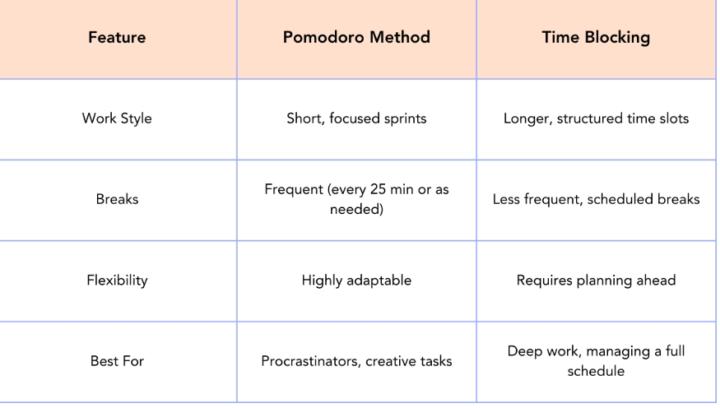
⭐Working Sprints/Time Blocking: Getting More Done by Doing Less at Once
Okay, this productivity "hack" has been kind of a game changer for me the last few weeks and thought that I should share it.:) Maybe you're familiar with it and maybe not, but it's certainly something to consider if you're looking to have better focus with your tasks and get those tasks completed more efficiently! @Wesley Penner has been having group working sessions every weekday in his group Executive Skill Journey and I've benefitted every time that I've joined. The allotment of time, the structure, and the accountability piece have been so helpful! :) Wesley also has some really thought provoking posts! (Wesley, please feel free to share more about this in a comment if you'd like) ------------------------------------------------ “Working in sprints”/Time blocking is kind of like interval training, but for your attention. Instead of trying to be productive all day, you focus your energy in short, intentional bursts of time. STEPS: 1.Choose ONE specific task (what's your intention for the next __ minutes?) 2.Set a clear time block (ex: 20–60 minutes) 3.Remove distractions 4.Work with full focus until the timer ends 1. Take a real break before starting again (In Wesley's work groups, we get together virtually and work together but separately--this added "observer" effect has been beneficial for me, but you don't need to have the camera on. Just knowing that others are working along side has been helpful). Why this works so well: - It lowers overwhelm :you only have to face one small window, not an endless to-do list; that's nice - It reduces procrastination : starting feels easier when it’s “just one sprint.” - It builds momentum: finishing a sprint creates a quick win and that is satisfying! -It respects your brain: focus naturally comes in waves, not all day long Sprints can also create permission to rest. When you know a break is coming, your nervous system stops resisting the work which is a very nice feeling and it helps calibrate the nervous system. You don't have to be in constant grind mode, but rather in focused attention mode. There's a decrease in stress with this.
Poll
16 members have voted
4 likes • Feb 20
Great stuff! I should try sprinting instead of jumping between tasks / not starting at all, like I usually do.
1 like • Feb 21
@Georgiana D I think it's usually okay, but sometimes I find myself starting the next task before finishing the previous one, or going back and forth between them. Maybe some time and energy is wasted doing that. I need to be less ADHD about computer work. 😂
1-10 of 18
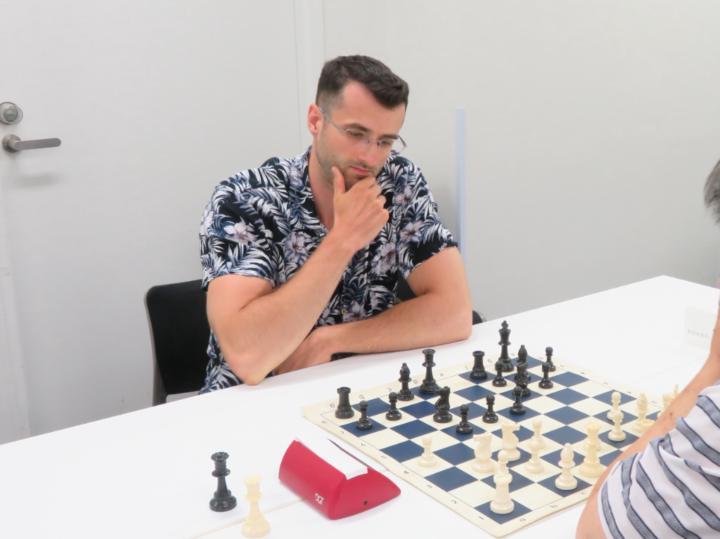
@tyler-scott-9955
Areas of expertise: chess, fitness, languages.
Feel free to contact regarding the above.
FIDE Profile: https://ratings.fide.com/profile/7003048
Active 30d ago
Joined Jan 26, 2026
INTJ
Nagoya, Japan.