
Write something

Oct 25 •
Damaged Chains: Three-Tonne Steel Beam Falls into Molten Zinc
During a steel galvanising operation, a beam weighing nearly three tonnes was being lifted above a bath of molten zinc. The lifting chains were damaged and deteriorated. The chains had not received their required thorough examination. An incorrect slinging configuration exceeded the chains’ safe lifting capacity. The chain failed, dropping the beam into the molten zinc. The impact created a wave of molten metal that struck a worker, causing burns to 40% of their body. The worker required 13 operations and suffered life-changing injuries. What Went Wrong ● Damaged Accessories – Deteriorated chains remained in service. ● Missing Examination – Mandatory thorough examination requirements were not met. ● Incorrect Slinging – The configuration exceeded the permitted chain capacity. ● Inadequate Risk Assessment – Chain checks and correct slinging arrangements were not addressed. Key Lessons Learned ● A valid certificate does not replace pre-use inspection. ● Chain slings exposed to aggressive environments require additional attention. ● The WLL must be suitable for the actual slinging configuration. ● Damaged lifting accessories must be immediately removed from service and quarantined. Safety Recommendations ● Inspect lifting chains before use. ● Check examination records and any applicable examination scheme. ● Verify sling configuration, angles and working load limits. ● Quarantine damaged, corroded or deteriorated accessories. ● Include environmental exposure and accessory selection in the lift plan. Incident Source HSE prosecution report – 20 October 2026. The company was fined more than £500,000. The reported conviction was under the Health and Safety at Work etc. Act, rather than LOLER. Regulatory Mapping ● LOLER Reg. 8 – Lifting operations must be properly planned and safely carried out. ● LOLER Reg. 9 – Lifting accessories require appropriate thorough examination. ● PUWER Reg. 5 – Work equipment must be maintained in an efficient state and good repair. ● BS 7121 principles – Correct accessory selection, inspection and safe slinging arrangements.
1
0

Sep 26 •
Hands on the Suspended Load: The “Routine Lift” That Wasn’t Routine
In May 2026, HSE served an Improvement Notice on a Plant Hire & Haulage company concerning the refitting of track idlers to Komatsu D65 dozers. An excavator was being used as a crane, with the component suspended from a single lifting chain and single attachment point. But there was another serious problem: A worker was required to manually manipulate the suspended component to achieve the correct angle for installation. The company regarded the operation as something carried out routinely. HSE’s position was clear: Routine did not mean simple. What Went Wrong According to the HSE notice: - No competent person had properly planned the operation. - No appropriate written lifting plan had been prepared. - A single lifting attachment allowed the component to move/swing. - A worker was manually positioning the suspended load. - Hands and fingers were exposed to crushing, shearing and entrapment hazards. - The operation was being supervised, but the supervisor did not intervene despite the unsafe conditions. The Dangerous Part Think about where the worker’s hands potentially are: Suspended component or fixed machinery If the excavator moves slightly, If the chain rotates, If the component suddenly changes angle, or If tension changes. There may be no time to remove the hand. HSE specifically identified the potential for amputation injuries to fingers and/or hands. “But We Do This All the Time” This is one of the most dangerous phrases in lifting operations. Repetition can make an operation familiar. It does not automatically make it low risk. HSE guidance says the amount of planning should reflect the complexity and foreseeable risks of the operation. Routine operations that are more complex may still need to be planned each time they are undertaken. Key Lessons Learned Never design a lifting method that depends on somebody placing their body in the line of fire to make the load fit. If workers repeatedly have to push, pull, twist or hold a suspended component into alignment, ask:
1
0

Sep 11 •
Incorrect Lifting of Mobile Crane Counterweights
The photograph shows four mobile-crane counterweight slabs being handled together using round slings. The round slings appear to be crossed between the counterweight lifting points. A comment accompanying the photograph states that the lifting lugs were intended for no more than two counterweights at a time. This creates an important lesson: counterweights may look simple to handle, but they must be lifted exactly in accordance with the crane manufacturer’s specified procedure. What Went Wrong - Four counterweights were being handled in one lift. - The round slings were crossed and bearing against each other. - The lifting points may have been subjected to forces/configurations they were not designed for. - The sling arrangement could introduce poor load sharing, local pressure and instability. - The manufacturer’s permitted lifting arrangement may not have been followed. Why Crossing Round Slings Is a Problem Round slings should not simply be crossed or twisted to make an improvised lifting arrangement. This can cause: - Sling-to-sling contact and friction. - Localised compression. - Unequal loading. - Poor load control. - Damage to the sling cover and potentially the load-bearing fibres. - A configuration that may not correspond with the sling manufacturer’s rated method of use. If the required configuration isn’t covered by the manufacturer’s instructions or lift plan, don’t improvise it. Key Lessons Learned Counterweights are lifting loads in their own right. Before lifting them, confirm: - Manufacturer’s lifting instructions. - Maximum number permitted per lift. - Correct lifting points. - Correct lifting accessories and configuration. - Individual and combined weight. - WLL of the lifting system. If the manufacturer specifies maximum two counterweights, then four should not be lifted simply to save crane time. Safety Recommendations - Follow the crane manufacturer’s counterweight handling procedure. - Do not exceed the permitted number of slabs per lift. - Never improvise by crossing or twisting round slings. - Check sling WLL, configuration and condition. - Inspect the counterweight lifting points. - Keep personnel outside the drop zone. - If the correct lifting arrangement is uncertain,STOP and verify it before lifting.
0
0

Sep 1 •
Shipping Container Structural Failure During Lift
During port lifting operations, a crane was lifting a shipping container using a container spreader. While suspended, the container suffered major structural failure and split apart, creating a serious risk of falling cargo and debris. Importantly, the lifting system appeared to remain connected, the load itself failed. What Went Wrong - Container structural integrity was lost during lifting. - Possible previous damage, corrosion or weakened structural members. - Incorrect or uneven cargo distribution should also be considered. - Personnel could have been exposed to a major falling-object hazard. - The exact cause cannot be confirmed from the photograph alone. Key Lessons Learned Inspecting the crane and lifting accessories is not enough. The condition of the load itself must also be considered. For containers, obvious damage to corner fittings, posts, rails or structural sections should never be ignored. If unusual distortion, movement or cracking is observed during take-off: STOP THE LIFT. Safety Recommendations - Inspect the container before lifting. - Check for corrosion, deformation and structural damage. - Verify container gross weight. - Maintain a suitable exclusion/drop zone. - Use a controlled initial lift to identify abnormal behaviour. - Quarantine questionable or damaged containers for competent assessment. Incident Source Safety-learning case based on the supplied photograph. The exact location, date and official cause have not been verified. Guidance Mapping ● IMO/ILO/UNECE CTU Code – Container condition and safe cargo transport principles. ● LOLER Reg. 8 – Proper planning, supervision and safe execution of lifting operations where LOLER applies. ● PUWER – Suitable and safely operated work equipment where applicable. Key Point The crane can be safe. The spreader can be safe. But what about the load? Never assume that because something can be picked up, it is structurally capable of being lifted safely. Wolf Lifting Dynamics | www.wolflifting.uk | Case Study 134
1
0

Aug 12 •
Damaged Precast Element Collapses During Installation
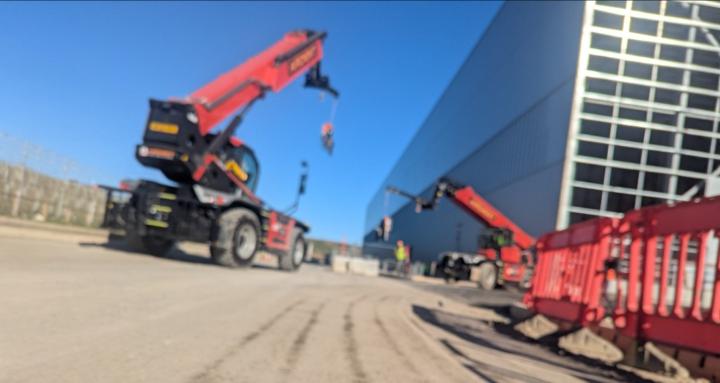
During the installation of large precast façade elements inside a warehouse, a 360° Rotation telehandler was being used as lifting equipment together with a spreader beam and lifting accessories. The precast element was lifted into its installation position and initially appeared controllable. However, the element had already suffered damage which affected its structural integrity. During the final positioning and installation stage, once the element was placed and the load condition changed, part of the precast unit became unstable, broke away and collapsed to the ground. A slinger was positioned immediately beside the element at the time. As the section started to fail, the slinger recognised the movement and managed to move away quickly. Part of the heavy precast element then crashed onto the floor beside him. He was extremely lucky. Had he reacted only seconds later, he could have been crushed or fatally injured by the collapsing precast section. The photographs taken afterwards show the extent of the failure, with large sections of the precast element broken and lying on the floor. What Went Wrong Damaged precast element allowed to proceed through the lifting operation. Structural integrity of the element was not adequately confirmed before installation. Damage became critical when the element reached its final position. Part of the load suddenly became unstable. Slinger was positioned inside the potential collapse/fall zone. Personnel relied on the load remaining structurally intact. The danger did not disappear simply because the load had reached its landing position. Key Lessons Learned Inspect the load – not only the lifting accessories. A certified spreader beam, chains and lifting machine cannot make a damaged precast element safe. Precast units can contain cracks, damaged edges, compromised lifting points or structural defects that may become critical when the load orientation or support conditions change. The final installation stage can be one of the most dangerous parts of the lift.
3
0

1-30 of 33
powered by
skool.com/wolf-lifting-dynamics-9548
This community shares real lifting case studies, consultancy insights, and site-proven lessons covering cranes, supervision, planning, and execution.
Suggested communities
Powered by