
Nov '25 • FIELDCRAFT DISCUSSION
The 5 Survival Skills Every Green Beret Masters (And Why You Should Too)
I spent years as a Green Beret Engineer and Intelligence NCO.
Deployed to some of the harshest environments on the planet. And here's what I learned:
Survival isn't about having the fanciest gear. It's about mastering the fundamentals that keep you alive when everything goes wrong.
These are the 5 core skills every Green Beret is expected to master – and the same skills I teach civilians who want to be truly prepared, not just "survival enthusiasts."
1. FIRECRAFT – The Non-Negotiable
Why it matters: Fire is life. Warmth, water purification, signaling, morale. Lose your ability to make fire, and your survival timeline collapses fast.
What Green Berets know:
-Multiple ignition methods (ferro rod, friction fire, magnification, chemical)
-Fire in ANY weather (rain, snow, wind, wet conditions)
-Tinder identification and prep (natural and man-made)
-Fire lay structures for different purposes (cooking, warmth, signaling)
The skill that separates amateurs from pros: Hand drill friction fire.
If you can make fire with nothing but wood and your hands, you're
never truly without fire.
What you should practice:
-Master your primary method (ferro rod) until you can do it in the dark, in the rain, with numb hands
-Learn one primitive method (bow drill or hand drill)
-Build a tinder bundle that catches on the first ember
-Practice fire-making in bad weather – that's when you'll actually need it
2. SHELTERCRAFT – Your First Line of Defense
Why it matters: Exposure kills faster than hunger or thirst. Hypothermia can set in within hours. Your shelter is your survival priority after immediate threats.
What Green Berets know:
-Site selection (drainage, wind protection, hazards, resources)
-Insulation principles (ground insulation is critical – cold ground -steals body heat)
-Natural shelter construction (debris huts, lean-tos, snow shelters)
-Improvised materials (tarps, ponchos, emergency blankets)
The skill that separates amateurs from pros: Building a debris hut that actually keeps you warm. Most people build shelters that look good but don't retain heat.
What you should practice:
-Build a shelter with ONLY natural materials (no tarp, no cordage)
Sleep in it overnight in cold weather – you'll learn fast what works and what doesn't
-Practice in your backyard before you need it in the field
-Learn to insulate from the ground up (12+ inches of debris between you and the earth)
3. WATERCRAFT – The 72-Hour Clock
Why it matters: You can survive 3 weeks without food, 3 days without water, 3 hours without shelter (in harsh conditions), 3 minutes without air. Water is your 72-hour survival clock.
What Green Berets know:
-Water sourcing (streams, springs, collection methods, indicators)
-Purification methods (boiling, filtration, chemical, UV)
-Hydration discipline (rationing, preventing dehydration before it starts)
-Waterborne illness prevention (Giardia, Cryptosporidium, bacteria)
The skill that separates amateurs from pros: Knowing how to find water where others see none. Reading terrain, vegetation, animal behavior.
What you should practice:
-Boil water properly (rolling boil for 1 minute at sea level, 3 minutes above 6,500 ft)
-Build a solar still or transpiration bag
-Identify 5 water indicators in your local environment
-Carry backup purification (tablets, filter, etc.) and know how to use them under stress
4. FIELDCRAFT – The Knife is Your Most Important Tool
Why it matters: Your knife is your force multiplier. Shelter building, fire prep, food processing, first aid, self-defense, tool-making. Lose your knife, and every task becomes exponentially harder.
What Green Berets know:
-Knife selection (full tang, high carbon steel, functional over flash)
-Proper grip and cutting techniques (away from your body, controlled cuts)
-Batoning (splitting wood safely and effectively)
-Carving and notching (shelter stakes, traps, tools)
-Field maintenance (sharpening, rust prevention, edge retention)
The skill that separates amateurs from pros: Sharpening a blade in the field to razor-sharp without a fancy kit. A dull knife is a dangerous knife.
What you should practice:
-Baton wood safely (proper hand placement, controlled strikes)
-Carve feather sticks for fire tinder (fine, curled shavings that catch a spark)
-Sharpen your knife with a basic stone until you can shave hair off your arm
-Make natural cordage from plant fibers (basswood, yucca, dogbane)
5. NAVIGATION – When GPS Fails, You'd Better Know Where You Are
Why it matters: Getting lost turns a bad situation into a life-threatening one. Panic, wasted energy, dehydration, exposure – all because you don't know which way to go.
What Green Berets know:
-Map and compass (no batteries, no signal required)
-Terrain association (reading the land, not just the map)
-Natural navigation (sun, stars, moss, wind patterns, vegetation)
-Pace count and dead reckoning
-Rally points and backtracking
The skill that separates amateurs from pros: Navigating WITHOUT a compass. Using the sun, stars, and terrain to maintain direction.
What you should practice:
-Take a map and compass into the woods – NO PHONE – and navigate a 2-mile loop
-Learn to find north using the sun (shadow stick method)
-Identify Polaris (North Star) and navigate at night
-Practice pace count (how many steps = 100 meters for YOU)
Why I Teach This
I didn't learn survival from a book or a YouTube video. I learned it downrange, in the field, where mistakes have consequences.
And when I came home, I saw a problem:
Too many people think they're prepared because they bought expensive gear. But when the gear fails – and it will – they don't have the skills to back it up.
That's why I started Migizi Outdoors.
Elite Survival Made Simple.
I teach the same no-fluff, battle-tested skills I used as a Green Beret. Not theory. Not Instagram survival.
Real techniques that work when it matters.
What You Can Do Right Now
Pick ONE of these five skills and commit to mastering it in the next 30 days.
Can't make fire with a ferro rod in under 60 seconds? Practice until you can.
Never built a debris hut? Build one this weekend and sleep in it.
Don't know how to sharpen your knife? Learn. Your life may depend on it.
And if you want to learn these skills hands-on, the way Green Berets do – with real instruction, real tools, and real results – I teach monthly workshops here in Kentucky/Tennessee.
Bladesmithing. Survival skills. Primitive fire. Knife skills. Shelter building.
You'll leave with a knife you forged yourself and the skills to use it.
Next workshop coming soon. DM me "WORKSHOP" or drop a comment below if you want details.
No fluff. No gimmicks. Just proven skills that work.
—Pat Russell
Former U.S. Army Green Beret
Migizi Outdoors
Elite Survival Made Simple
P.S. – What survival skill do you want to master first? Drop it in the comments. I'll answer every single one.
4
4 comments
The 5 Survival Skills Every Green Beret Masters (And Why You Should Too)
powered by
skool.com/wilderness-mastery-school-3134
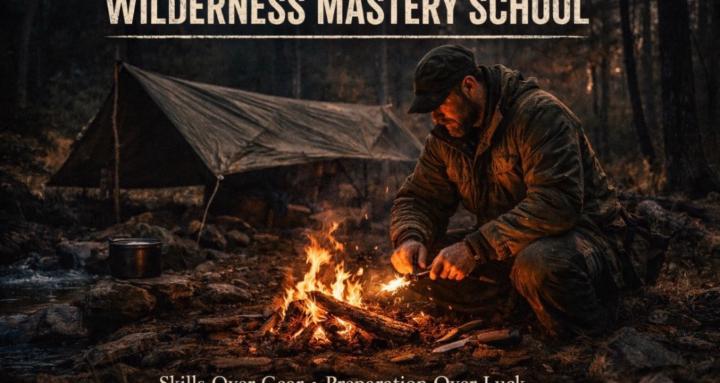
Wilderness Mastery School: Green Beret-led survival training. Fire, shelter, water, navigation, first aid. Weekly challenges.
Suggested communities
Powered by