2d • General discussion
The Problem With “Just Letting Go”
There is a strain of modern advice that sounds wise at first hearing. If you want a different life, you must “let go.” Let go of control. Let go of certainty. Let go and trust the process. It is spoken softly, almost reverently, as if surrender itself is proof of maturity.
But I’ve begun to suspect that much of this language is not wisdom. It is convenience.
When you are young, surrender looks romantic. You can burn bridges, call it courage, and if it fails, you rebuild. Time absorbs the shock. The runway stretches out in front of you. A wrong turn is painful, but recoverable. You can afford to experiment with irreversibility because you still have years to correct it.
Later in life, the physics change. At this stage, irreversibility is no longer a philosophical concept. It has weight. You begin to understand that some doors, once closed, will not reopen. That certain assets, once lost, will not be reacquired. That rebuilding is not just difficult — it may be structurally unrealistic. The stakes are no longer ego and ambition. They are survival and dignity.
I know one thing with clarity: my life cannot continue in its current form. The friction is not theoretical. It is cumulative. I need roots. I need belonging. That is not drama; it is alignment. Something has to change.
But here is where the tension tightens. Change carries risk. Not abstract risk. Real risk. Income volatility. Regulatory uncertainty. Healthcare variables. Cultural shifts. Unknowns layered on unknowns. And if the income layer collapses at the wrong moment, there is no second thirty-year career arc waiting in reserve. There is no property ladder to climb again. There is no indulgent recovery decade.
The fashionable response is to say, “Trust.”
I don’t think trust means gambling your structural base. There is a difference between control and discipline. A control freak tries to eliminate uncertainty because he cannot tolerate tension. He scripts the future, micromanages every variable, demands guarantees. That is fear disguised as strength.
But the opposite extreme drifting and calling it surrender is not courage either. It is abdication. It is a refusal to take conscious responsibility for sequencing. It hides inside spiritual language while avoiding structural reality. The harder path sits between them.
I do not want to eliminate uncertainty. That is impossible. I want to prevent entrapment. I want to ensure that if the move falters, if the income stumbles, if the unknowns collide, I am not pinned against a wall with no re-entry.
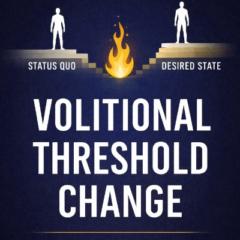
That is not a lack of conviction. It is respect for gravity. At this stage of life, freedom does not come from burning bridges. It comes from preserving optionality while moving toward alignment. It means defining a floor — a minimum viable income, a re-entry pathway, a survivable base — before stepping fully into the next configuration.
Belonging requires commitment. Commitment requires risk. But risk without structure is not bravery. It is exposure. So when I hear “just let go,” I no longer hear wisdom. I hear a failure to account for physics.
Living intentionally is not about gripping the steering wheel harder. Nor is it about removing your hands and hoping the road cooperates. It is about defining what you will no longer tolerate, designing a floor beneath yourself, and then moving deliberately into the unknown.
Not because you crave danger.
But because misalignment has become intolerable.
And because discipline, not recklessness, is what makes freedom survivable.
0
0 comments
The Problem With “Just Letting Go”
powered by
skool.com/when-life-stops-working-1688
This is for You if you feel there is something not working in your life and you need tools to examine that and possibly make a BIG change.
Suggested communities
Powered by