10d • General discussion
Case One: The Offer He Should Have Wanted
The email arrives mid-morning, dropped into his inbox without ceremony. Promotion – Confidential.
He doesn’t open it straight away. He knows what it is before he reads it. For months the conversations have been circling. Hints in meetings. A senior manager lingering a little longer after presentations. A comment about “next phase leadership.”
When he finally clicks, the words confirm what he already suspected. Expanded remit. Larger team. Strategic visibility. A salary increase significant enough to feel responsible. This is the next step. The natural step. The step he has been walking toward for twenty years.
Around him the office carries on. Keyboards. Low conversation. Someone laughing too loudly near the printers. He reads the email twice, then closes it.
He should feel something.
Instead he feels a weight settle low in his chest.
By lunchtime the news has travelled. A colleague claps him on the shoulder and says, “You’ve earned it.” Another tells him this will “open doors.” He smiles in the right places. He thanks them. He means it. He has worked hard. He has been disciplined. Reliable. Consistent.
He has done everything correctly.
The rest of the day moves as it always does. Meetings. Decisions. Approvals. He notices, with a strange detachment, how easily he performs his role. He knows when to speak. When to hold back. How to phrase an objection so it sounds collaborative. He has become fluent in this environment.
Fluent, and almost invisible inside it.
Driving home that evening, the offer replays in his mind, not as text but as trajectory. He doesn’t picture the salary. He pictures the years.
If he accepts, next year will look much like this one, only heavier. More responsibility layered on top of the same structure. More evenings carrying unfinished conversations home in his head. A larger office perhaps. A new title beneath his name. The same rhythm.
Five years stretch ahead of him. He sees himself in the same building, walking the same corridors, speaking in bigger meetings about larger targets. The language more strategic, the stakes higher, but the pattern unchanged.
Ten years extends further. He is still there. More senior. More entrenched. The lines on his face deeper. His calendar fuller. His options fewer.
Nothing in this vision is catastrophic. There is no collapse. No scandal. No failure.
It is respectable. Stable. Predictable.
And it feels like a tunnel.
Not dark. Not frightening. Just narrowing.
He tries to shake it off. This is progress. This is what sensible men do. You build, you advance, you secure. You do not question when the system rewards you.
He stands in the kitchen later that night, long after the house has gone quiet, and opens the email again. He reads it slowly this time, line by line. The praise feels deserved. The expectations feel manageable. The numbers make sense.
He imagines replying. A short message. Grateful. Professional. Committed.
He imagines the moment after that email is sent.
The door closes.
Not loudly. Not dramatically.
Just firmly.
He will have confirmed something about himself. About the direction of his life. About who he is becoming.
For years he has measured movement in vertical terms. Upwards meant forward. More meant better. Responsibility meant value.
Now, at forty-two, he finds himself staring at the shape of the path rather than its status. He is not afraid of the work. He is not even afraid of the pressure.
He is afraid of permanence.
He is afraid that by saying yes, he is not choosing a promotion but choosing a future he has not properly examined. A future that looks steady but increasingly defined. Increasingly narrow. A future where the space to reconsider grows smaller each year.
He realises something uncomfortable.
If he accepts, nothing explodes. Life continues. His family is secure. His reputation strengthens.
But something inside him tightens.
He cannot quite name it. It is not unhappiness. It is not resentment. It is not boredom.
It is friction.
A low, persistent awareness that he may be reinforcing a version of himself that fit perfectly at thirty-two but no longer sits cleanly at forty-two.
He closes the laptop again.
The offer is still open.
So is the question.
Not “Is this good?”
Not “Is this sensible?”
But “Can I continue in this direction without slowly eroding something essential?”
He stands there in the dim light, aware that nothing in his life is broken.
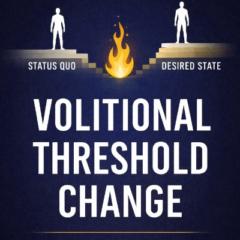
And yet, for the first time, he feels the fork.
If this feels familiar to you, I need your help.
I am building this series to understand real friction in real lives. If you are standing at a similar point — in a job, a marriage, a location, a belief system — and you feel that same tightening, tell me about it.
Not the dramatic version. The honest one.
What does your tunnel look like? Where does it narrow? What are you tolerating that no longer sits right?
Reply. Comment. Email me.
The more I understand your circumstances, the better I can write these cases — and the more accurately we can map what these moments actually are.
This series will only be as real as the people behind it.
0
0 comments
Case One: The Offer He Should Have Wanted
powered by
skool.com/when-life-stops-working-1688
This is for You if you feel there is something not working in your life and you need tools to examine that and possibly make a BIG change.
Suggested communities
Powered by