
Write something

10d •
October Is Here!
🍂 October is here — and your landscape isn’t done yet! October is one of my favorite months in the landscape. The temperatures are cooling down, plants are settling in, and it’s a great time to look around your yard and ask: What do I want this landscape to become next year? Fall is a great time to: 🌱 Plant many trees, shrubs, grasses, and perennials while the soil is still warm
💧 Check irrigation and fix leaks before winter
✂️ Do some cleanup — but consider leaving some seed heads and habitat for birds and beneficial insects
🍂 Use fallen leaves as mulch or compost instead of treating them like garbage
📝 Start planning next year’s water-wise landscape
🌾 Identify lawn areas you rarely use and consider replacing them with beautiful, lower-water plants And here in Utah, there’s an even bigger reason to rethink some of our landscaping. The Great Salt Lake needs water. No single homeowner is going to save the lake alone. But thousands of us making smarter decisions about how we use water outdoors can be part of the solution. That doesn’t mean getting rid of every lawn. Lawn can be wonderful where we actually use it. But lawn in park strips, steep slopes, narrow side yards, and decorative areas often uses a tremendous amount of water without giving us much in return. Instead, imagine those spaces filled with flowering perennials, ornamental grasses, native and adapted plants, groundcovers, boulders, pathways, and places for pollinators. We can have beautiful landscapes and use less water. At Natural By Design, that’s a big part of what we’re trying to accomplish — one lawn at a time. 🌊🌱 So this October, take a walk around your yard. Look at the places you love, the places you actually use, and the places that could become something better. A little change in one yard may not seem like much. But multiply it by thousands of yards across Utah, and suddenly we’re making a difference. Here’s to a beautiful October — and a greener future with a little less grass. 🍁
1
0
Mar 17 •
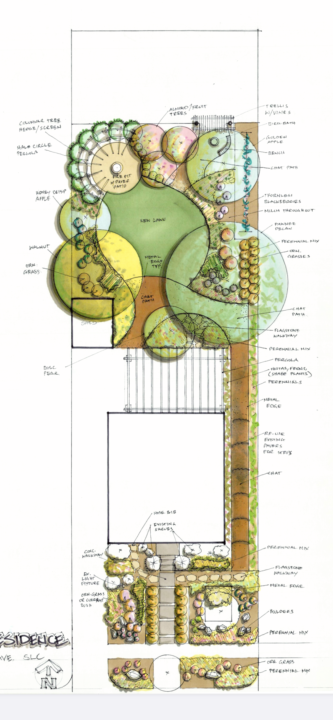
Fun little design in SLC.
Homeowner will be getting about 5-6k back in rebates if all goes well!
22d •
When September Ends!
As we wrap up September, I’ve been thinking about how this time of year is actually one of the most important times for gardeners and landscape designers. A lot of people think the gardening season is basically over once fall arrives. But there’s still a lot we can do right now, especially if we’re trying to create landscapes that use less water and do a little more good for the planet. Fall is a great time to plant. The temperatures are cooler, the soil is still warm, and trees, shrubs, and perennials can spend their energy establishing roots instead of fighting summer heat. It’s also a great time to look around your yard and ask a simple question: Do I really need all this lawn? I’m definitely not anti-lawn. Lawn has a purpose. It’s great where kids play, where families gather, or where it’s actually being used. But lawn that nobody walks on, plays on, or uses? That’s where we have an opportunity. Those areas can become water-wise gardens filled with grasses, flowering perennials, shrubs and trees. They can provide food and habitat for bees, butterflies and hummingbirds while dramatically reducing the amount of water we need to keep our landscapes beautiful. And don’t be too quick to clean everything up! Leaving some seed heads, stems and organic material through the winter gives insects and wildlife places to overwinter and adds another layer of life to the garden. This is also a great time to turn down irrigation, evaluate what worked and what didn’t this year, start sketching ideas for next year, and look into lawn-removal rebates and other water conservation programs in your area. One yard might not seem like it makes much difference. But imagine what happens when thousands or millions of us start making these little changes. Less water used. More pollinators. More biodiversity. Healthier soil. More beautiful communities. And landscapes that are actually working with nature instead of against it. 🌎🌱🐝 What are you doing in your garden or landscape before September comes to an end?
Aug 12 •
Your Yard Is Talking: What August Reveals About Your Landscape
Your Yard Is Talking: What August Reveals About Your Landscape August is actually one of the best times of year to evaluate your landscape. Why? Because right now, your yard can’t hide its problems. After weeks of Utah heat, you can clearly see what’s working—and what isn’t. Here are 5 things to look for: 1. Plants that constantly wilt Some temporary wilting is normal, but plants that struggle every afternoon may be in the wrong location, have inadequate irrigation, or simply aren’t suited for our climate. 2. Dry spots in the lawn Before increasing your watering time, check your sprinkler coverage. Often the problem isn’t a lack of water—it’s poor distribution. 3. Plants that are thriving with very little attention Take note of these! They’re showing you what actually works in your specific microclimate. 4. Areas that feel unbearably hot Large expanses of rock, concrete, artificial turf, and other hard surfaces can absorb and radiate tremendous amounts of heat. A low-water landscape doesn’t have to mean a hot landscape. Strategic trees, shrubs, grasses, groundcovers, and living plant material can make a huge difference. 5. Empty or struggling areas of the landscape Don’t necessarily rush to fix them right now. August is a great time to observe and plan. Fall is one of the best planting seasons in Utah, and what you’re seeing today can help you make much better decisions in September and October. The goal of a water-wise landscape isn’t to create a yard that simply uses less water. It’s to create a landscape that becomes more resilient, more comfortable, and easier to maintain over time. So before August ends, walk your property and ask: What is my landscape trying to tell me? Drop a picture in the comments if you have an area you’re struggling with. I’d be happy to take a look.
Aug 24 •
🌿 September Is Almost Here — And It’s One of the Best Times to Plant! 🍂
🌿 September Is Almost Here — And It’s One of the Best Times to Plant! 🍂 As summer starts winding down, it’s easy to think the landscaping season is coming to an end. But for many plants, September is actually one of the best planting months of the entire year. Why? The soil is still warm, but the air is beginning to cool. That means newly planted perennials, grasses, shrubs, and trees can start establishing roots without battling the intense heat of July and August. For a water-wise landscape, that can be a huge advantage. 🌱 A few things to think about heading into September: • Plant now for next year. Fall-planted perennials and shrubs can establish roots before winter and often take off much faster the following spring. • Look at what survived the summer well. The plants that still look great after weeks of heat are giving you some valuable information. Those are often the plants worth repeating elsewhere in your landscape. • Take note of problem areas. Bare spots, struggling plants, irrigation problems, and areas with too much reflected heat are much easier to recognize now than they will be next spring. • Don’t shut the irrigation down too early. Cooler weather means plants need less water, but newly planted material still needs consistent moisture while roots establish. • Start planning lawn conversions now. If you’ve been thinking about replacing thirsty lawn with a more water-wise landscape, fall is a great time to start designing and planning—even if installation happens later. One of the biggest lessons in water-wise landscaping is that a beautiful landscape doesn’t have to use a lot of water. The goal isn’t simply to remove lawn or irrigation. It’s to replace them with something intentional, beautiful, functional, and adapted to where we live. 🌿 What are you thinking about changing in your landscape this fall? Post a photo below if you’d like ideas for plants, layout, or ways to make an area more water-wise. 👇
3
0
1-28 of 28
powered by
skool.com/waterwisexeriscaping-school-6679
A global community for xeriscape design and build. Learn water-smart plans, plant combos, and practical steps to create beautiful low-water yards.
Suggested communities
Powered by