
Write something

18h •
Daily Post: Practice Challenge!
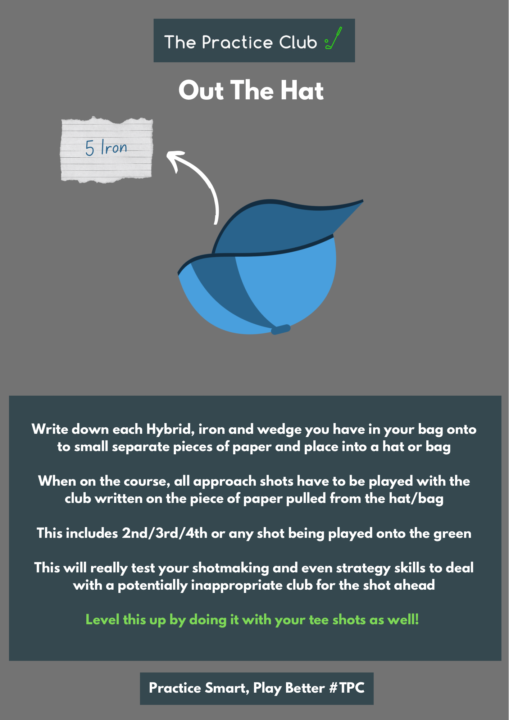
Not a reading post today, but one of my practice guides to help your long game and build skill at the same time! The image has all the detail, let me know if you have any questions and how you get on with the challenge!
0
0
2d •
Daily Post: Sunday Supplement - Why Skill Building is The Key to Better Golf
Most golfers spend the majority of their time doing one thing: Playing. They show up, tee it up, keep score, and hope that somehow, through repetition alone, improvement will come. Sometimes it does, briefly. But more often, progress stalls, frustration builds, confidence dips. Because here’s the truth: Golf doesn’t reward time spent, it rewards skill built. The Difference Between Playing and Learning. Playing golf and learning golf are not the same thing. Playing is performance, Learning is development. When you’re on the course, your brain is wired for outcomes, score, results, avoiding mistakes. There’s very little space to experiment, refine, or deeply understand what you’re doing. Learning, on the other hand, requires intention: - Slowing things down - Breaking skills into components - Repeating with purpose - Reflecting and adjusting If you’re only ever playing, you’re asking your current skill level to magically improve under pressure… without ever upgrading the system behind it. Skill Is Built Before It’s Needed One of the biggest misconceptions in golf is that improvement happens “in the moment.”…It doesn’t. When you stand over a shot on the 18th hole, you’re not creating skill, you’re accessing it. And under pressure, something important happens: You don’t rise to the occasion… You fall back on what you’ve built. That means your performance ceiling on the course is directly tied to the quality of your preparation off it. What Does “Building Skill” Actually Mean? Skill building isn’t just hitting balls. It’s structured, deliberate, and often uncomfortable. It looks like: - Practicing specific shots with a clear intention - Adding variability instead of hitting the same shot repeatedly - Training decision-making, not just technique - Simulating pressure before it shows up in competition - Developing a consistent pre-shot routine In other words, you’re not just training your swing, you’re training your ability to perform the swing when it matters.
0
0
3d •
Daily Post: Mental Rehearsal and Visualisation
Today’s post is a bit of a follow from yesterdays post and how seeing what you want can help achieve what you want.. The power of visualisation and mental rehearsal has been demonstrated in dozens of research studies. If you take twenty athletes of equal ability and give ten mental training they will outperform the ten who received no mental training every time. This is what’s known as the ‘head edge’. One interesting study involved college basketball players. For three months, one group shot free throws for one hour each day. Another group spent an hour each day thinking about shooting free throws. The third group shot baskets thirty minutes a day and spent thirty minutes visualising the ball going through the hoop from the foul line. Which group, at the end of the study, do you think improved its free-throw shooting the most? The third group did! The imagery had as much impact on accuracy as shooting baskets. In another case study, cited in Foundations of Sport and Exercise Psychology, a sports psychologist worked with the United States Olympic ski team. He divided the team into two groups equally matched for ski-racing ability. One group received imagery training; the other served as a control group. The coach quickly realized that the skiers practicing imagery were improving more rapidly than those in the control group. He called off the experiment and insisted that all his skiers be given the opportunity to train using imagery. So, while these are two different sports to golf, the principle here is what visualising and pre round rehearsal can do help you game… give it a try and see how it impacts your performance!
0
0
4d •
Daily Post: Mind Sabotage?
Most people, not just golfers, underestimate the power of the mind and how the brain can sabotage performance. When a weekend golfer arrives at a water hole what is the second thing he does after fishing an old ball, a water ball-out of his bag? Stepping to the tee he tells himself, "Don't hit it in the water." What we now know in psychology, and particularly golf, is that actions follow our thoughts and images. If you say, "Don't hit it in the water? and you're looking at the water, you have just programmed your mind to send the ball to a watery grave. The law of dominant thought says your mind is going to remember the most dominant thought. Think water, remember water, and water likely is what you will get. So, rather than say "Don't hit it in the water," try another instruction, like "Land the ball ten yards to the right of the pin." You get what your mind sets. The mind works most effectively when you're telling it what to do rather than what not to do. By changing your thinking (and you can choose how you think) you can change your performance. Put another way, if you don't like the program you are watching, switch the channel! Learn to use your mind or your mind will use you. Actions follow our thoughts and images. Don't look where you don't want to go!
1
0
5d •
Daily Post: The Shot Is Over… Your Next Move Matters!
One of the most overlooked skills in golf isn’t the swing, it’s what you do after the shot. A good post-shot routine isn’t about pretending every shot was perfect. It’s about controlling your response so one swing doesn’t affect the next. Try this simple process: Accept it. Good or bad, the ball has gone. You can’t change it. Assess it. If needed, make a quick, objective observation. Was it the club? The strike? The decision? Keep it factual, not emotional. Move on. Once you’ve learned what you need to, let it go. Your focus should now be on getting to the next shot with a clear mind. Use a ‘closing’ trigger, such as taking your glove off or hearing the noise of the club landing in your bag, to put closure on the shot ready to move on to the next. The best golfers aren’t mentally strong because they never hit bad shots. They’re mentally strong because they recover from them quickly. Your score isn’t determined by your worst shot… it’s determined by how well you respond to it.
0
0
1-30 of 56
powered by

skool.com/warren-harris-golf-performance-1196
This is for all levels of golfer to learn how they can perform better on the course without swing changes, using better mental and practice strategies
Suggested communities
Powered by