
Write something


3d •
Putting Anger in Its Place
When the Fire of Emotion Is Given a Safe Way Out Anger is one of the Seven Emotions recognized in Traditional Chinese Medicine. These emotions—joy, anger, worry, pensiveness, grief, fear, and fright—are natural responses to life. They are not harmful simply because we experience them. They become internal causes of disharmony when they are unusually intense, remain unresolved for a long time, or are continually suppressed. Anger is especially associated with the Liver and the Wood element. The Liver’s energetic responsibility is to keep Qi moving freely and smoothly throughout the body. Like a healthy tree, Liver energy needs room to grow, change direction, and respond flexibly to its surroundings. Anger often appears when that movement is blocked. We may feel obstructed, mistreated, controlled, ignored, betrayed, or unable to move forward. Anger rises because something within us recognizes that a boundary has been crossed or that change is needed. In this way, anger is not automatically an enemy. It is a messenger carrying energy for protection, correction, and action. The problem comes when the messenger is never heard—or when it is allowed to take control of the entire house. When Anger Causes Qi to Rise In Chinese medicine, the natural movement of anger is upward. Sudden or explosive anger may cause Liver Qi to rise rapidly toward the head and upper body. This helps explain why an angry person may develop: - A red face or red eyes - Headaches or migraines - Dizziness - Ringing in the ears - Tightness in the neck and shoulders - A pounding heartbeat - Shouting, clenched teeth, or trembling - A bitter taste in the mouth - Difficulty sleeping When anger remains unresolved, it may instead become Liver Qi stagnation. The person may feel irritable, frustrated, tense, emotionally stuck, or unable to take a satisfying breath. There may be tightness beneath the ribs, digestive disturbances, menstrual irregularities, frequent sighing, or the sensation of a lump in the throat.
0
0

8d •
Putting Emotions in their Place- WORRY!
Worry, Pensiveness, and the Spleen Have you ever noticed how worry seems to circle? The same thought returns again and again: What if this happens? What if I cannot fix it? What if something goes wrong? We may believe that continually thinking about a problem will eventually produce an answer. But much of the time, worry does not lead to resolution. It simply keeps the mind—and the body—working on a problem that cannot be solved in that moment. Chinese medicine has a beautiful way of describing this. Worry and pensiveness are associated with the Spleen. The Spleen’s energetic role is to transform and transport nourishment, helping the body turn food into usable Qi and Blood. It also supports our ability to mentally process information and experiences. Healthy thought allows us to reflect, learn, plan, and make wise decisions. But excessive thinking becomes pensiveness—the repetitive chewing over of an experience long after useful thought has ended. Chinese medicine says that worry knots the Qi, while excessive pensiveness depletes the Spleen. Instead of energy moving freely, it begins circling around the same concern. This may eventually appear as mental fatigue, poor concentration, heaviness, low energy, changes in appetite, bloating, digestive discomfort, or feeling tired after eating. We could say that the mind begins doing emotionally what an overwhelmed digestive system does physically: it keeps trying to process something that it cannot fully break down. So how do we put worry back in its proper place? The method shared in this video is sometimes called a “Worry Hour” or “Worry Journal.” Finland’s Mentalhub describes a similar practice: worries are written down as they arise and intentionally postponed until a designated time, rather than being allowed to dominate the entire day. A focused period is then used to acknowledge and consider them. The purpose is not to deny worry, but to give it a boundary. Mentalhub Finland
0
0
11d •
Putting Emotions in their Place
Understanding the Seven Emotions in Chinese Medicine Emotions are not enemies. They are messengers. Anger tells us that a boundary may have been crossed. Fear alerts us to danger. Grief helps us acknowledge loss. Worry attempts to solve a problem, while joy opens the heart to connection and life. Chinese medicine has long recognized that emotions are inseparable from physical health. The mind and body are not treated as two separate systems; they are understood as different expressions of the same living person. What affects the heart can influence the mind. What troubles the mind can eventually be reflected in the body. The traditional Chinese medicine framework identifies seven primary emotions: 1. Joy 2. Anger 3. Worry 4. Pensiveness or overthinking 5. Grief 6. Fear 7. Fright or shock These emotions are normal and necessary. Chinese medicine does not suggest that feeling anger, grief, or fear automatically creates illness. Difficulty may arise when an emotion becomes extremely intense, continues for a long time, is repeatedly suppressed, or overwhelms the body’s ability to regain balance. In this way, “putting emotions in their place” does not mean denying or controlling them. It means recognizing them, understanding their messages, and helping them move through the body rather than allowing them to remain lodged within us. Joy and the Heart In Chinese medicine, joy is associated with the Heart. The Heart is said to house the Shen the spirit, consciousness, awareness, and emotional presence of the person. Healthy joy warms the Heart, encourages connection, and brings lightness to life. However, excessive excitement, emotional overstimulation, or constant pursuit of pleasure may scatter the Heart’s energy. A person may feel restless, overstimulated, distracted, unable to settle, or have difficulty sleeping. In more extreme patterns, excessive joy may appear less like peaceful happiness and more like agitation or emotional instability. Balanced joy is not frantic excitement. It is a quiet sense of presence, gratitude, connection, and inner peace.
0
0
1-30 of 151
powered by
skool.com/true-medicine-3260
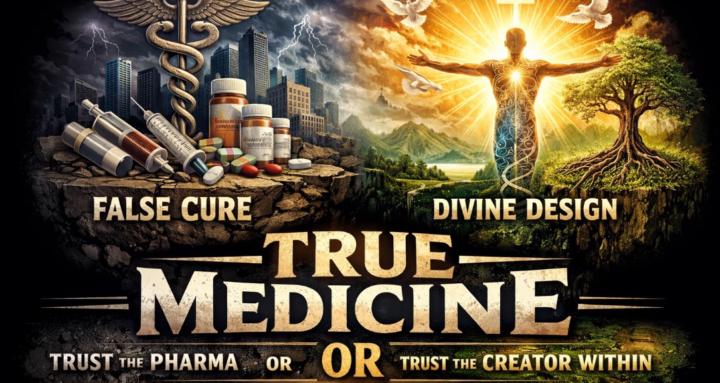
Revelation of Innate intelligence or the human body -contradicting big pharma and modern medicines hypothesis that we need their "magic" to heal.
Suggested communities
Powered by