
4h •
Would Your Team Keep the Standard Without a Reminder?
Brian Cain makes a useful distinction between an athlete following instructions while the coach watches and an athlete who understands the standard well enough to carry it independently. Choose one team expectation and ask players what it looks like. If the expectation is supporting teammates after errors, what would they say or do? Listen to their answers and agree on something practical. Then model it as a staff. When a player misses the standard, describe the behavior and hear their perspective. If they turned away from a teammate after a mistake, ask what happened and what they will try next time. Leave room for a genuine answer. Accountability is more useful when a player understands the gap and has a way to act differently. Also notice when the group follows through without prompting. Name what happened and why it helped. That gives players a concrete example of the culture they are building. My challenge, inspired by Brian’s article: pick one standard your staff needs to model more consistently. What would your players actually see you doing? Brian Cain resources Original article and video: https://briancain.com/blog/how-to-coach-self-control-and-discipline-as-a-trainable-skill.html Listen to the matching podcast episode: https://podcasts.apple.com/us/podcast/how-to-coach-self-control-and-discipline-as-a/id1499162056?i=1000799189550 Free three-day coaches mini-course: https://briancain.com/coach-offer MPM Coaching Certification information: https://briancain.com/mental-performance-mastery-certification-register Brian’s courses are separate external resources; check his site for current enrollment details. — Coach JT
0
0
8h •
The Subscription Flip — Extend the Relationship You Have Built
The value of a coach’s knowledge includes more than drills. It also includes how you explain a standard, respond after a mistake, and help an athlete decide what to do next. In The Subscription Flip replay, Greg Jameson explores how ReplicAI•tor Coach can extend access to an expert’s methods between sessions. For team leaders, the question I’d bring is this: what would help reinforce your approach while keeping the human relationships at the center? An approved explanation of your reset routine might be useful. A conversation that needs listening, context, and judgment may need you personally. Decide which is which before building a service. Watch the replay below and share one part of your coaching approach you would want athletes to understand consistently, even when you aren’t in the room. Watch the full replay: https://www.youtube.com/watch?v=4cfuQX64qyk — Coach JT
0
0
23h •
Your Team Learns from How You Show Up
Dan Hollis asked me for a leadership lesson I learned the hard way. My answer was that our words don’t mean nearly as much as how we show up. If I ask players to respond well after mistakes, they’re going to watch my response when an umpire makes a call I don’t like. If I ask them to prepare, they’ll notice whether I arrived with a practice plan. If I say every player matters, they’ll notice who gets my attention when the game gets tight. Choose one standard your team hears a lot. Then write down what that standard looks like for the coaching staff. “Be ready” might mean assistants know their stations before warm-ups. “Stay together” might mean coaches use the same reset language rather than giving a player three conflicting instructions. At your next staff check-in, ask: “Where did we model this well, and where did we make it harder for players to follow?” Use one example, choose one adjustment, and check it again after the next practice. The goal is to make the standard visible. Young athletes don’t need a perfect coach; they need adults who take responsibility and follow through. When you miss the standard yourself, showing them how you correct it can be a useful lesson too. What’s one team standard you’re working on, and what would your players see you doing if you were modeling it well? — Coach JT
0
0
1d •
What We Want Pack Athletes to Carry Beyond the Diamond
I judge our culture by what happens after a mistake. Does the shortstop want the next ground ball? Does the dugout help that player get ready for it? Those little moments tell you what your team is learning about responsibility, trust, and how to respond when something goes wrong. The About Pack page on our new site explains why we’re trying to connect athlete development, team opportunities, and coach support across more than one season. Give it a read and see what we’re building. https://www.packacademyco.com/about-pack What’s one behavior you’d want a former player to carry with them years after leaving your team? — Coach JT
0
0
1d •
Decide What Deserves a Team Meeting
One of the easiest ways to give players time back is to stop turning every correction into a team meeting. Ira talks about guarding the blocks of time that matter. On a team, I think that means asking who actually needs to hear a message and when they need to hear it. If one infielder missed a coverage, give that player a quick explanation and another rep. If the whole defense is confused about who covers second, stop long enough to agree on the call, then run it again so everyone hears it in context. If it’s a serious issue affecting a teammate, give it the time and attention it needs in the right setting. Try this with assistants before practice: pick the one thing you’ll stop the whole group for and agree on what can be coached individually. After practice, ask players what they remember. You’ll learn whether you protected the message they needed or just gave them more time to stand around. What does your team stop practice for that could be handled better one-on-one? — Coach JT Inspired by Ira Rosen and Cory Michael Sanchez, Mojo Global: Daily Mojo Day 9: Time Vampires
2
0
1-30 of 55
skool.com/trainwithpack
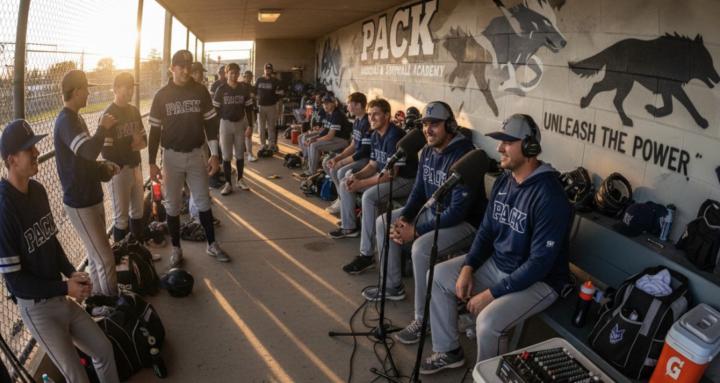
Free baseball & softball coaching community. Build better practices, player confidence, and stronger teams. Premium: $49/month or $295/year.
Leaderboard (30-day)
1

+16
2

+3
3

+3
4

+2
5

+2
Powered by