
Write something
Pinned
Dec '25 •
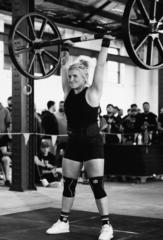
Meet your head coach 🫡
Hey everyone 👋🏼 I’m Lauren I’m a gym owner and have spent the last 10 years as a strength & conditioning coach, working with a wide range of athletes and everyday lifters to build real, measurable strength and long-term performance 💪🏼 I’m also a competitive strongwoman athlete in the U73kg class, currently ranked 3rd in Australia 🇦🇺 and 18th in the world 🌍. I actively compete while coaching, which means everything I teach is grounded in evidence-based practice and real-world application 🏋️♀️ My focus is on intelligent strength training, sustainable progress, and developing athletes who are strong, resilient, and capable. I’m here to contribute, share insights, and connect with others who take performance seriously 🔥 Let’s level the fk up big dogs 🐶
Jan 27 •
ONE BELIEF THAT IS SLOWING YOUR PROGRESS (AND HOW TO REFRAME IT)
“They’ve got better genetics than me — it’s easy for them.” We call bullsh#!t. 🫢 Yes, genetics are real. Some people are naturally built for certain movements, sports, or body types. Limb length, leverages, muscle insertions - all of that matters. But here’s what doesn’t matter: Using genetics as an excuse to stop showing up. Let’s break it down. You might have long arms. Great - that gives you an advantage in something like a heavy deadlift.But those same long arms? Massive disadvantage in an overhead press where you’ve got a long way to lock the weight out. Does that mean you only deadlift and ignore pressing?No. It means you lean into your strengths and put in the work where you’re challenged. Everyone has advantages. Everyone has disadvantages.The difference between people who make progress and people who don’t? 👉 The ones who progress don’t let their disadvantages become excuses. And here’s the part people don’t like to admit... What you’re seeing as “easy” for someone else is usually the result of: - Years of consistency - Training through frustration - Failing reps - Adjusting, learning, and sticking with it - Showing up when motivation was nowhere to be found You’re not seeing the early mornings, the missed lifts, the self-doubt, or the weeks where nothing seemed to move. You’re just seeing the outcome. Reframe it like this:“I might not be built for this, but I can outwork it.” Your job isn’t to have perfect genetics.Your job is to: - Show up - Train with intent - Be patient - Put in the hard yards - Stop waiting for things to feel fair or easy Because progress doesn’t go to the most genetically gifted, it goes to the hardest workers in the room. 💬 Question for the group... What’s one area you’ve been blaming genetics for… instead of effort?
3
0

Jan 18 •
So you ate too much over the weekend?
Now what? Firstly nothing has gone wrong. One weekend doesn’t undo progress. Here’s what actually helps you get back on track without spiralling: 1️⃣ Don’t compensate No skipping meals. No “being good” today. Under-eating after over-eating is how the binge–restrict cycle starts. 2️⃣ Eat your next normal meal Not a detox. Not salads only. Just a balanced meal with: - protein - fibre - carbs - fats 3️⃣ Hydrate + move your body Water, steps, a gym session or mobility. 4️⃣ Expect scale noise Extra food = extra carbs, sodium, and water. This is not fat gain. Give it 2–4 days. Progress isn’t about being perfect. It’s about returning to your normal habits without drama. Save this for Monday mornings 💛
3
0

Jan 14 •
TRAINING INTENSITY ❤️🔥 Are you actually training hard enough?
One of the most misunderstood parts of training is intensity. Not how long you train. Not how sweaty you get. Not how exhausted you feel afterward. Intensity = how close you train to your true capacity. For strength and muscle-building, this usually means: - You’re finishing sets with 1–3 reps left in the tank - The last reps are slow, challenging, and require focus - You couldn’t casually add 5 more reps “if you had to” Here’s the important part 👇 Training too light won’t create enough stimulus for change. Too hard, too often leads to burnout, poor recovery, and stalled progress. The goal is effective intensity, not punishment. It's a balancing act. Ask yourself during your sessions: ✔️ Did I challenge the muscle, or just move the weight? ✔️ Did I stop because it was hard… or because it was uncomfortable? ✔️ Could I repeat this performance again next week? Progress comes from intentional effort, not empty fatigue. If you want results, train with purpose. You have to be paying attention to what is happening in your body, not chatting to your best mate at the same time. Loz 🐶
1-12 of 12
skool.com/theathletehub
Train like an athlete.
The Athlete Hub is where performance, nutrition, and mindset actually make sense.
Built for people who want to level up.
Powered by