
Write something
Pinned

May 27 •
Price of the Membership
I wanted to give you all a heads up about our community pricing.: Right now, you're locked in at $27/month, and here's the great news: **this price will remain for all current members until we reach 100 members.** Once we hit that 100-member milestone, the price for NEW members will increase to $97/month. But don't worry - if you're already in, you keep your $27/month rate. This is my way of rewarding our founding members who are helping us build something special from the ground up. You believed in this community early, and I want to make sure you benefit from that. So if you know anyone who's been thinking about joining, now is the time to let them know. Once we hit 100 members, they'll be paying almost double. Thanks for being part of The Children BJJ Blueprint family. Let's keep growing and getting better together! Oss! Joao
Pinned
Feb 22 •
Your Most Powerful Teaching Tool Isn't on the Mat — It's the Parent Sitting in the Lobby.
Here's something most coaches figure out too late: you can do everything right inside that class, and still lose the battle at home. You spend 45 minutes building a child's confidence, teaching them to stay calm under pressure, helping them understand boundaries and respect, and then they walk out the door, get in the car, and everything you just did gets undone in a 10-minute ride home. Not because the parents are bad. But because nobody told them what you were working on. Here's the reality of working with children that we don't talk about enough: kids are wired to be loyal to their parents first. It's not a choice, it's survival instinct. When what you say on the mat conflicts with what mom or dad says at home, the child doesn't get confused about the parent. They get confused about you. And a confused child can't learn. A confused child eventually stops trusting the mat. This is why the most effective kids coaches aren't just great with children, they're great with families. The parent isn't an obstacle to your coaching. They're your most important partner. When parents understand your methodology, your language, and your goals for their child, something powerful happens. The lessons don't stop at the edge of the mat. They continue at the dinner table, in the car, at school. You multiply your impact without adding a single extra class. So how do you build that partnership? Start by communicating your curriculum in plain language. Don't just teach, explain. Send a message home about what you worked on this week and how parents can reinforce it. Use simple language that parents can repeat back to their kids without getting it wrong. Create moments of connection. Parent observation days, brief check-ins, a simple monthly newsletter, these aren't extras. They're investments in the consistency your students need to grow. And when a parent pushes back or seems skeptical, resist the urge to defend your methods. Instead, get curious. Ask them what they're seeing at home. Nine times out of ten, the disconnect between what's happening on the mat and what's happening at home is simply a communication gap — and that's something you can fix.
Pinned
Feb 21 •
Welcome to the Family!
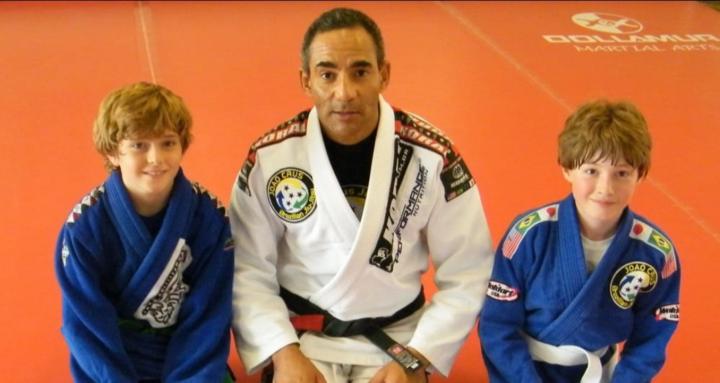
I’m Joao Crus, and I’ve been teaching Brazilian Jiu-Jitsu to kids for over 25 years. What I discovered along the way changed everything. BJJ isn’t just a martial art. It’s one of the most powerful tools we have to help children develop emotional regulation, set healthy boundaries, and build real confidence. This community exists because I believe instructors like you deserve more than technique videos and belt checklists. You deserve a complete approach, one that helps your students grow on and off the mat. Here’s what you’ll find here: Free resources to help you build better classes, communicate with parents, and understand the emotional side of what we do. And for those who want to go deeper, premium content including my full Boundary Guard curriculum, complete syllabus guides, and direct access to me through monthly live calls. Whether you’re a brand new kids instructor or a seasoned black belt looking to refine your approach, you belong here. Start by introducing yourself below, tell us where you teach, how long you’ve been working with kids, and one challenge you’re facing right now. I read every post. Let’s build something great together. Joao Crus Black Belt | Author of Grapple with Emotions | Host of Blackbelt Parenting Life| Creator fd the Kids BJJ Curriculum Course
1
0
15h •
Week 4: Change the question you ask
When a child struggles, replace “Why aren’t they doing it?” with “What does this child need in order to try again?” Action: choose one student who often disengages. During the next class, test one relational adjustment: use the child’s name, give one specific success target, pair them carefully, or offer a smaller version of the task. Record what changed. Which relational adjustment has helped one of your students re-engage?
0
0

8d •
Week 3: Turn one game into a teaching tool
Choose one game you already use and define its teaching purpose before class. Is it training balance, base, distance, pressure, reaction, or cooperation? Action: explain the purpose in one sentence, run the game, then ask one child what skill the game was building. If the answer is unclear, simplify the rules or connect the game more directly to the technique. Share one favorite kids-class game and the exact skill it teaches.
0
0

1-22 of 22
powered by
skool.com/the-children-bjj-blueprint-9044
BJJ & martial arts instructors: go beyond drills. Build resilient, confident kids. Free resources inside. Join free. Teach better. Change lives.
Suggested communities
Powered by