
Write something
Mar 9 •
Case Study: Why Impulse Control and Engagement Come Before Everything Else
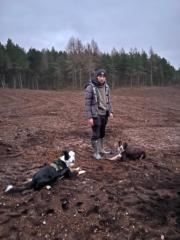
Today Zeus joined us for his first training walk, and his situation highlights something we see far too often in the dog training world. Zeus’ owners have previously invested a lot of money into trainers and behaviourists trying to solve his walking issues. Unfortunately, they also experienced very poor handling from a previous walker who reportedly strangled him during walks. Handling like this doesn’t teach a dog how to behave — it simply adds stress, confusion and often makes behavioural problems worse. When Zeus started with us, his main challenges were: • Pulling heavily on the lead • Running off whenever given the opportunity • Very high excitement around people and dogs • Poor impulse control Many people assume the solution is to correct the behaviour or expose the dog to more situations, but the reality is that these behaviours usually come from missing foundations. So instead of jumping straight into distractions, we took Zeus right back to basics. 1. Engagement A dog that is constantly focused on the environment will struggle to respond to its handler. We worked on simple engagement exercises that encouraged Zeus to check in and offer eye contact voluntarily. When a dog learns that paying attention to their handler is rewarding, everything else becomes easier to teach. 2. Impulse Control Zeus wants to greet everything immediately. That excitement isn’t “bad behaviour”, but it does need direction. Impulse control work teaches the dog to pause, think and regulate their response instead of reacting instantly to every stimulus. 3. Loose Lead Foundations Loose lead walking isn’t about physically stopping a dog from pulling. It’s about teaching the dog that staying connected to the handler is the most valuable place to be. By reinforcing engagement and proximity, the lead naturally becomes loose because the dog chooses to stay close. Key takeaway for owners Most problems on walks are not actually lead problems. They are: • Engagement problems • Relationship problems
0
0

Mar 9 •
🐕 “My dog is stubborn.”
This is one of the most common labels owners give their dogs. But in reality, stubbornness is rarely the issue. Dogs repeat behaviours that work for them. If your dog ignores recall, pulls on the lead, or jumps up, it’s not because they’re stubborn — it’s because that behaviour has been reinforced in some way. For example: • A dog that pulls on the lead still gets to move forward. • A dog that jumps up still gets attention. • A dog that ignores recall still gets to keep exploring. From the dog’s perspective, the behaviour is successful. Good training changes the outcome of behaviours, so the dog learns that better choices are more rewarding. 💡 Training isn’t about forcing obedience — it’s about making the right behaviour the most valuable option. What’s one behaviour your dog repeats constantly?
0
0
Feb 17 •
Welcome to those who are serious about doing things properly
Let’s clear something up today: Calm behaviour is not personality. It is conditioned clarity. Socialisation is not chaos. It is controlled exposure with clear expectations. The reason many owners struggle isn’t because their dog is “difficult” — it’s because structure wasn’t implemented early enough. Inside this community, we focus on: • Leadership psychology • Structured neutrality • Environmental proofing • Long-term reliability This isn’t about quick fixes. It’s about raising standards. Over the next few weeks, more structured modules will be added leading into March. Free access is available, with higher tiers for those who want deeper implementation and more advanced support. If you’re here, you’re already ahead of most dog owners. Let’s build it properly.
0
0
Feb 12 •
The first course will be uploaded shortly
This community is designed to give you a complete training structure — not scattered tips. Here’s exactly what you get inside: FOUNDATION PHASE – Marker system explained properly – Engagement & focus development – Leash pressure & communication – Recall framework – Place training CONTROL PHASE – Heel positioning & duration – Impulse control progression – Neutrality around distractions – Visitors & home manners BEHAVIOUR CLARITY – Reactivity fundamentals – Over-arousal management – Boundaries & leadership structure – Environmental exposure done correctly REAL-WORLD APPLICATION – Town centre training – Café neutrality – Car & travel behaviour – Off-lead reliability foundations Plus: – Ongoing course uploads – Structured crash courses – Tiered access for deeper mentorship – Community support – Direct guidance from me This is built to help you create a calm, obedient, socially stable dog — regardless of breed. If you commit to the structure, you will see change. First course drops soon. Stay ready.
0
0

Feb 7 •
True canine excellence isn’t created in a field — it’s built for real life
Busy cities, refined environments, high expectations. Training should elevate your dog to meet your lifestyle, not limit it. Inside this community, we focus on: • Calm, neutral dogs anywhere • Precision over pressure • Structure that creates freedom This is where standards are raised.
0
0
1-10 of 10
powered by
skool.com/the-ccc-dog-training-8804
Refined, results-driven dog training designed for discerning owners who expect excellence.
Suggested communities
Powered by