Mar 9 • General discussion
Case Study: Why Impulse Control and Engagement Come Before Everything Else
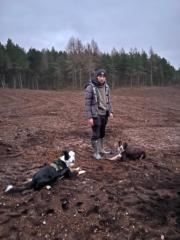
Today Zeus joined us for his first training walk, and his situation highlights something we see far too often in the dog training world.
Zeus’ owners have previously invested a lot of money into trainers and behaviourists trying to solve his walking issues. Unfortunately, they also experienced very poor handling from a previous walker who reportedly strangled him during walks.
Handling like this doesn’t teach a dog how to behave — it simply adds stress, confusion and often makes behavioural problems worse.
When Zeus started with us, his main challenges were:
• Pulling heavily on the lead
• Running off whenever given the opportunity
• Very high excitement around people and dogs
• Poor impulse control
Many people assume the solution is to correct the behaviour or expose the dog to more situations, but the reality is that these behaviours usually come from missing foundations.
So instead of jumping straight into distractions, we took Zeus right back to basics.
1. Engagement
A dog that is constantly focused on the environment will struggle to respond to its handler.
We worked on simple engagement exercises that encouraged Zeus to check in and offer eye contact voluntarily. When a dog learns that paying attention to their handler is rewarding, everything else becomes easier to teach.
2. Impulse Control
Zeus wants to greet everything immediately. That excitement isn’t “bad behaviour”, but it does need direction.
Impulse control work teaches the dog to pause, think and regulate their response instead of reacting instantly to every stimulus.
3. Loose Lead Foundations
Loose lead walking isn’t about physically stopping a dog from pulling.
It’s about teaching the dog that staying connected to the handler is the most valuable place to be. By reinforcing engagement and proximity, the lead naturally becomes loose because the dog chooses to stay close.
Key takeaway for owners
Most problems on walks are not actually lead problems.
They are:
• Engagement problems
• Relationship problems
• Impulse control problems
Address the foundations properly and the rest of the training becomes far clearer for the dog.
Zeus made a great start today and was already offering much more eye contact and focus during the walk — a small step that leads to much bigger changes over time.
0:48
0:42
0
0 comments
Case Study: Why Impulse Control and Engagement Come Before Everything Else
powered by

skool.com/the-ccc-dog-training-8804
Refined, results-driven dog training designed for discerning owners who expect excellence.
Suggested communities
Powered by