
Write something

🔥
5d •
When B-Roll Hurts Your Authority (And When It Doesn't)
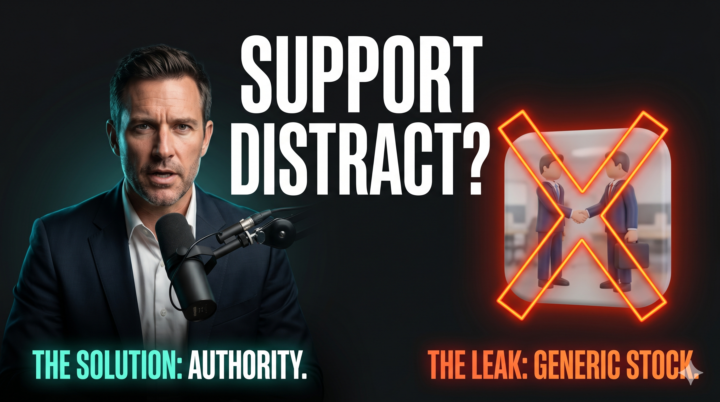
B-roll is one of those things coaches and consultants overthink before they've even filmed a single video. Here's the honest answer on when it earns its place - and when it doesn't. **Add B-roll when:** The point you're making is abstract. If you're explaining a concept that lives in someone's head - a sales cycle, a lead generation gap, a methodology - a visual cuts through faster than words alone. You've just delivered a big insight. Attention dips after a value peak. A cut to something visual buys the viewer a beat before the next point lands. It's a re-engagement tool, not decoration. The section is running long. If you're 90 seconds into a single talking-head sequence, B-roll breaks the fatigue before the viewer decides to leave. **Skip B-roll when:** You're making a direct, personal point. If the credibility of the statement comes from you saying it - a client result, a diagnostic observation, a direct challenge - cutting away undermines it. Stay on camera. You don't have footage that matches. Generic stock imagery is worse than no B-roll at all. A consultant explaining lead generation over footage of people shaking hands in an office is a positioning leak. If the visual doesn't match the argument, leave it out. You're still early in production. Getting the script, the delivery, and the hook right matters more than covering every cut. Build the asset first. Refine the production second.
🔥
8d •
A podcast won't fix a discovery problem
And I say that as someone who genuinely respects the format. Long listens, deeper trust, faster closes with warm prospects, when it works, it works well. But here's the sequencing issue I keep seeing: A podcast is built for people who already know you exist. It nurtures. It deepens. It converts warm prospects faster. YouTube search does something different. It finds people who've never heard of you - at the exact moment they're looking for what you do. Run both together and they're a powerful combination. The search video finds them. The podcast deepens the relationship once they're in your world. But if you're only publishing podcast episodes and wondering why the pipeline is still inconsistent - that's not a content quality problem. That's a discovery problem. And more depth won't solve it. Find them first. Then go deep.

🔥
10d •
Why sending YouTube viewers to a booking link kills your conversion rate
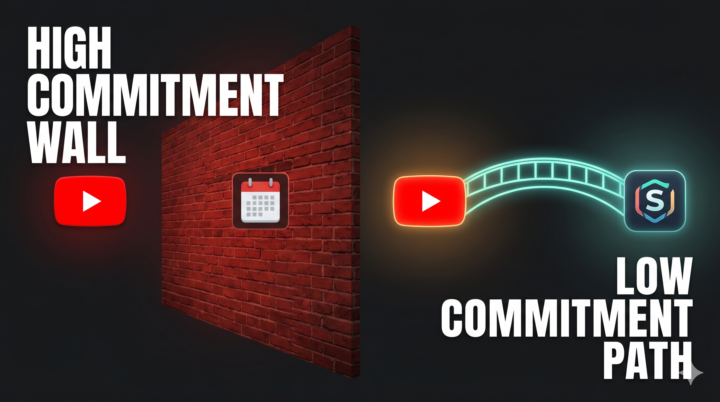
Most coaches, consultants, and founder-led businesses make the same mistake when they finally start getting traction on YouTube. They send the viewer straight to a booking link. It feels logical. The video did the work. The viewer is interested. The next step is the call. Right? It's the wrong step. And once you understand why, you can't unsee it. A YouTube viewer who has just watched 8 minutes of your content is *warm* traffic - they know you, they like the thinking, they're curious. But warm is not hot. Hot traffic books calls. Warm traffic needs one more step before it's ready to commit time on a calendar to a stranger on the internet. When you ask warm traffic to behave like hot traffic, you don't get a low conversion rate. You get *no* conversion. The viewer closes the tab and you never hear from them again. A free community sits in the middle for three reasons. One - it matches the temperature. Joining a community is a low-commitment yes. Booking a discovery call is a high-commitment yes. The brain processes them completely differently. Behavioural research going back to the 1960s shows that a small initial commitment makes a larger second commitment far more likely. Skip the small one and the big one rarely happens. Two - it removes the decision pressure. A booking link forces a yes/no in seconds, right after the viewer has been sitting passively for 10 minutes. That's cognitive whiplash. A community lets them lurk, read, and self-qualify in their own time. No countdown. No pressure. Just a quiet space to decide. Three - it adds peer proof. Inside the community, the viewer sees other people who look like them — same niche, same stage, same problems. That peer presence does more for conversion than any amount of testimonials on a sales page. The trust you built on YouTube gets transferred and amplified by the room. The trade-off is real. A community that nobody tends to becomes a ghost town, and a ghost town converts worse than a booking link. So the model only works if the community is actually run.
🔥
Mar 29 •
Face-to-cam or full production? Here's the actual rule.
It's the question I'm asked more than almost any other. And the answer is rarely what most coaches expect. Your prospect doesn't care how polished the video looks. They care whether you seem like someone who understands their problem. A beautifully produced video with the wrong message loses to a simple face-to-camera clip that names the exact frustration your ideal client was feeling. That said, there is a floor. Here it is: Audio first - always. Muddy audio signals amateur. Clean audio signals professional. A £30 lapel mic and a duvet behind you beats a ring light and the MacBook's built-in microphone every time. Lighting second. Your face must be clearly visible with no harsh shadows. Natural window light is usually enough. Everything else is optional until you're consistently generating inbound enquiries and you want to remove any remaining friction. The coaches and consultants I see stuck on this are almost always using production quality as a proxy for readiness. "Once the setup is perfect, then I'll start." The setup is never the problem. The message is. One face-to-camera video that speaks directly to a real client challenge will do more for your inbound pipeline than any fully produced video on a topic nobody is searching for. Get the message right first. Then improve the packaging. Reply below with where you stand right now - full production setup, face-to-camera only, or still waiting for the right moment. I'll give you a direct read. 👇

🔥
15d •
The podcast most coaches dismiss is the one that closes clients
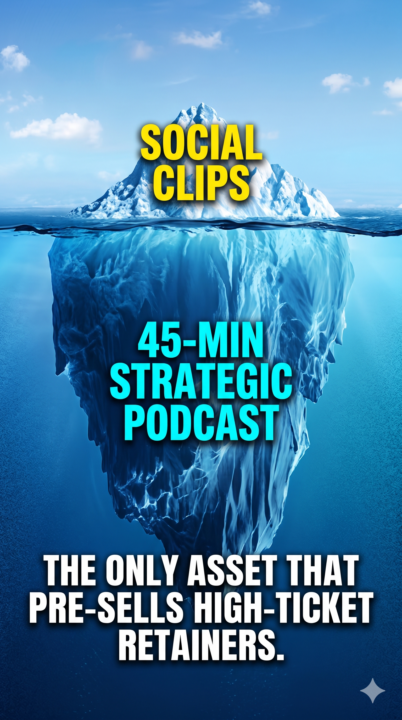
Most coaches and consultants treat podcasts as a vanity project. Something you do when you've "made it." A nice-to-have once the business is already running. That's the wrong frame entirely. A well-structured 45-minute video conversation does something no short-form clip, carousel, or LinkedIn post ever can - it lets a prospect sit inside your thinking long enough to decide they trust you before they've ever spoken to you. That matters more than most people realise. Coaches and consultants selling serious retainers aren't closing strangers. They're converting people who already believe in the methodology, already recognise the problem, and have already decided they want help. The question by the time they book a call isn't "should I work with someone?" It's "is this the right person?" A long-form video answers that question before the call begins. The prospect who's watched 40 minutes of you handling objections, walking through your framework, and demonstrating exactly how you think, that person doesn't need convincing. They arrive pre-qualified. The discovery call becomes a formality rather than a pitch. The catch is that most coaches produce podcasts the wrong way. They record a loose conversation, publish it, and wonder why nothing happens. Format alone doesn't do the work. The ones that generate inbound enquiries are built around a single, specific problem your ideal client is already searching for an answer to. One problem. One framework. One clear next step at the end. That's not a podcast. That's a pipeline asset that happens to be 45 minutes long. What's your current longest piece of content - and is it doing any of this work for you?
1-15 of 15
powered by
skool.com/the-authority-engine-7664
YouTube-led lead generation for Coaches and Consultants. Build an Authority Engine that attracts inbound clients - without chasing referrals.
Suggested communities
Powered by