
Write something

🔥
4h •
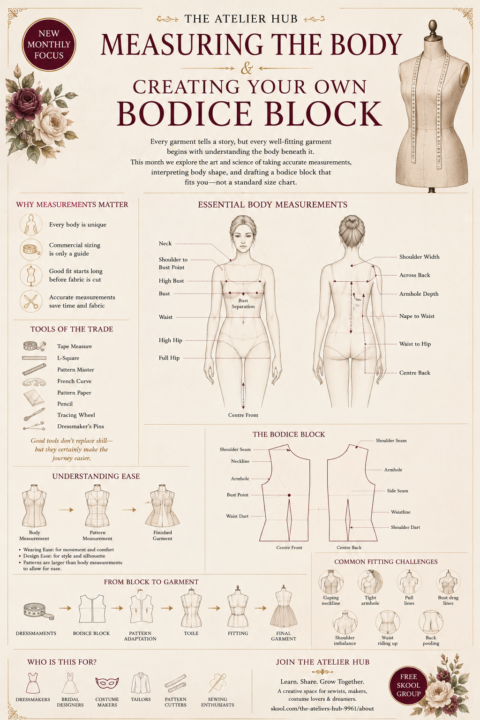
What's On - Measuring The Female Body & Making A Body Block
We're stepping into one of the most valuable skills any dressmaker, pattern cutter or garment maker can learn: understanding the body and creating a bodice block that truly fits. No matter what you love to sew—everyday clothing, bridal wear, historical costume, tailoring or couture—it all begins with a solid foundation. And that foundation isn't fabric or thread... it's understanding the person you're creating for. Throughout these sessions, we'll explore how to take accurate body measurements, interpret those measurements, and use them to draft a personalised bodice block. A bodice block (sometimes called a sloper) is a simple, close-fitting pattern that represents the unique proportions of the body. It isn't a finished design, but it is the starting point for countless garments. Once you have a well-fitting block, you can adapt it into dresses, blouses, jackets, bodices and so much more. Along the way, we'll be discussing topics such as: 📏 How to take accurate body measurements 📐 Understanding balance, posture and body shape 🪡 Drafting a personalised bodice block ✏️ Common fitting challenges and how to identify them 👗 Turning a basic block into your own garment designs ✨ Why commercial patterns don't fit everyone—and how to make them work for you One of the most rewarding parts of learning pattern cutting is that it changes the way you see clothing. Instead of simply following instructions, you begin to understand why a garment fits, how seams create shape, and where adjustments make the biggest difference. Whether you've been sewing for decades or you're just beginning your dressmaking journey, these skills will help you build confidence and create garments that fit better, feel better and reflect your own creativity. We'd love to hear from you! 📏 Have you ever drafted your own bodice block? 📏 Do you usually rely on commercial patterns, or have you experimented with pattern drafting? 📏 What's the biggest fitting challenge you've experienced when making clothes?
🔥
10d •
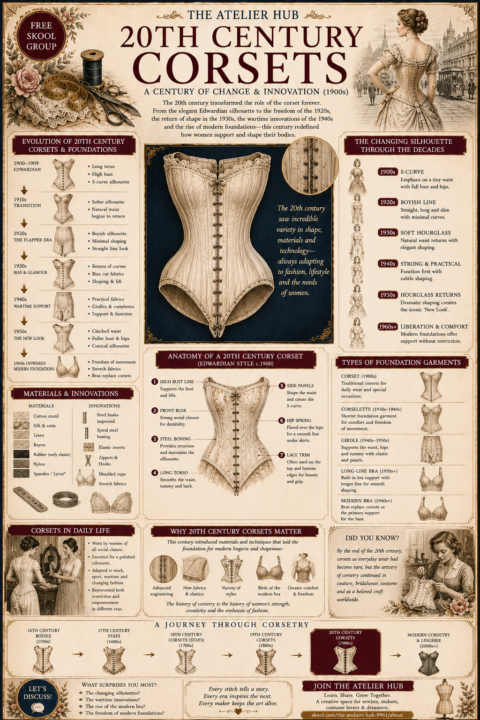
20th Century Corsets – A Century of Reinvention 🪡
As we reach the final chapter in our historical corsetry journey, it's fascinating to see just how dramatically foundation garments changed throughout the 20th century. Unlike previous centuries, where silhouettes evolved gradually, the 1900s brought rapid social, technological and cultural change, and corsetry evolved alongside it. The Edwardian Years (1900–1910) The century opened with the elegant S-bend corset, designed to create the fashionable "health corset" silhouette. These corsets encouraged an upright posture with the bust pushed forward and the hips gently back, creating the distinctive S-shaped profile that defined Edwardian fashion. The 1910s & 1920s As women's lives changed, so did their clothing. The First World War brought practicality to everyday dress, and by the 1920s fashion had shifted dramatically. The fashionable silhouette became long, straight and youthful. Rather than shaping the waist, foundation garments were designed to smooth the body and minimise curves beneath the loose-fitting dresses of the Jazz Age. For the first time in centuries, many women no longer wore heavily boned corsets every day. The 1930s & 1940s Fashion embraced softer, more natural lines. Corsetry didn't disappear—it adapted. Lightweight corselettes, girdles and foundation garments became increasingly popular, offering support without the rigidity of earlier corsets. Advances in textiles and manufacturing allowed garments to be lighter, more comfortable and better suited to modern lifestyles. During the Second World War, practicality and resourcefulness influenced every aspect of clothing, including foundation wear. The 1950s With Christian Dior's famous "New Look," structured foundations returned to fashion. Nipped waists, full skirts and beautifully sculpted silhouettes relied on carefully engineered undergarments, including waist cinchers, longline bras and girdles. While different from Victorian corsets, they shared the same purpose, creating shape through thoughtful construction.
🔥
11d •
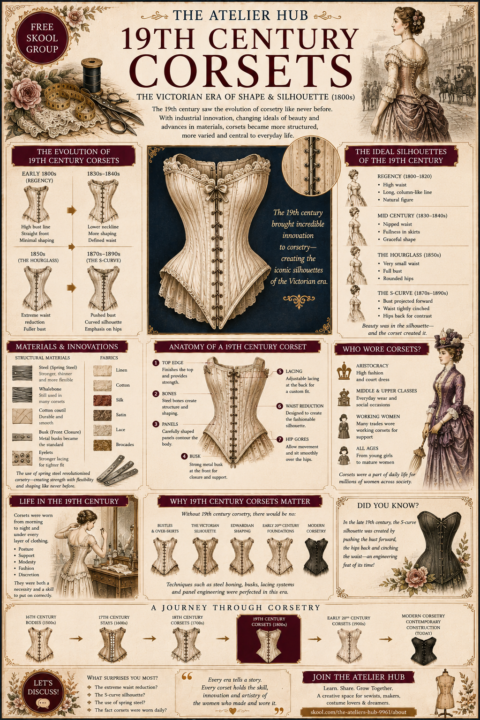
🪡 19th Century Corsets – Innovation, Craftsmanship & the Victorian Silhouette
As we continue our journey through the history of corsetry, we've reached perhaps the most recognisable era of them all the 19th century. When many people hear the word corset, this is often the image that comes to mind. Yet the Victorian corset was far from static. Throughout the 1800s, it evolved dramatically alongside fashion, technology and society itself. The century began with the elegant, high-waisted Regency silhouette, where corsets were relatively short and lightly structured. As fashions changed, so did the corset. By the mid-century, waistlines returned to their natural position, skirts became fuller, and corsets grew longer, offering increased shaping and support. One of the greatest developments of the Victorian era was the introduction of industrial manufacturing. Advances in metalworking transformed corsetry, introducing stronger steel busks and more reliable steel boning. These innovations allowed corsets to become both more supportive and more comfortable, while maintaining the fashionable silhouettes of the day. During this period, makers commonly worked with: 🪡 Cotton coutil and tightly woven cottons for strength 🪡 Linen and fine cotton linings 🪡 Flat and spiral steel boning 🪡 Steel busks for secure front closures 🪡 Hand-worked and later machine-set eyelets 🪡 Silk, satin, brocade and decorative trims for fashionable finishes The Victorian corset was also an extraordinary feat of pattern engineering. Carefully shaped panels, precise seam placement and graduated boning worked together to support the body while distributing tension evenly throughout the garment. It's important to remember that not every Victorian corset was designed for dramatic waist reduction. Everyday corsets were worn by women from many walks of life, providing support beneath clothing and helping garments fit as intended. Like modern bras or structured undergarments, they were practical foundation garments as much as they were fashionable ones. Many techniques used by modern corset makers continue to build upon Victorian innovations. From panel shaping and boning placement to busk installation and precision fitting, the craftsmanship of the 19th century still influences couture, bridal wear, historical costume and contemporary corsetry today.
🔥
13d •
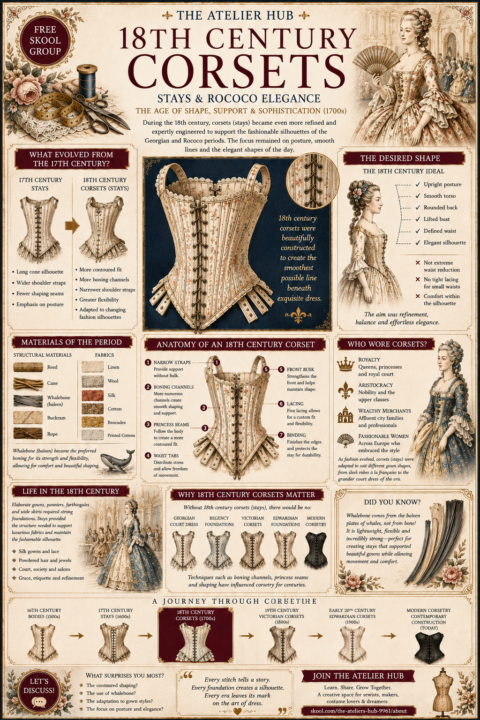
🪡 18th Century Corsets – The Age of Elegance & Engineering
As we continue our journey through the history of corsetry, we arrive in one of the most recognisable and technically fascinating periods of fashion history—the 18th century. Often associated with the grandeur of the Georgian and Rococo eras, 18th-century corsets (commonly referred to as stays) were an essential part of a woman's wardrobe. They weren't simply undergarments; they were the foundation upon which every fashionable gown was built. By this time, corsetry had become a highly specialised craft. Makers had refined centuries of knowledge into garments that offered remarkable support while allowing women to carry the wide skirts, panniers and luxurious fabrics that defined the period. Unlike the dramatic hourglass silhouette that many people associate with Victorian corsets, the ideal shape of the 18th century was one of balance and elegance. The aim was to create: ✨ An upright posture ✨ A smooth, elongated torso ✨ Gentle bust support and lift ✨ A beautifully proportioned silhouette that complemented the elaborate gowns of the era One of the defining features of 18th-century stays was their incredible construction. They were often made using: 🪡 Linen or silk outer fabrics 🪡 Strong linen foundation layers 🪡 Baleen (commonly called whalebone) for flexible support 🪡 Carefully stitched boning channels 🪡 Hand-worked eyelets for lacing 🪡 Waist tabs that allowed movement while maintaining structure Every stitch served a purpose. Every panel contributed to the overall fit. These garments were masterpieces of engineering as much as they were works of dressmaking. What makes this period especially interesting is how influential it remains today. Many of the techniques we use in modern corsetry, boning channels, multiple fabric layers, precise pattern shaping and careful distribution of support, have their roots in the craftsmanship of the 18th century. For anyone interested in couture, bridal wear, historical costume or advanced dressmaking, studying these garments offers valuable lessons in structure, balance and precision.
🔥
19d •
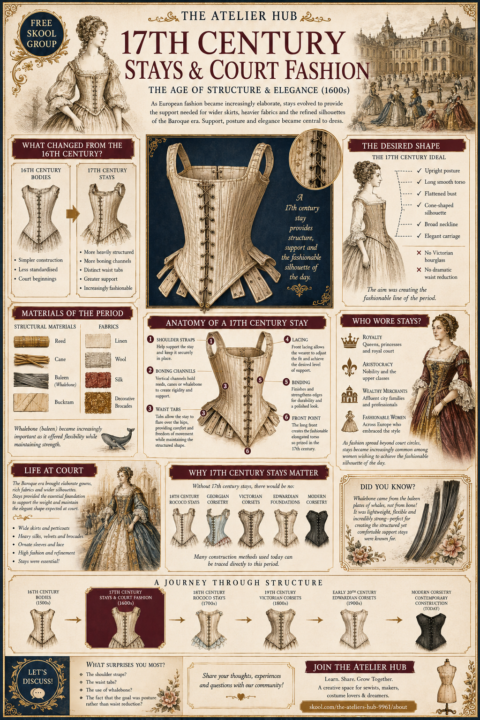
🪡 17th Century Stays, Corsets & Court Fashion 🪡
As we continue our journey through the history of corsetry, we arrive at a fascinating period where structure, elegance and craftsmanship became increasingly intertwined. By the 17th century, the earlier "pair of bodies" had evolved into what we now recognise as stays. These garments were becoming more refined, more structured and increasingly important to fashionable dress throughout Europe. One of the most common misconceptions about historical corsetry is that it was always about creating a tiny waist. In reality, the fashionable silhouette of the 1600s was very different. The goal was a long, smooth torso, upright posture and a cone-shaped silhouette that supported the elaborate gowns of the Baroque period. Rather than emphasising curves, stays helped create a controlled and elegant line beneath clothing. The construction itself was becoming increasingly sophisticated. Makers used materials such as: 🌿 Reed 🌿 Cane 🌿 Buckram 🐋 Baleen (commonly known as whalebone) 🪡 Linen 🪡 Wool 🪡 Silk and decorative brocades One particularly important development was the growing use of baleen. Despite its name, whalebone wasn't actually bone at all. It was a flexible material taken from the baleen plates of whales, offering the perfect balance between strength and movement. This made it ideal for creating the support required by increasingly elaborate garments. The 17th century also saw the widespread use of features we still associate with corsetry today: ✨ Boning channels ✨ Lacing systems ✨ Structured shaping ✨ Waist tabs for movement ✨ Reinforced construction techniques For anyone interested in historical costume, dressmaking, tailoring or couture, studying stays offers valuable insight into how garments achieve shape and support. Many techniques used in modern corsetry can trace their origins directly back to this period. As makers, it's easy to focus on the outer garment, but these hidden foundations are often where the real engineering takes place. I'd love to hear from you:
1-13 of 13
powered by
skool.com/the-ateliers-hub-9961
For sewers past the beginners stage, who love their craft. Learn across every sewing discipline. Worldwide & free to join. A hub for those who sew ✂️
Suggested communities
Powered by