

1d •
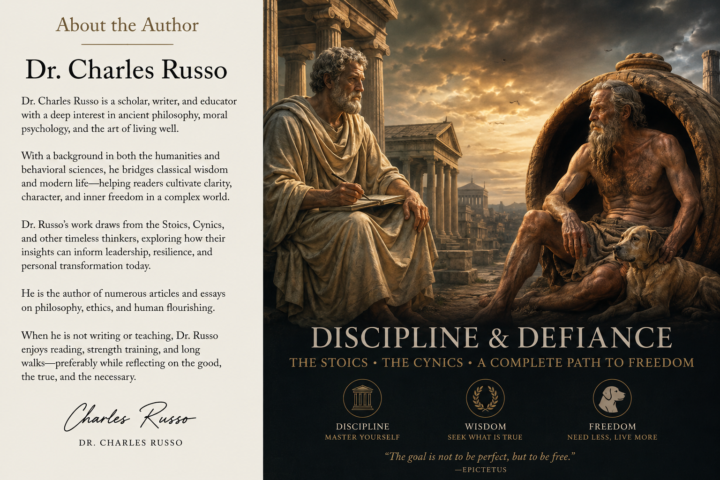
New Book Release
THE UNEXAMINED LIFE IS NOW A PUBLIC DANGER https://shop.ingramspark.com/b/084?params=USv1g8MMb4wnjLvhyDlTsBqHEKZxyP2UEjCV8rMUmFc
0
0
1d •
Weekend Thoughts and Resources
The strongest pattern this week is clear: the serious work is moving past “Should students use AI?” and toward “What kind of thinking must be protected, scaffolded, and assessed when AI is already in the room?” That is exactly the right battlefield for articles, workshops, and course design. 1. Cognitive offloading and critical thinking in higher education Roy, B. K., & Jony, M. S. (2026). Generative AI and critical thinking in higher education: Students’ narratives of cognitive offloading. Journal of Interdisciplinary Studies in Education, 15(3), 263–282. doi:10.32674/jey59q25. Published May 27, 2026. Takeaway: Students are not merely “cheating” with AI; many are outsourcing parts of cognition itself. The study found themes of superficial engagement, weakened self-regulation of cognitive effort, increasing reliance on AI-supported thinking, and student awareness that this reliance creates internal intellectual risk. 2. Character, virtue, and what universities should still do Grove, M., & Harrison, T. (2026). Educating what AI cannot: Character and the future of higher education. British Journal of Educational Studies. Advance online publication. doi:10.1080/00071005.2026.2678972. Published June 2, 2026. Takeaway: This is the most philosophically useful piece in the set. Grove and Harrison argue that AI exposes the poverty of efficiency-driven higher education. Their neo-Aristotelian frame places moral, civic, intellectual, and performative virtues at the center of the university’s purpose. 3. Generative AI support in open and distance learning Öncü, S. E., Gevher, M., Erdoğdu, E., & Koçdar, S. (2026). Exploring the potential of generative AI for academic support in open and distance learning: A case study of learner experiences. The International Review of Research in Open and Distributed Learning, 27(2), 67–82. doi:10.19173/irrodl.v27i2.9289. Published May 6, 2026. Takeaway: In an online course, students valued GenAI for time-saving and course-aligned responses, but structured use mattered. When AI use was guided by tasks, students engaged more purposefully through self-assessment and verification rather than casual answer-seeking.
0
0
6d •
More writings and platforms
I know you are all inundated with the internet of stuff, but are you truly focusing on what you need to do? LEARN! If you follow me on Substack, that is wonderful, and I appreciate the support. If you don't follow me on https://medium.com/@charlesmrusso then you should. See the Substack is focused on critical thinking and the analysis world. Medium is truly a focus philosophical platform. The older I get, the more focused I have become and my philosophy is shaped by my understanding and non-understanding of our world. I encourage you to continue your journey here and everywhere.
0
0
9d •
Logic clarifies; rhetoric reveals.
1. How do logic and rhetoric, as two of the seven liberal arts, shape our understanding of what it means to be human and why might the ancients have considered them “of the highest order?” 2. What does the distinction between science (knowledge from contemplation) and art (knowledge ordered toward production) reveal about the dual roles that logic plays in human reasoning? 3. How does distinguishing between primary and secondary substances shape our understanding of universals, particulars, and the way we talk about things in this world? Learning logic and rhetoric is important because both disciplines help a person understand how thinking works, how ideas are formed, and how judgments are made. Logic teaches us to examine the structure of our thoughts. It asks whether our conclusions actually follow from our reasons, whether our assumptions are sound, and whether we are being consistent. Through logic, a person learns to notice contradictions, weak evidence, false comparisons, and emotional shortcuts that can distort judgment. This is valuable not only in academic work, but also in ordinary life, where people must make decisions, solve problems, and evaluate claims every day. Rhetoric, on the other hand, teaches us how language shapes thought. It shows that ideas are not only judged by whether they are true, but also by how they are expressed, framed, and received. When we study rhetoric, we become more aware of the persuasive power of words, tone, examples, images, and appeals to emotion. This awareness helps us recognize when we are being persuaded by style rather than substance. It also helps us understand how we persuade ourselves. Many of our beliefs are supported not only by evidence, but by stories, habits, fears, loyalties, and familiar ways of speaking. Together, logic and rhetoric strengthen self-understanding. Logic helps us ask, “Is this belief reasonable?” Rhetoric helps us ask, “Why does this belief feel convincing to me?” These questions are essential for intellectual maturity. Without logic, we may accept ideas that are confused or unsupported. Without rhetoric, we may fail to see how emotion, identity, and language influence our reasoning.
0
0
1-30 of 48
powered by

skool.com/the-analytical-edge-3643
Analytical Edge Academy is a professional community for serious thinkers who refuse intellectual stagnation. The world rewards clarity, not noise.
Suggested communities
Powered by