User
Write something
Show Your Work: APA-Grade Integrity for AI-Assisted Criminology and Practitioner Analysis
Yesterday, during out Coffee Hour chat, a few of us dad an interesting conversation about the use of Artificial Intelligence (AI) in both academic and intelligence fields.The fastest way AI improves analysis in academia and intelligence work is when you treat it like a very capable junior analyst: useful, tireless, occasionally brilliant, and absolutely capable of confidently saying something wrong. The best practice is to make your AI usage auditable—not mysterious. That means documenting what you asked, what you fed it, what it produced, and what you did next. In academic work, that looks like keeping a “prompt trail” the same way you keep notes for a literature review: prompts, model/tool used, dates, key outputs, and which outputs were accepted, rejected, or revised (with why). In intelligence-style analysis, it’s basically tradecraft: a chain-of-custody for reasoning. If someone can’t reconstruct how you got from question → evidence → judgment, your conclusion is fragile no matter how slick it sounds. So, when you “stack” or “layer” data with prompts, you’re not just iterating—you’re building a transparent workflow: first prompt to define the question and terms, next to surface hypotheses, next to map what evidence would confirm or falsify each hypothesis, next to test with sourced material, and only then to draft a judgment with confidence levels and stated assumptions. The goal isn’t to show off prompts; it’s to show your reasoning wasn’t a vibes-based séance. Where people go off the rails is letting AI become the author of conclusions instead of the engine for structured thinking. A clean approach is: constrain the model, separate tasks, and force friction. Constrain it by telling it exactly what it may use (your notes, specific documents, a bounded dataset) and what it may not do (invent citations, infer facts not in evidence, fill gaps with “common knowledge”). Separate tasks by using different prompts for different cognitive moves—summarize, compare, extract claims, find contradictions, generate counterarguments, identify missing data, propose collection requirements—rather than one mega-prompt that produces a polished fairy tale. And force friction by routinely asking it to argue against your emerging conclusion, list disconfirming evidence, and identify the assumptions that—if wrong—would flip the assessment. In academic settings, that friction shows up as better literature synthesis and cleaner argumentation; in professional settings, it shows up as fewer analytic faceplants when reality shows up holding a baseball bat.
0
0
Logic Under Fire: Fallacies That Break Intelligence & Crime Analysis
Bad logic doesn’t announce itself. It slips in quietly—through assumptions, shortcuts, narratives, and pressure to “just make the call.” In this 1-hour live online session, we’ll strip logic down to its bones and examine logical fallacies—what they are, how many exist, and how they quietly sabotage intelligence and crime analysis every day. This is not an abstract philosophy lecture. We will: - Explain what logical fallacies actually are (not the TikTok versions) - Categorize the major families of fallacies (formal vs. informal) - Examine real-world intelligence and crime analyst scenarios where fallacies: If you work in intelligence, law enforcement, security, analysis, leadership—or teach critical thinking—this session will sharpen how you think, not just what you know. Format: 🎥 Live 1-hour online session (recorded) 📊 Practical scenarios 🧠 Analyst-focused logic tools 📄 Downloadable handouts to be included during the session: Who This Is For: - Intelligence analysts (crime, national security, corporate) - Law enforcement professionals - Educators teaching critical thinking or analysis - Leaders who make decisions with incomplete information Fallacies don’t make you stupid.They make you confidently wrong. Be here on Friday, 2 January 2026 at 8:30 AM Central
0
0
📣 Announcement: New Courses Launching Soon in Analytical Edge Academy
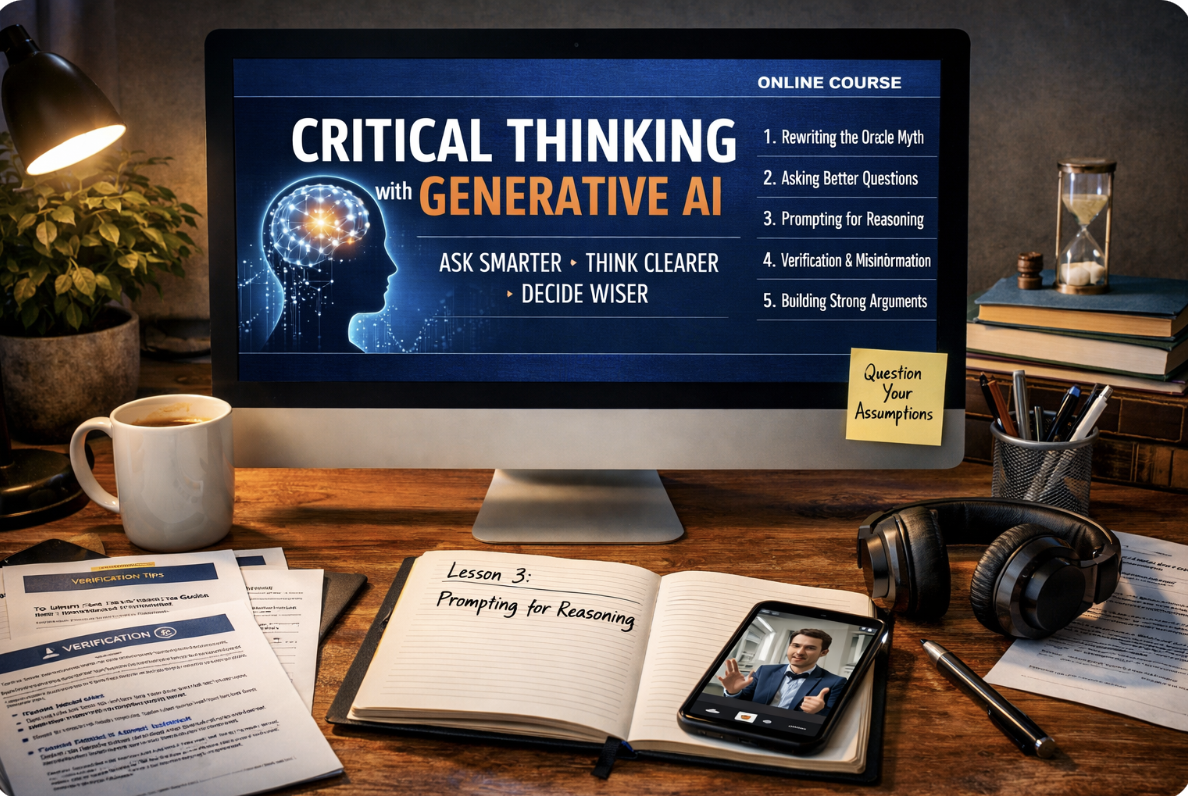
Analytical Edge Academy is rolling out three new courses designed for people who are tired of shallow takes, lazy thinking, and “trust me bro” reasoning. These aren’t fluff classes. They’re skill-builders—meant to sharpen judgment, improve clarity, and upgrade how you think under pressure. 1) Philosophy and Intelligence Philosophy isn’t abstract entertainment—it’s the operating system behind strong analysis. This course connects classic philosophical tools (logic, epistemology, ethics) directly to intelligence thinking: assessing evidence, spotting assumptions, handling uncertainty, and making defensible conclusions without getting hijacked by bias or narrative. 2) Become an Intellectual This is about building the habits and identity of a serious thinker. Not performative “smartness”—real intellectual discipline: reading strategically, questioning responsibly, writing clearly, and developing viewpoints that can survive contact with reality. If you want to think like a grown-up in a world optimized for distraction, start here. 3) Using AI to be a Critical Thinker AI can either make you sharper… or make you confidently wrong faster. This course teaches how to use AI as a thinking partner—not a shortcut. You’ll learn prompting for reasoning, stress-testing arguments, verifying claims, identifying hallucinations, and building repeatable workflows that improve decision-quality instead of outsourcing your brain. Enrollment opens soon. If you’re ready to level up your reasoning, analysis, and intellectual edge—Analytical Edge Academy is about to get busy.
Train Your Judgment: One Lesson at a Time
Somewhere today, someone is going to confidently share something false… and get rewarded for it with likes, applause, and volume. Analytical Edge Academy exists for the opposite reason: to help you build the unfair advantage of clear thinking when the world is noisy, emotional, and absolutely obsessed with certainty. If you’ve been meaning to start the course, here’s your nudge: Don’t wait for “more time.” Train the skill that creates more time—better judgment, fewer mistakes, cleaner decisions, less second-guessing. Show up for one lesson. Do one worksheet. Practice one tool. That’s how you become the person who doesn’t get manipulated by headlines, peer pressure, or your own cognitive autopilot. Progress isn’t a mood. It’s a system. Let’s build yours. Join here: https://www.skool.com/the-analytical-edge-3643 #AnalyticalEdgeAcademy #CriticalThinking #BetterDecisions #AnalyticalThinking #CognitiveBias #MediaLiteracy #SignalVsNoise #PersonalGrowth #LeadershipDevelopment #ProfessionalDevelopment #LifelongLearning #MindsetMatters #ThinkBetter #SkoolCommunity
1-7 of 7
powered by
The Analytical Edge
skool.com/the-analytical-edge-3643
Welcome to The Judgment Gym — a practical community for people who want to think clearly when things get messy.
Build your own community
Bring people together around your passion and get paid.
Powered by