
Write something
Pinned

4h •
🧭 AI Creates Options. Humans Create Direction.
AI is exceptionally good at producing possibilities. It is completely indifferent to which one matters. As output explodes, direction becomes the scarcest and most valuable human contribution. ------------- Context: When More Becomes Harder ------------- One of the quiet surprises of AI adoption is that many teams do not feel faster or clearer at first. They feel busier. More drafts. More ideas. More analyses. More directions to consider. What once required effort to generate now appears instantly, in abundance. While this seems like progress, it introduces a new problem. Decision load increases faster than decision capacity. People find themselves reviewing instead of creating, comparing instead of choosing, and second-guessing instead of committing. Productivity rises on paper, while confidence quietly erodes. This is not a failure of AI. It is the predictable result of shifting the bottleneck from production to judgment. ------------- Insight 1: Output Is No Longer the Constraint ------------- For decades, work was constrained by how fast humans could produce. Write the document. Build the deck. Generate the options. AI has fundamentally changed this equation. Now the constraint is sense-making. What matters. What aligns. What should move forward. These questions do not scale automatically. When organizations continue to reward volume in an environment of infinite output, they create overwhelm. Direction becomes unclear, and people feel busy without feeling effective. Recognizing that output is no longer scarce allows us to redesign work around what actually is. ------------- Insight 2: More Options Increase Anxiety, Not Confidence ------------- Psychologically, choice is not neutral. While a few options feel empowering, too many create stress and hesitation. AI routinely produces dozens of reasonable paths forward. Each one feels viable. Each one carries opportunity cost. Choosing now feels riskier because alternatives remain visible. This leads to a subtle paralysis. Decisions get deferred. Work cycles lengthen. Confidence weakens, not because people lack intelligence, but because the environment no longer supports decisive action.

Pinned
1d •
Gemini Wants Access to ALL of Your Search History
In this video, I break down the week's AI news including the new Gemini Personal Intelligence, ads and age prediction coming to ChatGPT, the annual Anthropic Economic Report and more. Enjoy!
Pinned

2d •
We’re wired for progress.
As humans, and especially as entrepreneurs, we need to feel like we’re moving forward. Otherwise, what’s the point? And coming out of the gate into a new year, even though it somehow already feels like January 75th, a lot of entrepreneurs are feeling the same thing... You’re working. You’re showing up. But you’re quietly wondering if you’re actually making progress or just staying busy. The truth is that if you are not measuring where you’re going, it’s really hard to know if you’re moving forward at all. And a lot of the time frustration doesn’t come from lack of effort. It comes from lack of knowing if anything you are doing is actually moving the needle. You can do everything right and still feel off if you don’t have something concrete telling you, “Yes, this is working.” So instead of asking, “Am I winning?” ask better questions. What actually moved forward this week? What’s clearer today than it was seven days ago? What’s one thing you could track that would give you real certainty? Progress doesn’t always feel exciting in the moment. But clarity creates momentum. What’s one thing you’re paying attention to right now that tells you you’re headed in the right direction? Drop it below 👇
55m •
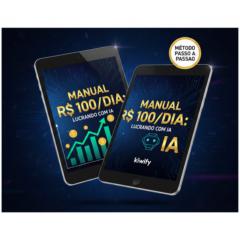
🚀 $100/Day AI Service Manual
🚀 $100/Day AI Service Manual Want to earn with AI? 🚀 I just launched the $100/Day AI Service Manual (validated by Skool experts). It's a high-converting offer at a low price point—perfect for quick sales! 🤝 I'm looking for affiliates! High commissions and a product that sells itself. Join here to promote: https://dashboard.kiwify.com/join/affiliate/x5LUVDn7 See the product: https://pay.kiwify.com.br/FtAFKgX

1h •
The AI Overwhelm!
Learning everything I can about the AI overwhelm, there is something for everyone, lets make sure we keep hold of our carbon reality as it changes with silicon influence. Keep grounded! Go Barefoot or garden are only two ways to ground.
1
0
1-30 of 11,005

skool.com/the-ai-advantage
Founded by Tony Robbins, Dean Graziosi & Igor Pogany - AI Advantage is your go-to hub to simplify AI and confidently unlock real & repeatable results
Leaderboard (30-day)
1

🔥
+314
2

+261
3

+211
4

+190
5

+189
Powered by