Activity
Mon
Wed
Fri
Sun
Mar
Apr
May
Jun
Jul
Aug
Sep
Oct
Nov
Dec
Jan
What is this?
Less
More
Memberships
AI Automation Mastery
10.9k members • Free
The AI Advantage
71k members • Free
AI Automation Society
241.5k members • Free
1 contribution to The AI Advantage

2d •
Hybryd VCS.
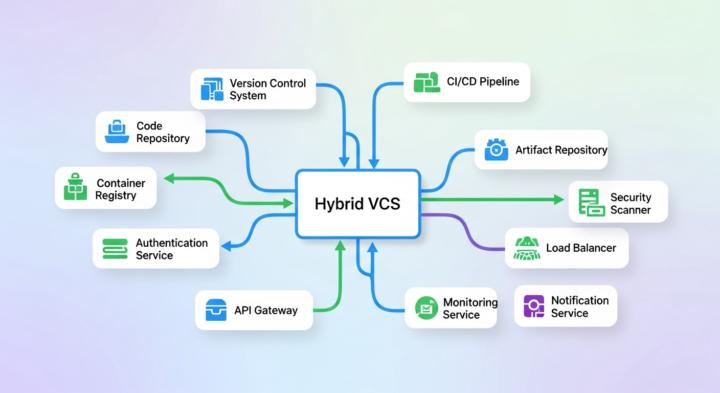
🌀 Hybrid VCS: The Stuff-You-Actually-Care-About Layer Most of us treat Git like a sacred temple for code… and then dump everything else into chaos. 📁 Models, datasets, configs, screenshots, research links – all the assets that actually decide whether an AI system works – usually end up in random folders, Google Drive, or “final_final_v7.zip”. That’s the gap Hybrid VCS is trying to close. 🧠 What Hybrid VCS Does 🧩 Unifies versionsInstead of juggling Git for code and mystery storage for everything else, Hybrid VCS ties together: - 💻 Code (still in Git) - 🧪 Experiments (states, hyperparams, metrics) - 🧱 Artifacts (models, datasets, exports) - 🔖 Context (notes, feedback, web content via a browser extension) All of that is tracked as one timeline, so “What produced this model?” is a query, not a crime scene investigation. 🛠️ How it changes your day - ⏪ Reproducible checkpoints“Give me the exact config + data + code for the last good run” stops being a fantasy. - 🧾 Honest experiment historyYou see what you actually tried, not what you remember you tried. - 🤝 Handoff without painSharing a project with your future self or a teammate doesn’t require a 2‑hour voice note and 5 drive links. 🏠 Local‑first on purpose Hybrid VCS is designed to be: - 🧱 Local-first – runs on your own machine, your disks, your rules. - 🔒 Privacy‑friendly – no hidden cloud pipeline you have to “trust”. - 😌 Boringly reliable – Git where it makes sense, a database where that makes sense. If you’re building AI systems where artifacts + context matter as much as the code, a hybrid version control layer stops being a luxury and starts being basic hygiene.

0 likes • 2d
I'm doing great, Joshua! Thanks for asking. Just busy scaling some AI workflows and helping people in the community. How about you? Are you working on any AI projects right now?
1-1 of 1