
Write something
Pinned

3h •
This Week in AI...
This week, I show off some results of my Claude Cowork testing, the new Scribe v2 transcription model from ElevenLabs, and Midjourney's new Niji 7 model. Plus, I discuss the rising "AI for shopping" trend and OpenAI's new healthcare initiative. All that a more in the video, enjoy!
Pinned
5h •
🔄 From One-Off Prompts to Habitual AI Use
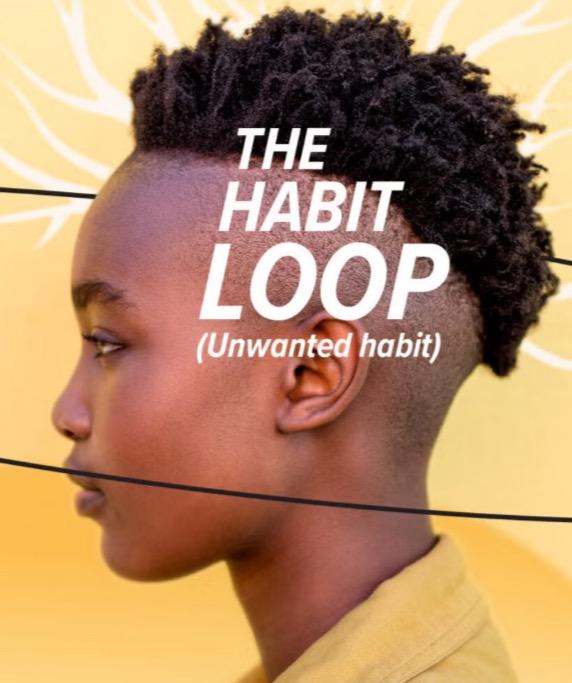
Many people believe they are using AI because they have tried it. A prompt here, a draft there, an occasional experiment when time allows. But trying AI is not the same as integrating it. Real value does not come from one-off interactions. It comes from habits. AI delivers its greatest impact not when it is impressive, but when it is ordinary. When it becomes part of how we think, plan, and decide, rather than something we remember to use only when things get difficult. ------------- Context: Why AI Often Stays Occasional ------------- Most AI use begins with curiosity. We explore a tool, test a few prompts, and are often impressed by the results. But after that initial phase, usage becomes irregular. Days or weeks pass without opening the tool again. Each return feels like starting from scratch. This pattern is understandable. Without clear integration into existing routines, AI remains optional. It competes with habits that are already established and comfortable. When time is tight, optional tools are the first to be skipped. Organizations unintentionally reinforce this pattern by framing AI as an add-on. Something extra to try, rather than something embedded into how work already happens. As a result, AI remains novel, but not essential. The gap between potential and impact often lives right here. Not in what AI can do, but in how consistently we invite it into our workflows. ------------- Insight 1: One-Off Use Creates Familiarity Without Fluency ------------- Trying AI occasionally builds awareness, but it does not build intuition. Each interaction feels new. We forget what worked last time. We rephrase similar prompts repeatedly. Learning resets instead of compounding. Fluency requires repetition. The same way we become comfortable with any tool, language, or process, through use in similar contexts over time. Without that repetition, AI remains impressive but unreliable. This is why many people describe AI as inconsistent. In reality, their usage is inconsistent. Without patterns, there is no baseline to learn from.
Pinned

1d •
3 things I do every weekend to set up my week
I’ve learned this the hard way. If you wait until Monday to get focused, you’re already behind. Here’s how I set up my week before it starts: 1. I choose ONE win that mattersNot a to-do list. Not busy work. One outcome that actually moves my life or business forward. That goes on the calendar first. 2. I remove friction ahead of time I look at my week and ask,“What’s going to trip me up?” Too many meetings, distractions, low-energy days. I fix it now so I’m not relying on willpower later. 3. I reset my environment Desk clear. Calendar clean. Priorities visible. When Monday hits, I don’t want to think... I want to execute. This isn’t about discipline. It’s about design. Winning weeks are built before they begin. What about you? What’s the ONE thing you do to set yourself up to win the week ahead? Drop it below 👇

4m •
WILL AI CREATE THE DESIRE TO FINALLY SOLVE/CREATE FUSION
Got it — short, sharp, punchy, same message, totally new wording, high‑energy + emoji ⚡️Here you go: Fusion Isn’t a Sci‑Fi Dream Anymore ⚛️🚀 And AI Might Be the Reason It Finally Shows Up Fusion energy has spent decades as the ultimate “trust me, next time” technology. Infinite clean power? Sure. Always coming soon? Absolutely. For a long time, it was easier to joke about fusion than to believe it. That’s changing — fast. Startups are pulling in billions 🤑. Big Tech is locking in power deals for electricity that hasn’t been generated yet. Engineers are assembling reactors at startup speed, not government‑lab pace. This suddenly looks less like theory and more like execution. Why now? Because AI is vacuuming up electricity 🧲⚡️. Training and running large models is pushing grids to the brink and turning power into the limiting factor for progress. Compute no longer matters if the lights can’t stay on. Energy isn’t a footnote anymore — it’s the headline. Fusion’s promise goes way beyond being “green.” It’s about scale. Always‑on, carbon‑free power, right where massive data centers need it. That’s why electricity is becoming the ultimate strategic resource — powering transport, industry, and now the intelligence layer of the economy 🤖. The physics question is settled. Fusion works.The only question left: Can we build it fast enough to matter? By 2035, we’ll know if fusion becomes the backbone of a new energy era — or another brilliant idea that arrived too late. Either way, the next decade will decide how far AI can really go. ⚡️Game on.
0
0


7m •
🆕 Motion Control (via Higgsfield × Kling)
Big update for AI video creators Higgsfield just showcased Kling’s new Motion Control feature, and this is one of the most important upgrades to AI character video so far Instead of relying purely on text prompts, Motion Control lets you: • Upload a real reference video • Upload a character image • Transfer actual human motion (body, gestures, timing, expressions) directly onto the character This means the movement is no longer “AI-guessed” — it’s motion-driven, which instantly improves realism and consistency Why this matters (especially for AI Visual Lab workflows): - Way more natural body movement - Better character continuity - Faster iteration (no complex motion prompting) - Ideal for AI influencers, reels, ads, and narrative clips Higgsfield’s demo shows how powerful this becomes when combined with strong base visuals — static images finally feel alive, not animated. I’ll upload the Higgsfield demo video here so you can see exactly how it works in practice. If you’re serious about AI video (not just testing prompts), this feature is a real unlock
0
0

1-30 of 10,888
skool.com/the-ai-advantage
Founded by Tony Robbins, Dean Graziosi & Igor Pogany - AI Advantage is your go-to hub to simplify AI and confidently unlock real & repeatable results
Leaderboard (30-day)
1

+372
2

+359
3

+329
4

+208
5

+189
Powered by