Activity
Mon
Wed
Fri
Sun
Feb
Mar
Apr
May
Jun
Jul
Aug
Sep
Oct
Nov
Dec
Jan
What is this?
Less
More
Owned by John
Enabling people to master MS Copilot AI. Live demo's, Q&A Sessions. I have 16 years of experience, thousands of people trained on Copilot. Start here
Memberships
TeachTechU AI 101
2 members • Free
Stealth Founders Club
1.1k members • Free
Smart Skills Academy & AI
12 members • Free
AI Content Creators
301 members • Free
The AI Advantage
70.1k members • Free
AI Automation Society
237.5k members • Free
4 contributions to The AI Advantage

2h •
WILL AI CREATE THE DESIRE TO FINALLY SOLVE/CREATE FUSION
Got it — short, sharp, punchy, same message, totally new wording, high‑energy + emoji ⚡️Here you go: Fusion Isn’t a Sci‑Fi Dream Anymore ⚛️🚀 And AI Might Be the Reason It Finally Shows Up Fusion energy has spent decades as the ultimate “trust me, next time” technology. Infinite clean power? Sure. Always coming soon? Absolutely. For a long time, it was easier to joke about fusion than to believe it. That’s changing — fast. Startups are pulling in billions 🤑. Big Tech is locking in power deals for electricity that hasn’t been generated yet. Engineers are assembling reactors at startup speed, not government‑lab pace. This suddenly looks less like theory and more like execution. Why now? Because AI is vacuuming up electricity 🧲⚡️. Training and running large models is pushing grids to the brink and turning power into the limiting factor for progress. Compute no longer matters if the lights can’t stay on. Energy isn’t a footnote anymore — it’s the headline. Fusion’s promise goes way beyond being “green.” It’s about scale. Always‑on, carbon‑free power, right where massive data centers need it. That’s why electricity is becoming the ultimate strategic resource — powering transport, industry, and now the intelligence layer of the economy 🤖. The physics question is settled. Fusion works.The only question left: Can we build it fast enough to matter? By 2035, we’ll know if fusion becomes the backbone of a new energy era — or another brilliant idea that arrived too late. Either way, the next decade will decide how far AI can really go. ⚡️Game on.

0 likes • 60m
@AI Advantage Team what would be the ramifications - u see Bill Gates for years and years talking about climate change and the ramifications - and then when he needs power for AI all of a sudden he is saying he was wrong about climate change - showing their opinions and motivations were alway aligned with their needs And so if fusion was created - what would energy cost. It’s self sustaining and it’s no a diminishing resource. So I would wonder - how they bill for something that has no end - technically it should mean free energy for all ? But would that cost companies more than AI generates them

1d •
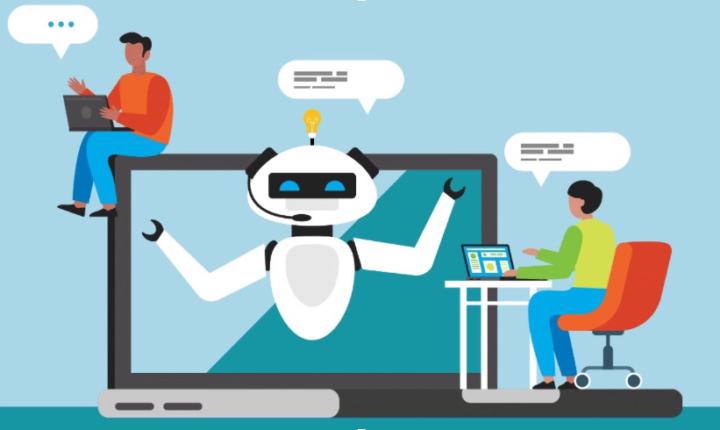
🔁 How Micro-Adaptations Build Long-Term AI Fluency
One of the most persistent myths about AI fluency is that it requires big changes. New systems, redesigned workflows, or dramatic shifts in how we work. This belief quietly stalls progress because it makes adoption feel heavier than it needs to be. In reality, long-term fluency with AI is almost always built through small, consistent adjustments rather than sweeping transformations. ------------- Context: Why We Overestimate the Size of Change ------------- When people think about becoming “good” with AI, they often imagine a future version of themselves who works completely differently. Their days look restructured. Their tools look unfamiliar. Their thinking feels more advanced. That imagined gap can feel intimidating enough to delay action altogether. In organizations, this shows up as waiting for perfect systems. Teams postpone experimentation until tools are approved, policies are finalized, or training programs are complete. While these steps matter, they often create the impression that meaningful progress only happens after a major rollout. At an individual level, the same pattern appears. We wait for uninterrupted time, for clarity, for confidence. We assume that if we cannot change everything, it is not worth changing anything. As a result, adoption stalls before it begins. Micro-adaptations challenge this assumption. They suggest that fluency does not come from overhaul. It comes from accumulation. ------------- Insight 1: Fluency Is Built Through Repetition, Not Intensity ------------- Fluency with AI looks impressive from the outside, but its foundations are remarkably ordinary. It is built through repeated exposure to similar tasks, similar decisions, and similar patterns of interaction. Small, repeated uses allow us to notice how AI responds to our inputs over time. We begin to see what stays consistent and what varies. This pattern recognition is what turns novelty into intuition. Intense bursts of experimentation can feel productive, but they often fade quickly. Without repetition, learning remains shallow. Micro-adaptations, by contrast, embed learning into everyday work where it has a chance to stick.
2 likes • 21h
100% - my go to phrase is always - start small - build confidence and grow ur complexity over time
1 like • 21h
@Lynn Wilson that’s awesome - everyone should be able to learn

4d •
Shiny object syndrome
I just carried away all the time with this shiny object syndrome, i want to do this i want to do that. my distraction is not social media mine is going through lot of courses one after the other and not implementing ,half way thru a course i find something else which comes up and I go there and learn and again from there one more thing, it has become a nonstop issue , I know I should not look at each and every course but to be honest there are so many courses and groups on the same topics. I am struggling with that. If it resonates with anyone and how did you recover from this, please comment. Thanks
1 like • 3d
Sort of, but i do try see something through - I did my degree in business, then working on Digital art, did a degree in 3d character Animation, and CGI VFX in Maya, then working on 2d animation and studied, Aftereffects. then working full time in MS 365 I did a diploma in AI, then delivered 1000+ people training in Copilot, then played with AI cartoons using Envato. still working professional in the MS echo system. but I have a Youtube channel for Animations, I am writing and Illustrating a childrens book series and Adult Novel, and In Skool setting up an AI and copilot Course for Individuals and Professional to learn and develop and keep up with the ever changing landscape. So i'm consistently interested in NEW and different areas. but I think Ultimately all the learning helped me Create my community. Which is a day old.
3d •
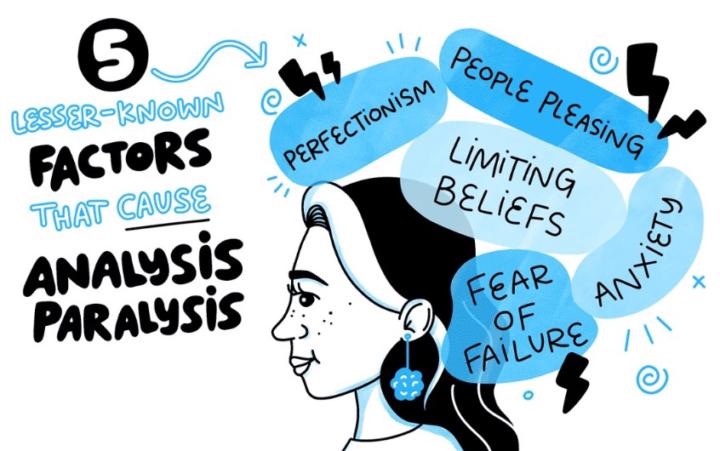
🧠 The Hidden Cost of Overthinking AI Instead of Using It
One of the most overlooked barriers to AI adoption is not fear, skepticism, or lack of access. It is overthinking. The habit of analyzing, preparing, and evaluating AI endlessly, while rarely engaging with it in practice. It feels responsible, even intelligent, but over time it quietly stalls learning and erodes confidence. ------------- Context: When Preparation Replaces Progress ------------- In many teams and organizations, AI is talked about constantly. Articles are shared, tools are compared, use cases are debated, and risks are examined from every angle. On the surface, this looks like thoughtful adoption. Underneath, it often masks a deeper hesitation to begin. Overthinking AI is socially acceptable. It sounds prudent to say we are still researching, still learning, still waiting for clarity. There is safety in staying theoretical. As long as AI remains an idea rather than a practice, we are not exposed to mistakes, limitations, or uncertainty. At an individual level, this shows up as consuming content without experimentation. Watching demos instead of trying workflows. Refining prompts in our heads instead of testing them in context. We convince ourselves we are getting ready, when in reality we are standing still. The cost of this pattern is subtle. Nothing breaks. No failure occurs. But learning never fully starts. And without practice, confidence has nowhere to grow. ------------- Insight 1: Thinking Feels Safer Than Acting ------------- Thinking gives us the illusion of control. When we analyze AI from a distance, we remain in familiar territory. We can evaluate risks, compare options, and imagine outcomes without putting ourselves on the line. Using AI, by contrast, introduces exposure. The output might be wrong. The interaction might feel awkward. We might not know how to respond. These moments challenge our sense of competence, especially in environments where expertise is valued. Overthinking becomes a way to protect identity. As long as we are still “learning about AI,” we cannot be judged on how well we use it. The problem is that this protection comes at a price. We trade short-term comfort for long-term capability.
1 like • 3d
One of the other big factors in Implementation failure is an inflated expectation of AI. WHen it doesn't meet these crazy expectations you immediately form a negative opinion
1-4 of 4

@john-toland-3130
Making AI and Microsoft Copilot simple, practical, and valuable, 16 yrs, Thousands of people trained. AI is here. Learn Copilot now with us. Thanks
Active 2h ago
Joined Jan 16, 2026
Ireland
Powered by