
Write something
Pinned

2d •
🎧 Live Voice Agents Are Growing Up: Why Speaking Work Into Motion Could Cut Admin Time
For a long time, voice AI felt like a convenience. It helped with quick commands, simple dictation, or hands-free interaction when typing was not practical. Useful, yes, but still peripheral to real work. That is starting to change. Live voice agents are becoming more capable, more contextual, and more useful across actual workflows. They are moving from novelty to utility, and that matters because one of the quietest drains on modern work is the friction between having a thought and turning that thought into something actionable. A lot of work begins in speech. An idea arrives out loud before it ever becomes a document. A decision gets clarified in conversation before it becomes a plan. A next step is obvious in the moment, but if it is not captured, structured, and turned into action quickly, it starts to fade. This is where live voice agents become interesting. The time win is not only in faster talking. It is in reducing the lag between spoken thinking and real workflow movement. ------------- Context ------------- Most professional workflows still assume that useful work begins when it is typed. We treat written text as the formal starting point of productive action. But that is not how people actually work. Work begins in meetings, hallway conversations, quick reflections after calls, spoken explanations while walking, or rough verbal processing when someone is trying to think through a problem in real time. That mismatch creates a hidden tax. People often know what they mean before they have the time or energy to formalize it. So they delay. They tell themselves they will write it up later. They leave voice notes half-processed. They walk away from a meeting with the right insight but no clean handoff into the next action. Then later, the memory is weaker, the context is thinner, and the admin burden is larger. This is one reason live voice agents matter so much right now. They reduce the distance between natural thought and structured action. They can capture what is said, organize it, summarize it, and prepare the next useful artifact while the momentum is still alive. That shortens time-to-capture, time-to-first-draft, and often time-to-follow-up as well.

Pinned

⭐
6d •
🔥 Quick Clarification: The Difference Between Our 3 AI Advantage Communities
Hey everyone, we’ve received a few questions in the customer service inbox, so we wanted to take a moment to clearly explain the difference between the groups and experiences inside the AI Advantage ecosystem. --------------------------------------------------------------------------------------------------- 1. This Skool Community (Free) This group right here is our free community. It’s where Igor Pogany, our team, and the community continue to share value, insights, resources, conversations, and support. Inside here you can expect: - Free trainings and resources inside the Classroom - Ongoing conversations - Community support - Updates of the latest AI News - Updates and announcements for AIA - Valuable insights to help you grow with AI This group is completely free and we fully encourage you to stay engaged, ask questions, connect, and use everything available here. And just because the Summit is over, doesn’t meant mean this group is going anywhere! --------------------------------------------------------------------------------------------------- 2. AI Advantage Club (Paid Membership) The AI Advantage Club is our premium membership for those who want to go deeper and continue building their AI skillset consistently. Depending on how you joined: - VIP members received a 30-day trial - Bootcamp members receive 3 months included And if you took the VIP upgrade AND joined the Bootcamp, you would have 4 months free inside the Club. Inside the Club, the experience goes deeper with things like: - Advanced trainings - Step-by-step guides and our “Hacks of the Week” - AI workflows - Prompt libraries you can copy - Business use cases - Time-saving systems - Ongoing implementation support - New resources added regularly - A Technical Support Team who can answer questions if you hit roadblocks trying to implement an AI tool Think of this as your AI gym membership. It’s the place where you will train those AI muscles and really focus on implementing AI into your life and business.
Pinned

3d •
You’re Closer Than You Think
If it feels like it’s not working, you’re probably closer than you think. This is the phase almost nobody prepares you for. The part where you’ve put in real effort, you’re not brand new anymore, but the results still don’t match the energy you’ve invested. Momentum feels inconsistent. Wins are quiet. Doubt gets louder. And your brain starts looking for an escape hatch. New strategy. New offer. New direction. Here’s the uncomfortable truth. Most entrepreneurs don’t fail because they chose the wrong path. They fail because they leave a good path too early. There is a lag between effort and outcome that people underestimate. You don’t get rewarded in real time. You get tested in real time. If you don’t understand that, you keep resetting every time it gets hard, which guarantees you never build real momentum anywhere. Not everything is a sign to pivot. Sometimes it is a sign to get better. To get sharper. To stay long enough to actually see something compound. The people who win are the ones who can accurately diagnose the moment they are in and do not panic when it gets uncomfortable. So before you change everything, ask yourself... Am I actually on the wrong path? Or am I just in the part where most people quit? So my question for you today... where are you right now? Still pushing or questioning everything?
⭐
5d •
📣 Your Top 5 Questions = Answered
Ever since we shared about our all new 2026 AI Advantage Bootcamp we’ve been getting the same 5 questions… So before the doors shut for good at midnight tomorrow night, we want to give you the answers! Let’s get into it: 1. What will I build or learn during Bootcamp? Over 6 weeks, you'll build your own AI Clone-Agent. Not a chatbot or a gimmick, but a personalized AI partner has been fed your goals, your voice, and your everyday tasks. By the end, it won't just assist you when you ask. It'll work for you on its own - handling research, drafting and sending emails, creating content, and running tasks on autopilot.Our bold promise: If you show up to the trainings and do the work, you WILL reclaim at least 15 hours a week (and if you don’t, we’ll refund 100% of your money) 2. How is the Bootcamp different from the AI Advantage Summit or AI Advantage Club? The Bootcamp is a 6-week, hands-on experience to build and train your own AI Clone-Agent. You did not learn that at the Summit and you will not learn it inside the Club. It’s unique to the Bootcamp. Think of it like this: The Club is your gym membership where you stay plugged in and build momentum. The Bootcamp is your personal trainer with 6 weeks of immersion and training to set you up with a system you can use for life. 3. Do I need specific tools, software, or devices? We recommend using a laptop or desktop computer for the Bootcamp sessions… and the only other cost beyond the program fee is a $20/month subscription with Claude. 4. How much time should I expect to commit? We will have one, 45(ish) minute Kickoff Call on Friday, May 1st to walk through your Bootcamp setup (but we will try and keep it shorter)... Then we have 6 weekly workshops every Tuesday, for about 90 minutes. So it should be less than 2 hours a week you have to commit for trainings (although we do recommend using and working with your Clone in your off time to build its skills)

23h •
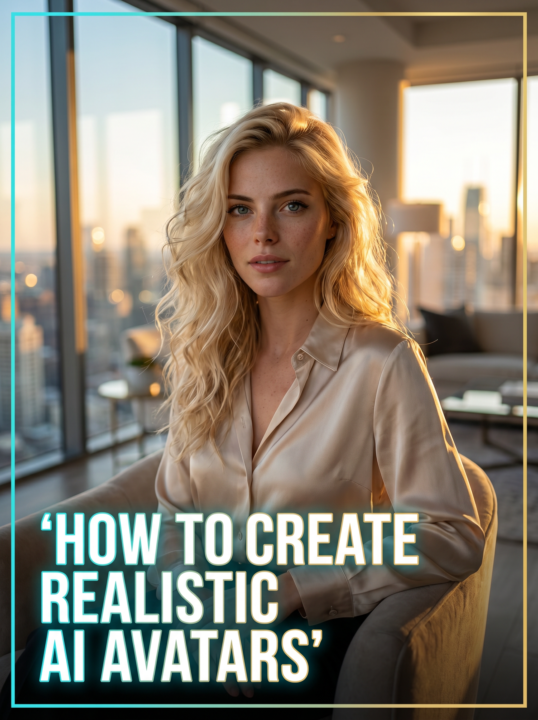
You can now create graphics with Gamma app!
I just tested something fun… and honestly a bit dangerous for your credits 😂 👉 You can now create full social media posts with realistic AI portraits inside Gamma in just a few clicks. No Canva. No Midjourney. No 10 tabs open. Just… boom → done. Here’s how I did it: 1. Pick Social Media Post + Instagram Portrait 2. Drop in a simple prompt (what the carousel should teach) 3. Choose Photo style 4. Let Gamma generate concepts (carousel layouts, hooks, structure) 5. Pick one → refine → generate images That’s it. It creates: - full carousel structure - text overlays - AND realistic portrait images Use cases (this is where it gets interesting): - AI avatar tutorials (like mine) - Lead magnets (turn this into a PDF = instant freebie) - Instagram carousels that actually look high-end - Promo posts for your tools / prompt books - Before/after transformations - Step-by-step “how to” content Basically… content machine on steroids. BUT ⚠️ small warning about credits: Quality matters. - The 72 credits per image option = 🔥 much better results - BUT… when you start clicking “variations”… 💸 credits disappear FAST Like… “where did my credits go??” fast. So:👉 Don’t spam variations blindly 👉 Pick a strong concept first 👉 Then generate carefully Honestly… this + our tools = unfair advantage. You create: AI avatar → prompt packs → content → funnel…all in one flow. If you tested Gamma already, tell me: 👉 Did you burn your credits like a maniac too or just me? 😅
1-30 of 18,644

skool.com/the-ai-advantage
Founded by Tony Robbins, Dean Graziosi & Igor Pogany - AI Advantage is your go-to hub to simplify AI and confidently unlock real & repeatable results
Leaderboard (30-day)
1

🔥
+1838
2

+1039
3

+759
4

+673
5

+547
Powered by