
Write something
Pinned

7h •
The Opportunity Isn’t the Hard Part
Sometimes you get exactly what you asked for—and instead of excitement, you feel the pressure. Because once the opportunity shows up, there’s no one else to wait on. No one else to blame. It’s on you. That’s the part most people don’t fully understand: opportunity doesn’t just require action...it requires capacity. Discipline. Decision-making. Follow-through. Responsibility. So don’t just focus on getting the opportunity. Focus on becoming the person who can execute, keep it, and continue to build it once it arrives. Question: Where do you need to increase your capacity right now...skills, systems, or standards?
Pinned

8h •
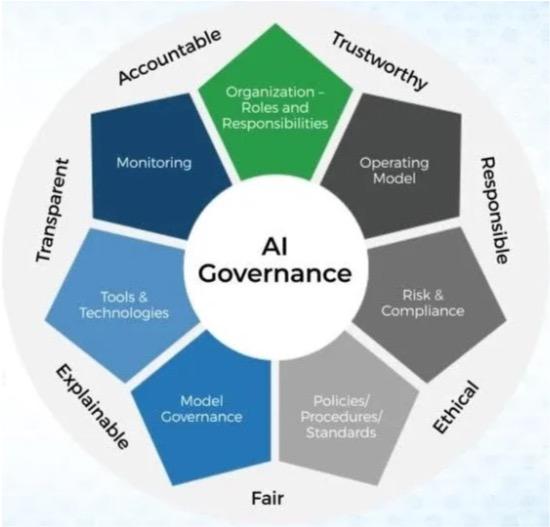
🔒 Guardrails That Accelerate: Responsible AI as a Team Habit
Speed without boundaries feels powerful at first, then fragile. Boundaries without trust feel safe, then suffocating. The real advantage with AI emerges when guardrails are designed not to slow teams down, but to help them move with confidence. ------------- Why “Responsible AI” Often Feels Like a Brake ------------- In many organizations, responsible AI enters the conversation late and heavy. It shows up as policies, approvals, disclaimers, and restrictions layered on top of tools that teams were already excited to use. The intent is good. The outcome is often frustration. People begin to associate responsibility with delay. Governance becomes something that happens after innovation, rather than something that enables it. Quietly, teams work around the rules, experimenting in shadows instead of learning in the open. This is where risk actually increases. The problem is not that guardrails exist. The problem is that they are treated as external controls rather than internal capabilities. When responsibility is positioned as compliance instead of judgment, it disconnects people from ownership. AI changes this dynamic because it scales decisions, not just outputs. When decisions scale, judgment becomes the bottleneck. Guardrails are no longer optional. But the way we design them determines whether they become friction or fuel. ------------- Insight 1: Guardrails Are a Confidence System ------------- We tend to think of guardrails as constraints. In practice, they are permission structures. They tell people where they can move quickly without fear of crossing an invisible line. When teams know what is acceptable, what requires escalation, and what is off-limits, they act faster. Uncertainty slows people down more than rules ever will. Ambiguity creates hesitation, second-guessing, and over-cautious behavior. Well-designed guardrails reduce cognitive load. They remove the need to evaluate every decision from scratch. Instead, people operate within known boundaries, focusing their energy on outcomes rather than risk calculation.
Pinned
1d •
The Secret to Getting 10x More Relevant Results in ChatGPT
In this video, I show you every way to customize ChatGPT as of October 2025. This includes personalization options for both the free and paid plans, so no matter how you use ChatGPT, this video will teach you how to set it up to get the best results!

34m •
Hey everyone
Hello everyone. I'm David. Husband, father of 3 boys, and Active Duty Military. I'm new here. New to everything AI as well. I'm a CompTIA Trifecta holder. I have no real experience besides working with radios and antennas in the military. It's so much out there not sure where this start. It seems a bit overwhelming, but I know I can learn with the correct guidance and consistency. I believe the overwhelming part is everyone is selling a Skool course. I have already created an AI twin for my wife but I would like to learn more about AI, to include how to create a way to post to all social media platforms. Are there any free ways to do this? Cause paying for multiple subscriptions is not what I want to do. I'm already paying for ChatGpt Plus. I'm also trying to research ways to generate income using AI as well. If anyone has any tips or advice let me know. Thanks
3d •
3 things I do every weekend to set up my week
I’ve learned this the hard way. If you wait until Monday to get focused, you’re already behind. Here’s how I set up my week before it starts: 1. I choose ONE win that mattersNot a to-do list. Not busy work. One outcome that actually moves my life or business forward. That goes on the calendar first. 2. I remove friction ahead of time I look at my week and ask,“What’s going to trip me up?” Too many meetings, distractions, low-energy days. I fix it now so I’m not relying on willpower later. 3. I reset my environment Desk clear. Calendar clean. Priorities visible. When Monday hits, I don’t want to think... I want to execute. This isn’t about discipline. It’s about design. Winning weeks are built before they begin. What about you? What’s the ONE thing you do to set yourself up to win the week ahead? Drop it below 👇
1-30 of 10,930

skool.com/the-ai-advantage
Founded by Tony Robbins, Dean Graziosi & Igor Pogany - AI Advantage is your go-to hub to simplify AI and confidently unlock real & repeatable results
Leaderboard (30-day)
1

+369
2

🔥
+335
3

+317
4

+196
5

+189
Powered by