
Write something
Pinned

14h •
The Opportunity Isn’t the Hard Part
Sometimes you get exactly what you asked for—and instead of excitement, you feel the pressure. Because once the opportunity shows up, there’s no one else to wait on. No one else to blame. It’s on you. That’s the part most people don’t fully understand: opportunity doesn’t just require action...it requires capacity. Discipline. Decision-making. Follow-through. Responsibility. So don’t just focus on getting the opportunity. Focus on becoming the person who can execute, keep it, and continue to build it once it arrives. Question: Where do you need to increase your capacity right now...skills, systems, or standards?
Pinned

15h •
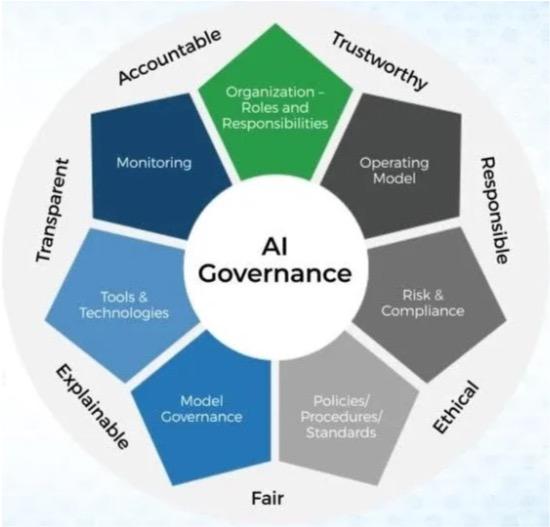
🔒 Guardrails That Accelerate: Responsible AI as a Team Habit
Speed without boundaries feels powerful at first, then fragile. Boundaries without trust feel safe, then suffocating. The real advantage with AI emerges when guardrails are designed not to slow teams down, but to help them move with confidence. ------------- Why “Responsible AI” Often Feels Like a Brake ------------- In many organizations, responsible AI enters the conversation late and heavy. It shows up as policies, approvals, disclaimers, and restrictions layered on top of tools that teams were already excited to use. The intent is good. The outcome is often frustration. People begin to associate responsibility with delay. Governance becomes something that happens after innovation, rather than something that enables it. Quietly, teams work around the rules, experimenting in shadows instead of learning in the open. This is where risk actually increases. The problem is not that guardrails exist. The problem is that they are treated as external controls rather than internal capabilities. When responsibility is positioned as compliance instead of judgment, it disconnects people from ownership. AI changes this dynamic because it scales decisions, not just outputs. When decisions scale, judgment becomes the bottleneck. Guardrails are no longer optional. But the way we design them determines whether they become friction or fuel. ------------- Insight 1: Guardrails Are a Confidence System ------------- We tend to think of guardrails as constraints. In practice, they are permission structures. They tell people where they can move quickly without fear of crossing an invisible line. When teams know what is acceptable, what requires escalation, and what is off-limits, they act faster. Uncertainty slows people down more than rules ever will. Ambiguity creates hesitation, second-guessing, and over-cautious behavior. Well-designed guardrails reduce cognitive load. They remove the need to evaluate every decision from scratch. Instead, people operate within known boundaries, focusing their energy on outcomes rather than risk calculation.
Pinned
2d •
The Secret to Getting 10x More Relevant Results in ChatGPT
In this video, I show you every way to customize ChatGPT as of October 2025. This includes personalization options for both the free and paid plans, so no matter how you use ChatGPT, this video will teach you how to set it up to get the best results!

6h •
Can AI change how we run email campaigns?
Hi Everyone, I keep seeing marketing agencies struggle with email campaigns — not because of strategy, but because of execution overload. Things like: – Writing personalized emails at scale – Adjusting copy for different audiences – Spending hours tweaking instead of testing I built a small AI tool that helps agencies generate and adapt email copy faster while still keeping it human and on-brand. I’m not selling anything here — genuinely trying to validate this: 👉 Is this a real pain for agencies running email campaigns today, or have you already solved this another way?
3d •
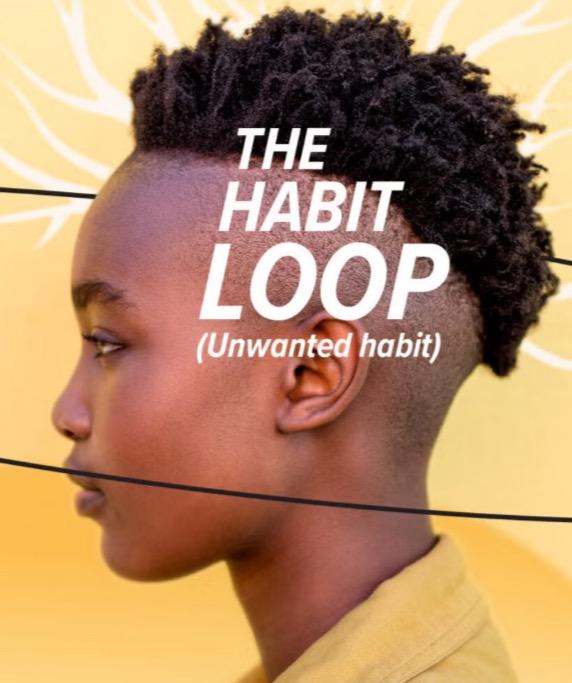
🔄 From One-Off Prompts to Habitual AI Use
Many people believe they are using AI because they have tried it. A prompt here, a draft there, an occasional experiment when time allows. But trying AI is not the same as integrating it. Real value does not come from one-off interactions. It comes from habits. AI delivers its greatest impact not when it is impressive, but when it is ordinary. When it becomes part of how we think, plan, and decide, rather than something we remember to use only when things get difficult. ------------- Context: Why AI Often Stays Occasional ------------- Most AI use begins with curiosity. We explore a tool, test a few prompts, and are often impressed by the results. But after that initial phase, usage becomes irregular. Days or weeks pass without opening the tool again. Each return feels like starting from scratch. This pattern is understandable. Without clear integration into existing routines, AI remains optional. It competes with habits that are already established and comfortable. When time is tight, optional tools are the first to be skipped. Organizations unintentionally reinforce this pattern by framing AI as an add-on. Something extra to try, rather than something embedded into how work already happens. As a result, AI remains novel, but not essential. The gap between potential and impact often lives right here. Not in what AI can do, but in how consistently we invite it into our workflows. ------------- Insight 1: One-Off Use Creates Familiarity Without Fluency ------------- Trying AI occasionally builds awareness, but it does not build intuition. Each interaction feels new. We forget what worked last time. We rephrase similar prompts repeatedly. Learning resets instead of compounding. Fluency requires repetition. The same way we become comfortable with any tool, language, or process, through use in similar contexts over time. Without that repetition, AI remains impressive but unreliable. This is why many people describe AI as inconsistent. In reality, their usage is inconsistent. Without patterns, there is no baseline to learn from.
1-30 of 10,938

skool.com/the-ai-advantage
Founded by Tony Robbins, Dean Graziosi & Igor Pogany - AI Advantage is your go-to hub to simplify AI and confidently unlock real & repeatable results
Leaderboard (30-day)
1

+367
2

🔥
+335
3

+307
4

+195
5

+192
Powered by