
Write something
Pinned

3d •
This Is What Commitment Actually Looks Like
I just want to take a moment to say this... I’m genuinely proud of you. Not because this is easy. Not because you have it all figured out. But because you’re leaning into the work anyway. Adapting is uncomfortable. Learning new tools stretches you. Changing how you think, move, and operate takes effort. And most people avoid that. Most people wait until it feels simple. Until it feels familiar. Until someone else proves it first. You didn’t. You are committed to the tools. You are staying in the room. You choose to get better instead of staying comfortable. That tells me everything I need to know. When things change and you don’t opt out… When you feel resistance and lean in anyway… That’s what separates the few from the many. This is how real growth happens. Not overnight. Not perfectly. But consistently. Keep going. You’re exactly where you should be.

6h •
AI is quietly raising the baseline for what customers expect from a business.
It is not replacing your team, it is replacing “good enough”. Reply time that used to be acceptable is now slow. Follow ups that used to be optional are now expected. Manual admin that used to be normal is now a bottleneck. The scary part is you will not notice it in one big moment You will notice it in small losses, more ghosting, slower sales cycles, more pressure on your team, even though you did not change anything. Because the businesses around you are installing AI into operations, and that becomes the new normal. Question for business owners here Where do you feel the baseline rising first in your industry, speed of response, follow up, customer support, or internal operation

3h •
Who will you be in the new year? 🤔
This month is your chance to rise above excuses. You do not need perfect conditions. You need a clear decision. Decide who you want to be walking into the next year and start matching that version today.

1d •
🧠 When AI Feels Hard, It’s Usually Because We’re Treating It Like We’re Being Tested
Most of us don’t struggle with AI because it’s confusing. We struggle because, subconsciously, we think we’re being evaluated. Evaluated on how well we prompt.On whether we “get it.”On whether we’re using it the right way. So we tighten up. We overthink our inputs.We hesitate to experiment.We quietly assume everyone else understands this better than we do. That pressure doesn’t come from AI itself.It comes from the mental frame we bring into the interaction. And until we change that frame, AI will continue to feel heavier than it needs to. ---- Why We Turn AI Into a Performance ---- Most tools we’ve used throughout our careers rewarded correctness. You followed steps. You learned the system.You mastered the interface. Once you knew how it worked, results were predictable. So when AI entered the picture, we carried that same expectation forward. We assumed there was a right way to interact with it. A correct prompt. A level of fluency we were supposed to reach before we could rely on it. But AI doesn’t reward mastery in the traditional sense. It responds to engagement. When we approach it like a test, every imperfect output feels like a personal failure. When we approach it like a system that needs to be guided, those same outputs become information. The friction isn’t the technology.It’s the invisible pressure we place on ourselves. ---- The Shift: From Performing to Participating ---- The most effective AI users aren’t trying to sound smart. They’re trying to be clear. They don’t aim for perfection on the first input. They expect to shape the result over time. That mindset changes behavior immediately. Instead of asking, “Did I prompt this correctly?”They ask, “What can I clarify next?” Instead of stopping when output misses the mark, They respond, refine, and redirect. This is the moment AI stops feeling like a judge and starts feeling like a collaborator. Not because the tool changed.Because the relationship did. ---- Language Isn’t a Command, It’s a Steering Wheel ----

5h •
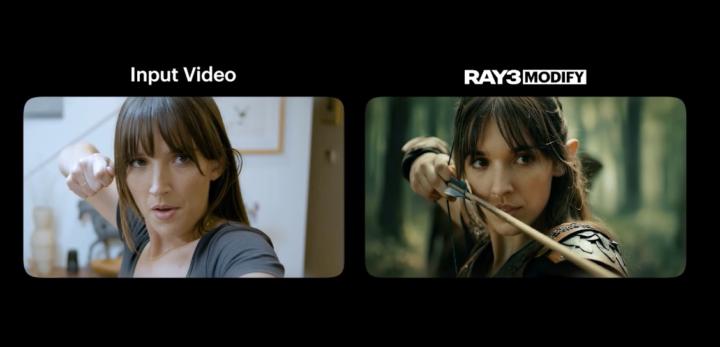
📰 AI News: Luma’s Ray3 Modify Lets You Reimagine Real Footage Without Reshoots
📝 TL;DR Luma just launched Ray3 Modify, an AI video model that lets you radically rework real footage while keeping the original performance intact. Think wardrobe swaps, new locations, and full scene redesigns, all built on what the actor actually did on set. 🧠 Overview Ray3 Modify is a new set of tools inside Luma’s Dream Machine that combines AI video generation with real cameras, real actors, and real performances. Instead of starting from text prompts, you film once, then use AI to transform wardrobe, environment, lighting, and even character identity while preserving motion, timing, and emotion. It is aimed squarely at filmmakers, brands, and creators who want high end control without high end reshoot costs. 📜 The Announcement Luma announced Ray3 Modify as a new hybrid AI workflow for acting and performance, now available in Dream Machine. The update brings three headline capabilities, Modify Video, Modify with Keyframes, and Character Reference, all designed to keep human performance at the center while AI handles the heavy lifting on visuals. The goal is to fix a core flaw of early AI video, it was expressive, but could not reliably follow or preserve what actors actually did on camera. ⚙️ How It Works • Modify Video - You upload a clip, then use Ray3 Modify to change wardrobe, environments, lighting, and product placement while keeping the physical logic, narrative flow, and performance authenticity of the original shot. • Modify with Keyframes - You can set Start and End Frames to guide longer moves and transitions, telling the model how the scene should begin and end so it respects camera motion and spatial continuity in between. • Character Reference - You add a character reference image, then Ray3 Modify projects that identity onto the actor, locking likeness, costume, and identity continuity across the whole clip. • Performance preservation - The model is conditioned on the original footage, so it follows the actor’s real motion, timing, eye line, and emotional delivery while transforming the look of the scene around them.
1-30 of 10,174

skool.com/the-ai-advantage
Founded by Tony Robbins & Dean Graziosi - AI Advantage is your go-to hub to simplify AI, gain "AI Confidence" and unlock real & repeatable results.
Leaderboard (30-day)
1

🔥
+1312
2

+900
3

+811
4

+747
5

+326
Powered by