
Write something
Pinned

2d •
Before You Plan 2026… Decide What You’re Done Carrying
There’s something about the space between Christmas and New Year’s that makes people want to stack plans. New goals. New habits. New pressure. It feels productive… but most of the time, it’s just more weight. Your next level isn’t hiding in what you add. It’s unlocked by what you finally say no to. No to commitments that drain you. No to goals you picked up out of obligation. No to habits that look good on paper but cost you energy. Growth isn’t always about doing more. Sometimes it’s about protecting your time, focus, and bandwidth so the right things can actually grow. Before you ask, “What do I need to do next year?” Ask this instead: "What am I done carrying into 2026?" That answer will shape your year more than any goal ever will. 👇Drop one thing you’re choosing to say no to next year.

1h •
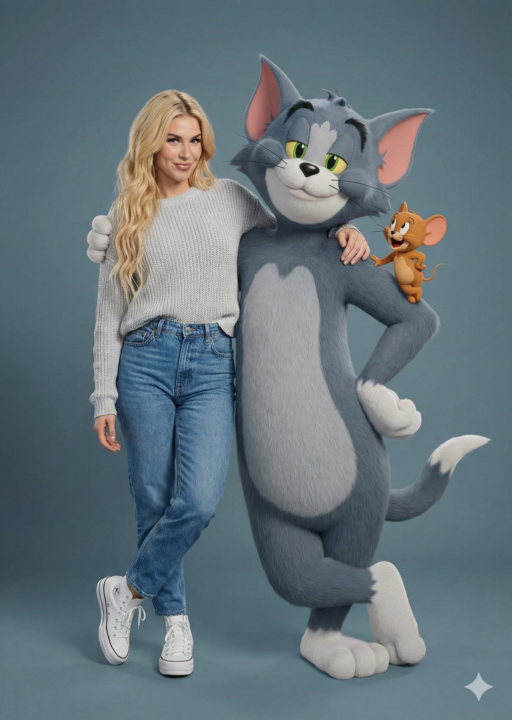
My Childhood just came back to life 🤯
Childhood nostalgia, re-imagined through pixels, prompts and a little bit of magic :)

1d •
Most people approach AI asking, “What can this tool do?”
The people who get real results ask a different question: “How do I think differently now that this exists?” AI doesn’t replace effort. It replaces friction. And once you see it that way, everything changes. Instead of trying to master AI, you start partnering with it. Instead of feeling pressure to keep up, you focus on making progress. Instead of chasing complexity, you learn that clarity is the real advantage. Confidence doesn’t come from knowing every feature. It comes from trusting yourself enough to start simple and improve as you go. That’s why this space matters. It’s not about becoming an AI expert overnight. It’s about building belief that you can learn, adapt, and apply AI in a way that actually serves your goals. If you’re hesitating right now, that doesn’t mean you’re behind. It means you’re standing at the edge of a new way of working. If there’s a mindset block you’re feeling around AI uncertainty, doubt, or even resistance you’re welcome to share it here. Sometimes naming what’s holding you back is the first real step forward.

2h •
Happy New Year - 2026
Wishing you a New Year overflowing with breakthroughs, meaningful connections, and the joy of learning together. May 2026 be the year your boldest goals become your lived reality. Let's continue to build, support, and grow this amazing community helping one another. Happy New Year! AI Insights Shaping 2026: 2026 will see the rise of Agentic AI—autonomous systems that execute multi-step tasks, from managing complex projects to personalized tutoring. Video generation will move beyond clips, enabling dynamic, long-form content creation. Most pivotally, we'll shift from massive, general models to smaller, specialized AI agents that work in concert, seamlessly integrating into our daily workflows and digital environments.

19h •
⚙️ From Tool Overload to Workflow Clarity, Why AI Feels Hard Before It Feels Useful
AI often enters our work lives as a promise of simplicity. Faster outputs, smarter assistance, less effort. Yet for many teams, the first real experience of AI feels like the opposite. More tools, more tabs, more decisions, and more cognitive load. This early friction is not a sign that AI is failing. It is a sign that we have not yet moved from tools to workflows. ------------ Context: When Possibility Becomes Overwhelm ------------ Most people do not meet AI through a single, well-integrated system. They meet it through a flood of options. Chat tools, image generators, automation platforms, and plugins all appear at once, each claiming to be essential. The result is not clarity, but paralysis. Inside organizations, this often leads to scattered experimentation. One team uses AI for drafting. Another uses it for analysis. A third tries automation. None of these efforts connect. AI becomes something people occasionally try, rather than something that reliably supports how work gets done. This fragmentation creates a subtle sense of failure. People know AI can be useful, but they cannot feel that usefulness consistently. Every interaction feels like starting over. The cognitive cost of choosing the right tool or prompt outweighs the benefit of the output. The mistake is assuming that value comes from finding the right tool. In reality, value comes from fitting AI into a repeatable way of working. ------------ Why Tools Alone Rarely Create Value ------------ Tools are easy to acquire and hard to integrate. They promise capability, but they do not automatically create coherence. Without a clear place in a workflow, even powerful tools feel optional and fragile. AI tools amplify this problem because they are general purpose. They can do many things, which makes it unclear what they should do first. When everything is possible, nothing feels necessary. This leads to a pattern where people try AI for impressive but disconnected tasks. A polished document here. A clever summary there. The outputs look good, but they do not reduce friction in the overall process.

1-30 of 10,437

skool.com/the-ai-advantage
Founded by Tony Robbins & Dean Graziosi - AI Advantage is your go-to hub to simplify AI, gain "AI Confidence" and unlock real & repeatable results.
Leaderboard (30-day)
1

+933
2

+482
3

+339
4

+298
5

+276
Powered by