

9h •
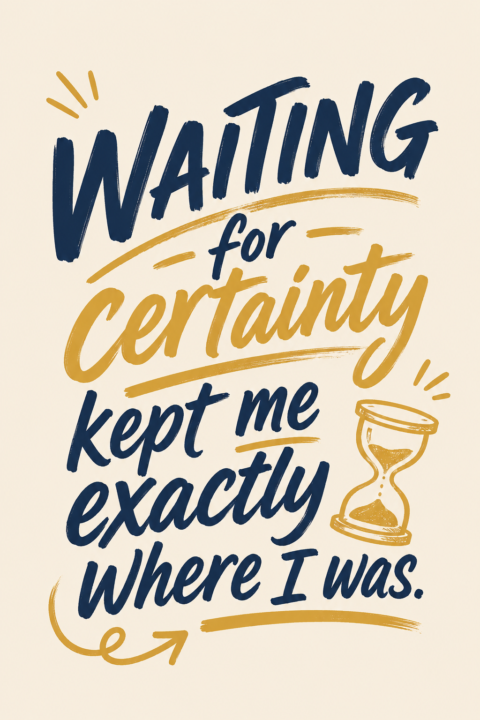
🤔Waiting for certainty kept me exactly where I was....
I spent so long looking for the right direction that I never picked one. I kept waiting for a plan that felt completely safe, completely certain, guaranteed to work. That plan never came, because it never exists. The direction I finally chose wasn't the safest one, it was just the one I stopped overthinking.💙

🔥
1d •
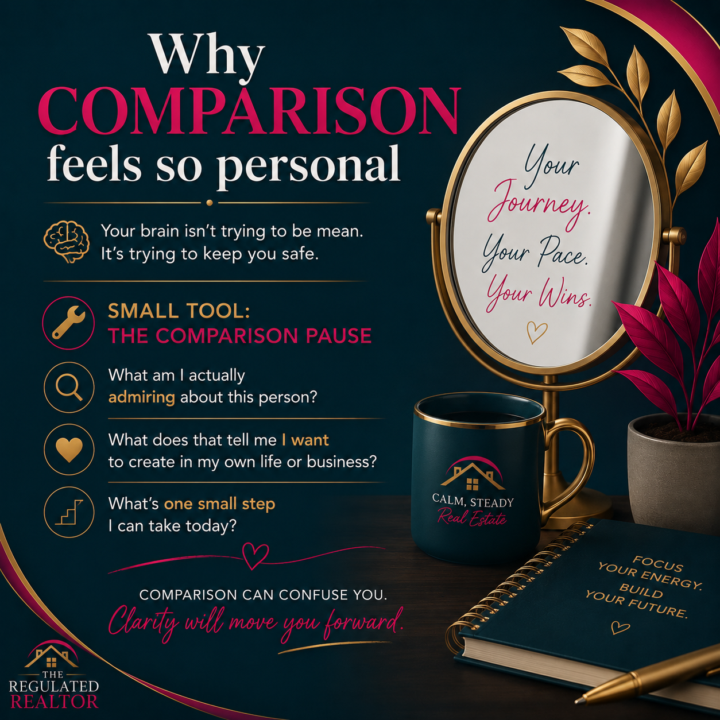
Why Comparison Feels So Personal
Have you ever noticed that one scroll through social media can completely change how you feel about your own business? You see someone announcing another listing. Another person shares a big win. Someone else launches a new offer. And suddenly you find yourself wondering... "Am I doing enough?" The interesting thing is that comparison isn't really about the other person. It's often your brain trying to answer one simple question: "Am I okay?" When we feel uncertain, our minds naturally look for information. We compare ourselves to others to figure out where we stand. The problem is that we're usually comparing our everyday reality to someone else's highlight reel. That comparison can quickly turn into pressure. Pressure can lead to rushed decisions, second-guessing yourself, or believing you need to change everything when what you really need is a little more clarity. 🛠️ Small Tool: The Comparison Pause The next time you catch yourself comparing, ask yourself these three questions: ✅ What am I actually admiring about this person? ✅ What does that tell me I want to create in my own life or business? ✅ What's one small step I can take today toward that goal? Comparison doesn't have to become self-criticism. It can become information. Instead of asking, "Why am I not there yet?" Try asking, "What can I learn from this?" That one shift can help you move from feeling behind to moving forward. 💬 Question: What's one thing you've learned from someone you used to compare yourself to?
1
0

🔥
9d •
Your About page isn’t about you. 👀
It’s about them. The second someone lands on your Skool community, they’re asking one question. “Is this for me?” Most About pages answer the wrong one. They list features. They talk about themselves. They say things like “a community for people who love [niche].” That tells someone what you are. It doesn’t tell them why they should stay. Here’s what actually works. Call out who it’s for, specifically. Name the problem they’re already feeling. Show them what their life looks like after they’re inside. Example “This is for the burnt-out fitness coach who has clients but no community holding them accountable between sessions.” That one sentence does more work than three paragraphs of features. I’ve gone deep on this, pulling apart what makes About pages convert versus ones people scroll past. The pattern is always the same. Get to the point fast People just need to know who it’s for, what they get, and why they should join and stay. Nothing else really matters. Your About page is your first impression and your first sales pitch. Most people set it once and never touch it again. 🚨 I’ll pin 📌 a prompt from my Ultimate Skool Playbook AI prompt bank that’ll help you write a high converting About page. If you use the prompt and tweak yours, drop your about page text below with your community link 🔗 I’ll give you some feedback, and you might find someone it speaks to.
Poll
16 members have voted

🔥
8d •
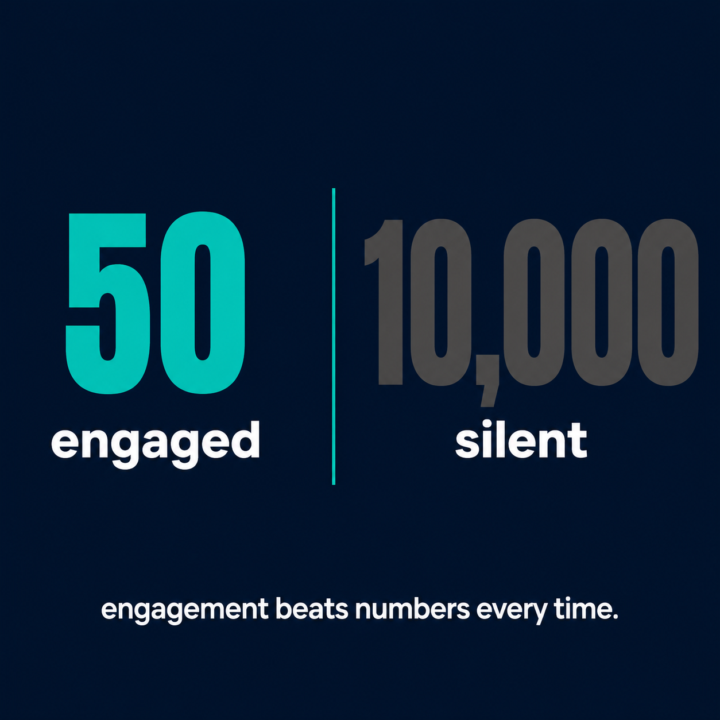
A dead community with 10,000 members is still a dead community.
This might sting a lil, but more members will not fix it. A small community that talks, beats a big community that scrolls every single time. Every algorithm, every referral, every word of mouth recommendation runs on one thing. Activity. When people land in a community and see real conversations happening they lean in. When they see nothing moving they assume it is dead and they leave or never check back in So the number you should obsess over is not your member count. It is how many people showed up and said something this week. Because adding more members to a quiet community does not fix the quiet. It just gives more people an empty room to walk into and walk right back out of. Engagement is not something that happens when your community gets BIG. It is something you build before you need it. It is a culture decision not a size milestone. Here is a free sneak peek prompt straight from my prompt vault inside The Ultimate Skool Playbook to help you start building that culture vibe right now. Dropping it in the comments and you can thank me later. What is the one post or conversation inside your community that got way more engagement than you expected? Drop it below because we can all learn from what is actually working. Together we all rise!
Poll
24 members have voted

🔥
3d •
📌 The Adaptation Economy
For years, I have been thinking about how economies evolve. We began by gathering natural resources. Then came agriculture, manufacturing, products, services, and eventually what many called the Information Age or the Idea Economy. Today, I think we are entering something different. I call it The Adaptation Economy. Information is no longer scarce. Ideas are no longer scarce. Even expertise is becoming more accessible than ever before. What is becoming increasingly valuable is the ability to learn, adapt, and apply new knowledge in meaningful ways. Artificial Intelligence is accelerating this shift. New tools appear almost weekly. Business models evolve overnight. Skills that seemed cutting-edge a year ago can already feel routine. Waiting for things to "settle down" may no longer be a realistic strategy. The people and businesses that thrive will not necessarily be those who know the most. They will be those who adapt the best! That does not mean chasing every new trend. It means developing the confidence to evaluate new ideas, discard those that do not fit, embrace those that do, and continue moving forward without becoming overwhelmed. To me, that is the real opportunity. The future does not belong to those with the biggest libraries of information. It belongs to those who can turn information into understanding, understanding into action, and action into meaningful results. Perhaps the most important question we can ask ourselves today is not: "What do I need to know?" Instead, it is: "How quickly can I learn what I need when the world changes again?" I believe that question will define success for the next decade.
5
0

1-19 of 19
skool.com/skoolsummitstage
Helping business owners, coaches, and creators grow their visibility, confidence, brand, and Skool through summits, speaking, bundles, and networking.
Leaderboard (30-day)
1

🔥
+403
2

+382
3

🔥
+259
4
+250
5

🔥
+246
Powered by