
Write something

🔥
May 23 •
An illustrated love letter from 1841
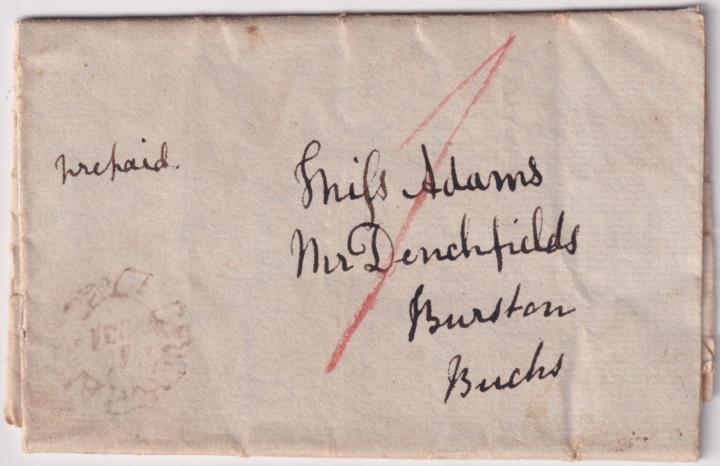
You have to see this one. I bought it over 10 years ago for £20, and have barely looked at it since. In February 1841, a young man named F (T?) Field, of Great Berkhampstead (now Berkhamsted) in Hertfordshire sent a letter to Miss Adams of Burston, Buckinghamshire. The letter is noted as prepaid, with a red manuscript "1" to indicate payment of penny postage, as he didn't want the object of his affections to have to pay the penny. The letter sheet was closed with a wax seal, which has survived intact, and although the cancels are very difficult to read, the one on the front is Gt Berkhampstead, and on the back, Aylesbury. The letter itself is absolutely wonderful. Mr Field illustrated his letter with a colourful image of a couple kissing, with a little boy looking on from behind a bush. The moon is out and the sky is full of stars. And then he wrote his poem. This is the transcription: Dear Madam tho bold you think me to write To a lady by whom I'm unknown Be assured that my reasons when brought to the light Will for such an intrusion atone My first and my greatest request is your hand Which I hope you will willingly give You're aware I must be an unfortunate man Whilst apart from my love I must live I heard a report that some nieces (?) imposed Upon her who has all my regard How (?) you must not imagine they've written again And that this your bright prospect is mar'd A very few words will suffice to express That of wealth I have a great store And of cattle estates and the like I've so much That no mortal could wish to have more Adieu dear Hannah & accept my love And hand & hope that you will yield That precious heart of yours to poor F (T?) Field Gt Berkhampstead Feb'y 13th 1841 The note with the little boy behind the bush is "They're a courting I'll go home and tell Mummy". Isn't it lovely? I've done a little research, but as yet can't find records of either Miss Adams or Mr Field. I'd like to get this where I think it belongs, a museum in Buckinghamshire, but I'd like to have some real research done first.

May 18 •
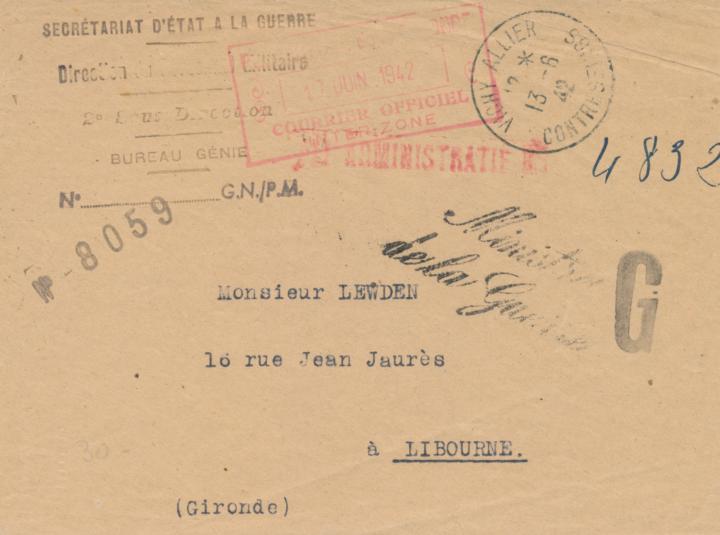
Vichy French Censored Cover
This cover (sadly front only) was in a small album with other censored covers from various parts of the world. Argentina, Iraq, USA and South Africa. I thought I would see how AI could help me to understand a bit more about it. I was very impressed with what it delivered. Decoupling the Military Text - Secrétariat d’État à la Guerre: The Vichy Ministry of War (Secretariat of State for War), which was led by General Eugène Bridoux in June 1942. - Direction [de l’Infanterie/Cavalerie/etc.] Militaire: The specific overarching Military Directorate overseeing resources or personnel. - 2e Sous-Direction: The 2nd Sub-Directorate. In French military administration, sub-directorates specifically manage infrastructure, logistics, and resource allocation. - Bureau du Génie: The Military Engineering Bureau (The French Army Corps of Engineers). This letter was sent just five months before November 1942, when Nazi Germany broke the armistice pact, invaded the Free Zone, and forcibly dissolved the Vichy Armistice Army. A letter sent on 13 June 1942 addressed to Monsieur Lewden at 16 rue Jean Jaurès in Libourne directly links the Vichy Government’s Military Engineering Bureau (Bureau du Génie) to a prominent local military family with deep historical ties to Libourne’s barracks. Who was Monsieur Lewden? In June 1942, this address was the home of a respected local military lineage: - The Family Connection: The Lewden family was long established in the region. A highly prominent member of the family was Lieutenant-Colonel Louis Lewden, a distinguished retired officer and local historian. - The Connection to the "Bureau du Génie": Lieutenant-Colonel Lewden was a renowned expert on the town's military infrastructure. He wrote and published the definitive historical study on the military barracks of Libourne ("Les casernes de Libourne", published in 1919). - Wartime Timeline: Historical records from the Société historique et archéologique de Libourne note that Lieutenant-Colonel Louis Lewden actually passed away in 1942.
May 6 •
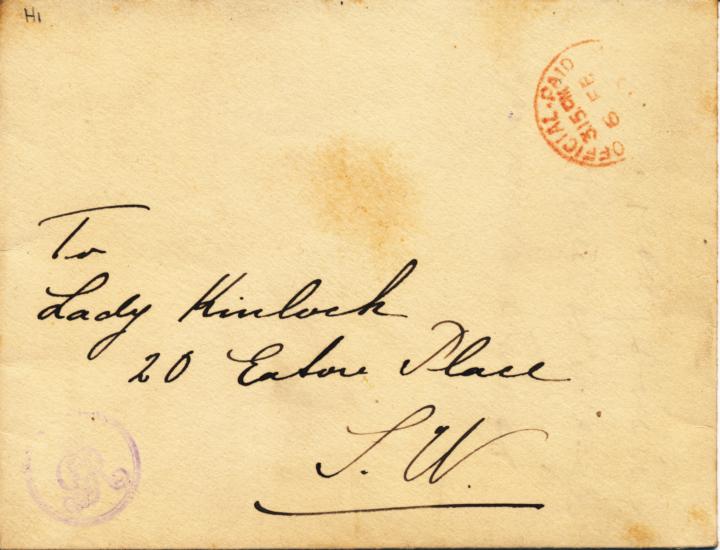
King George V Royal Embossed Crown Cover
This cover was picked up at a Sunday market in a bag of covers I purchased. There were lots of interesting items in there including a forged Tibet cover, a rare Fiji cancel of cover plus lots more. I have downloaded a lot of samples of KGV handwriting and the handwriting on the cover is remarkably similar. I tried (unsuccessfully) to get it verified by a hand writing expert as most won't do this type of work/research. I've added a few of the documents I downloaded (I have 14). What are your thoughts?
May 6 •
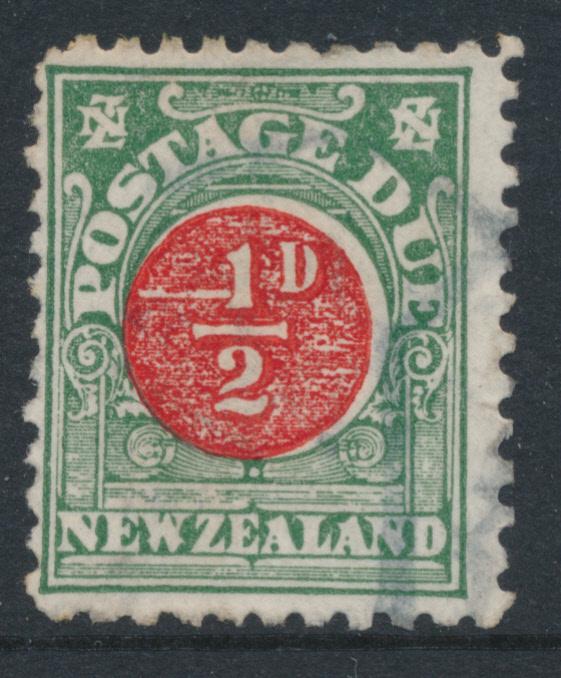
Stroke on 1904 NZ Postage Due SG D18 (CP Y15b)
This is a 1904 NZ Postage Due on unsurfaced Cowan Paper with sideways and inverted (W 7b) watermark, used. What is interesting is the massive stroke next to the "1". Can't find any reference to it anywhere in my literature. It is probably a transient error, but I'm curious if anyone has seen something similar.
Apr 27 •
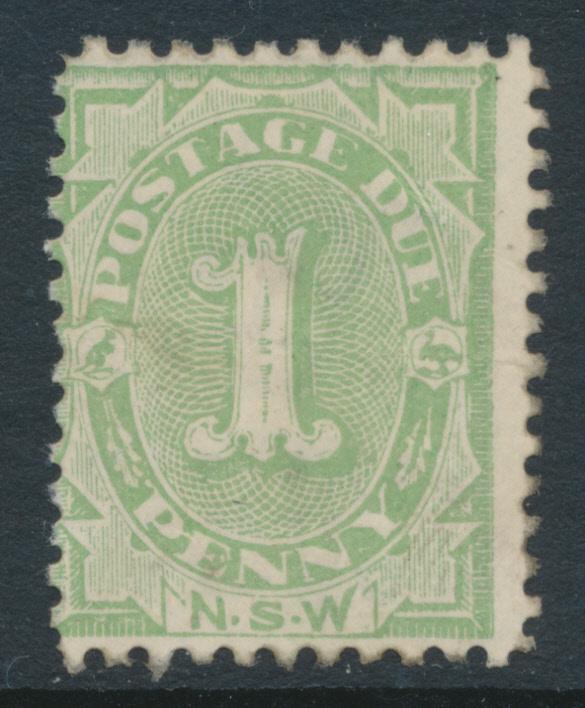
NSW Postage Due Perforation question
I've attached a page from ACSC Postage Due catalogue describing the differnent perforation options. I have also attached a PDF of EzPerf, a digital perf gauge I use which gives me much better (and demonstrable) accuracy on perforations. As you can see the perfs are 11.25 x average 11.55. What are your thoughts as to what this stamp is (catalogue number)?
1-10 of 10
powered by

skool.com/selling-stamps-online-2123
The most active collectables group on Skool. The hub for all collectors and dealers to master the market and maximise returns.
Suggested communities
Powered by