
Write something

Mar 7 •
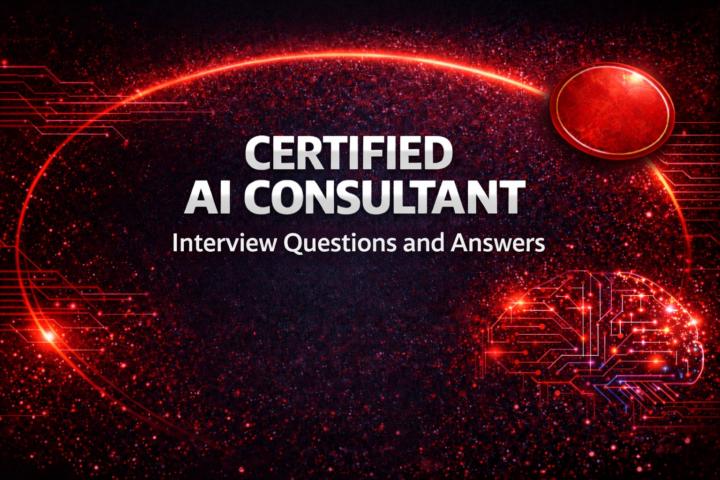
𝐖𝐞 𝐡𝐚𝐯𝐞 𝐣𝐮𝐬𝐭 𝐫𝐞𝐥𝐞𝐚𝐬𝐞𝐝 𝟏𝟎𝟎 𝐈𝐧𝐭𝐞𝐫𝐯𝐢𝐞𝐰 𝐐𝐮𝐞𝐬𝐭𝐢𝐨𝐧𝐬 𝐚𝐧𝐝 𝐀𝐧𝐬𝐰𝐞𝐫𝐬 𝐟𝐨𝐫 𝐭𝐰𝐨 𝐨𝐟 𝐭𝐡𝐞 𝐦𝐨𝐬𝐭 𝐢𝐧-𝐝𝐞𝐦𝐚𝐧𝐝 𝐀𝐈 𝐫𝐨𝐥𝐞𝐬:
• Certified AI Consultant • AI Automation Engineer This resource is now available inside AI Growth Academy for our community members to access. The questions and answers were carefully developed based on real interview experiences shared by our students who have gone through AI-related job interviews. Because of this, the content reflects the types of questions employers are actually asking in the industry. If you are preparing for roles such as: • AI Consultant • AI Automation Engineer • AI Implementation Specialist • AI Strategist this guide will help you practice your responses, strengthen your understanding, and prepare confidently for interviews. Many people learn AI tools but struggle during interviews because they have not practiced explaining AI concepts clearly. These interview questions and answers are designed to help you build that confidence. How to access it 1️⃣ Go to AI Growth Academy 2️⃣ Open the Community or Classroom section 3️⃣ Find the 100 Interview Questions and Answers resource 4️⃣ Unlock it and start practicing Take this seriously. If you go through the questions and truly understand the answers, it can significantly improve your chances of succeeding in AI-related interviews. 👉 **Head over to AI Growth Academy now https://www.skool.com/ai-growth-academy-4987/classroom

Dec '25 •
How to Land an AI / ML Job in 2026
A Practical Roadmap for the Next Generation of AI Professionals The AI job market in 2026 is no longer about knowing a few algorithms or completing online tutorials. It has evolved into a results-driven ecosystem where companies hire professionals who can design, deploy, and scale real AI systems. The demand has shifted from theoretical knowledge to practical impact. To land an AI or ML role in 2026, you must think like a builder, not a student. 1. Understand How AI Roles Have Evolved AI jobs today look very different from just a few years ago. Organizations are no longer hiring general “machine learning engineers.” Instead, they are looking for specialists who understand both technology and business. Common roles in 2026 include: - AI Engineer / Applied AI Engineer - Agentic AI Developer - LLM Engineer - AI Product Engineer - MLOps & AI Platform Engineer - AI Governance & Risk Specialist What employers now expect: - Ability to build end-to-end AI systems - Experience with real-world use cases - Understanding of cost, performance, and reliability - Awareness of ethics, safety, and compliance 2. Learn the Right Technical Skills (Not Everything) You don’t need to master every AI tool—but you must master the right ones. Core Skills - Python and SQL - APIs and system integration - Git, Docker, and cloud basics AI & ML Essentials - Machine learning and deep learning fundamentals - LLMs and prompt engineering - Retrieval-Augmented Generation (RAG) - Vector databases (FAISS, Pinecone, Weaviate) - Model evaluation and monitoring 2026 Must-Haves - Agent frameworks (AutoGen, CrewAI, LangGraph) - Tool-using AI systems - Cost and performance optimization - Responsible AI and governance If you can design an AI agent that reasons, retrieves data, and performs actions, you are already ahead of most candidates. 3. Build Projects That Actually Matter Recruiters no longer care about certificates alone. They want proof. High-impact project ideas include:
1-15 of 15
skool.com/school-of-ai
School of AI WhatsApp Channel: https://chat.whatsapp.com/JuqbToSN6bcJAY94jLzZEd
Leaderboard (30-day)
1
+15
2

+9
3

+7
4

+4
5

+2
Powered by